Keyword vs Prompt: We Asked ChatGPT the Same 24 Questions Two Ways. The Brands Changed.
Disclosure
This article is promotional content produced as part of the Semrush Creator Accelerator programme. It contains affiliate links to Semrush — if you buy through them we may earn a commission at no extra cost to you — and we may also receive a reward from Semrush for publishing it. All measurements in this article are our own. Semrush did not supply, review or approve the data, and the conclusions we draw are ours.
A keyword map lists what people type into a search box: "best pet insurance". A growing number of SEOs now add a second column for what people ask an AI assistant: "Which pet insurance company should I sign up with for a 1-year-old French bulldog?" Same need, different words. The question is whether the different words get a different answer.
Plan topics, not just keywords
Group your keywords into topics and see the intent behind each one with Topic Finder in the Content Toolkit. For the two columns themselves — keyword research and prompt research in one subscription — try Semrush One free for 7 days.
The experiment: one need, two phrasings
We took eight categories where people research before they buy — pet insurance, online therapy, dating apps, online tutoring, home warranties, solar panels, car insurance and clear aligners. For each, we wrote one need at each funnel stage, and wrote it twice:
| Stage | Keyword (what people type) | Prompt (what people ask) |
|---|---|---|
| Top of funnel | what is pet insurance | I just adopted a puppy. Is pet insurance something I actually need, and how does it work? |
| Middle of funnel | pet insurance comparison | How do accident-only and comprehensive pet insurance plans compare for a young dog? |
| Bottom of funnel | best pet insurance | Which pet insurance company should I sign up with for a 1-year-old French bulldog? |
That is 24 needs and 48 questions. We asked each one of ChatGPT once, with web search on, and compared the two answers to each need: which brands they named, which sources they cited, and how long they were.
Finding 1: the funnel stage decides whether brands appear at all
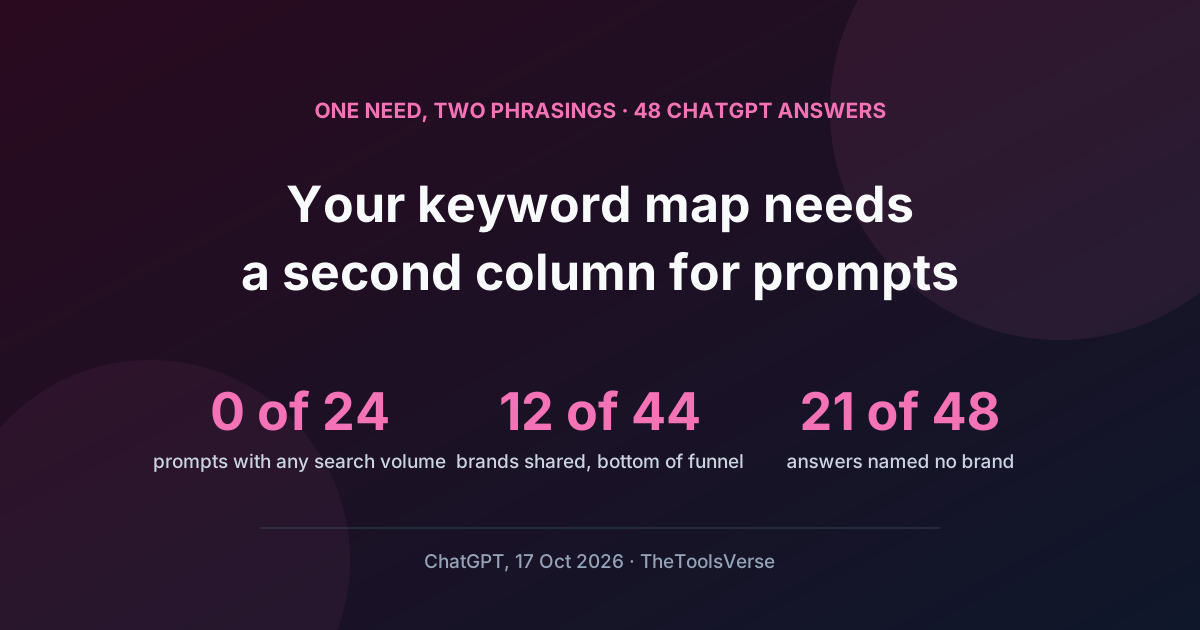
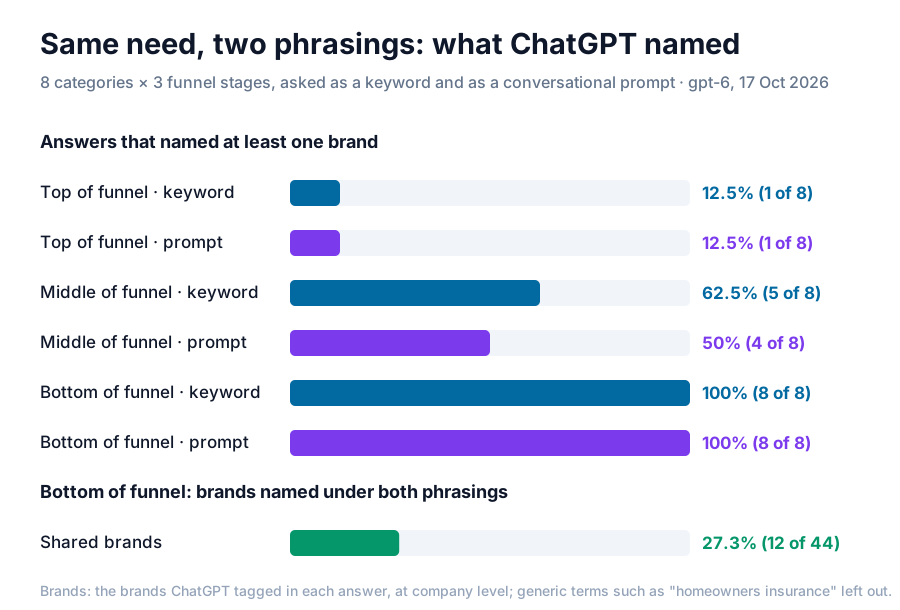
21 of the 48 answers named no brand. Almost all of them were early in the funnel:
| Stage | Keyword answers naming a brand | Prompt answers naming a brand | Brands named (keyword / prompt) |
|---|---|---|---|
| Top of funnel | 1 of 8 | 1 of 8 | 3 / 3 |
| Middle of funnel | 5 of 8 | 4 of 8 | 13 / 7 |
| Bottom of funnel | 8 of 8 | 8 of 8 | 31 / 25 |
At the top of the funnel, only the dating-app questions named brands under either phrasing. At the bottom, every answer did. This is the "brand-mention filter" some SEOs now apply to prompt lists: a prompt whose answer names no brand cannot be won by a brand, so it is a content question, not a visibility target. In our sample, that described 14 of the 16 top-of-funnel answers.
Finding 2: at the bottom of the funnel, the wording changed the shortlist
When both phrasings named brands, they did not always name the same ones. Across the eight bottom-of-funnel pairs, 12 of the 44 brands named appeared under both phrasings — and in two categories, none did:
| Category | Keyword → brands named | Prompt → brands named | Shared |
|---|---|---|---|
| Pet Insurance | "best pet insurance" → ASPCA Pet Health Insurance, Trupanion | "Which pet insurance company should I sign up with for a 1-year-old French bulldog?" → Pets Best, Embrace, AKC Pet Insurance | 0 of 5 |
| Online Therapy | "best online therapy" → Talkspace, Grow Therapy, BetterHelp, Headway, Brightside Health | "Which online therapy service should I use for anxiety if I want to pay with insurance?" → Headway, Talkspace, Alma | 2 of 6 |
| Dating Apps | "best dating app for relationships" → Hinge, eharmony, Match, Bumble, Coffee Meets Bagel | "Which dating app should I download if I want a long-term relationship?" → Hinge, eharmony, Match, Bumble | 4 of 5 |
| Online Tutoring | "best online tutoring service" → Wyzant, Varsity Tutors, Preply, Tutor.com, Khan Academy | "Which online tutoring service should I sign up for to help my 8th grader with math?" → Wyzant, Brighterly, Varsity Tutors, Khan Academy | 3 of 6 |
| Home Warranty | "best home warranty company" → American Home Shield | "Which home warranty company should I choose for a 20-year-old house?" → American Home Shield | 1 of 1 |
| Solar Panels | "best solar companies" → Great Basin Solar, Simple Power, Sol-Up Reno, Reno Solar, Go Solar Group | "Which solar company should I get quotes from for a home in Texas?" → Freedom Solar Power, Atma Energy, Good Faith Energy & Roofing, 512 Solar, Texas Best Solar | 0 of 10 |
| Car Insurance | "cheapest car insurance" → Travelers, Virginia Farm Bureau, GEICO, Erie Insurance | "Which car insurance company should I switch to for the cheapest rate as a 25-year-old?" → GEICO, Progressive, USAA | 1 of 6 |
| Clear Aligners | "best clear aligners" → Invisalign, Spark Aligners, ClearCorrect, Smileie | "Which clear aligner brand should I choose for mild crowding if I want to avoid in-person visits?" → SmileSet, Invisalign | 1 of 5 |
Dating apps barely moved: four of five brands were the same. Pet insurance changed completely — the keyword answer named ASPCA and Trupanion, the French-bulldog prompt named Pets Best, Embrace and AKC. A brand tracking only the keyword would have a different picture of its visibility than a brand tracking the question a buyer actually asks.
Finding 3: a short keyword lets the AI fill in the blanks
Two of the bottom-of-funnel keywords came back answered for a place nobody asked about. For "best solar companies", ChatGPT's own search was best solar companies Reno Nevada 2026 reviews warranties local installers, and the installers it named came from that Reno search — Sol-Up Reno and Reno Solar among them. For "cheapest car insurance", it searched cheapest car insurance companies Virginia 2026 and named Virginia Farm Bureau and Erie. The prompts that said "Texas" and "a 25-year-old" got answers for Texas and a 25-year-old.
A keyword leaves out the details a person would say out loud — where they live, how old the house is, what breed the dog is. The AI supplies its own, or asks none, and the answer changes with them.
Finding 4: prompts have no search volume — and get longer answers
We looked up the Google search volume of all 48 questions. 19 of the 24 keywords had measurable US volume — 380,010 searches a month between them. None of the 24 prompts had any. Conversational questions do not show up in keyword tools, which is why they need their own column rather than a volume number.
The prompt answers were also bigger: 632 words on average against 510 for the keyword answers, and ChatGPT ran 49 searches of its own behind the prompts against 34 behind the keywords. The more a person says, the more the AI looks up.
Your keyword map, with a second column
The workflow that follows from this is a keyword map with three extra columns:
| Keyword | Prompt (how a buyer would ask) | Stage | Brands in the answer? |
|---|---|---|---|
| what is pet insurance | I just adopted a puppy. Is pet insurance something I need? | Top | No — answer with content, not a brand push |
| pet insurance comparison | How do accident-only and comprehensive plans compare for a young dog? | Middle | Sometimes — check both phrasings |
| best pet insurance | Which pet insurance should I sign up with for a 1-year-old French bulldog? | Bottom | Yes — and they differ by phrasing, so track both |
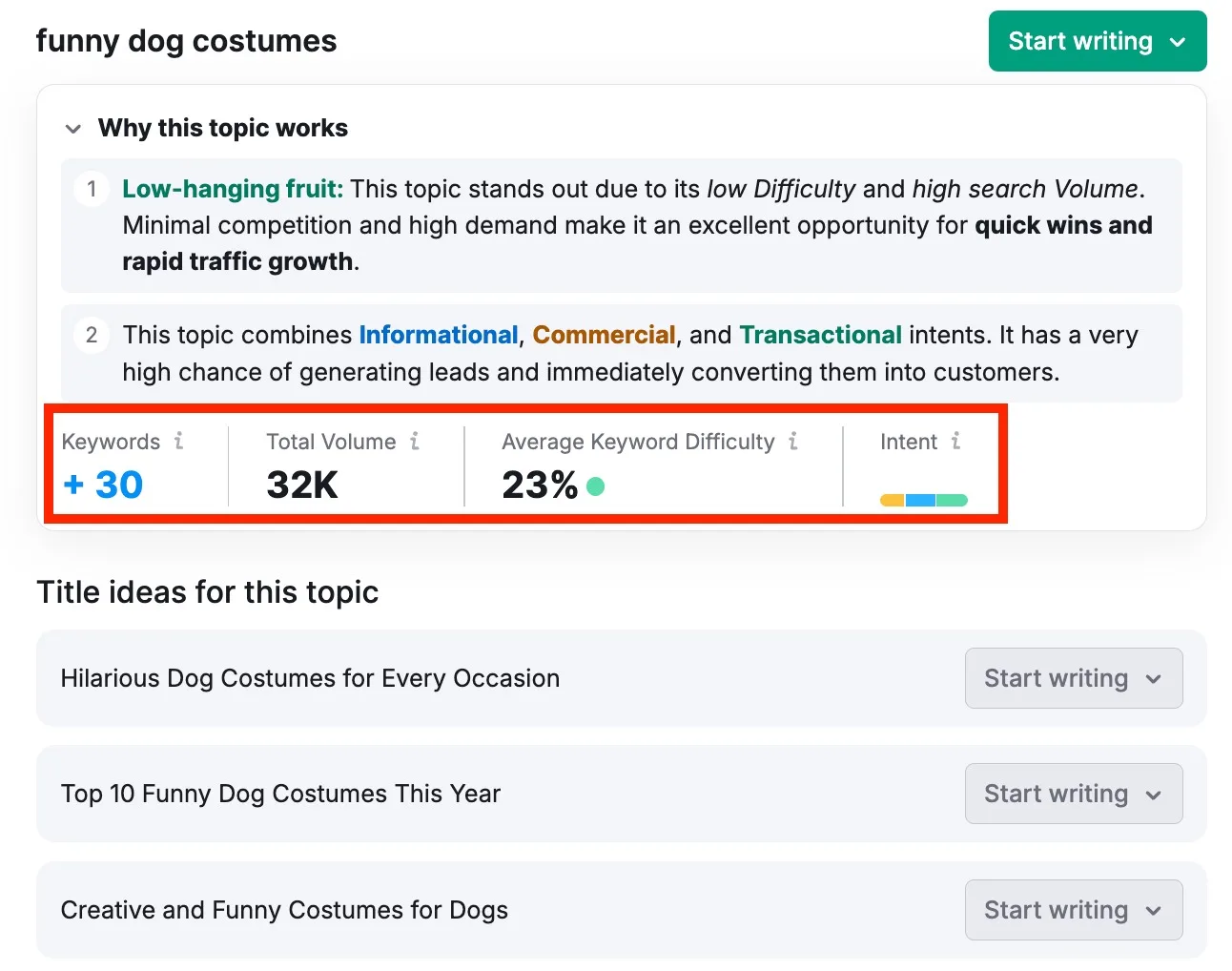
Start from topics, not single keywords. Topic Finder "analyzes the data and presents a list of the best-performing content topics based on your input", and for each topic shows the keywords, volume, difficulty and "Primary search intent (informational, commercial, transactional, or navigational)" — the stage column, already filled in.
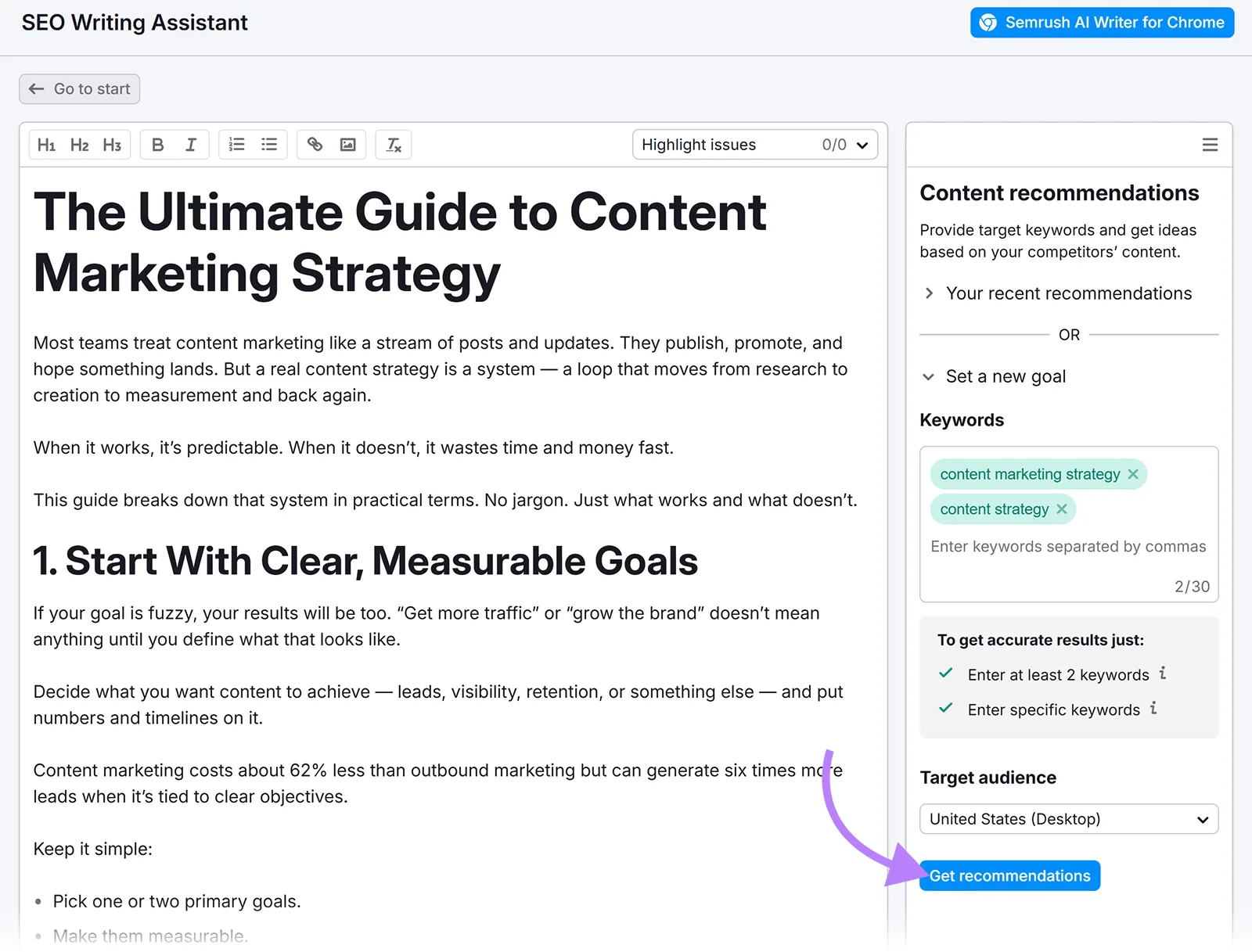
Write the page for the question, not just the keyword. The SEO Writing Assistant works from the target keywords you give it — "enter your target keywords, select a location, and choose a device type (desktop or mobile)" — and "The tool provides recommendations as you write and tracks how well your content follows those recommendations." Adding the prompt's details (the breed, the state, the age of the house) to the page is how it answers the long version of the question too.
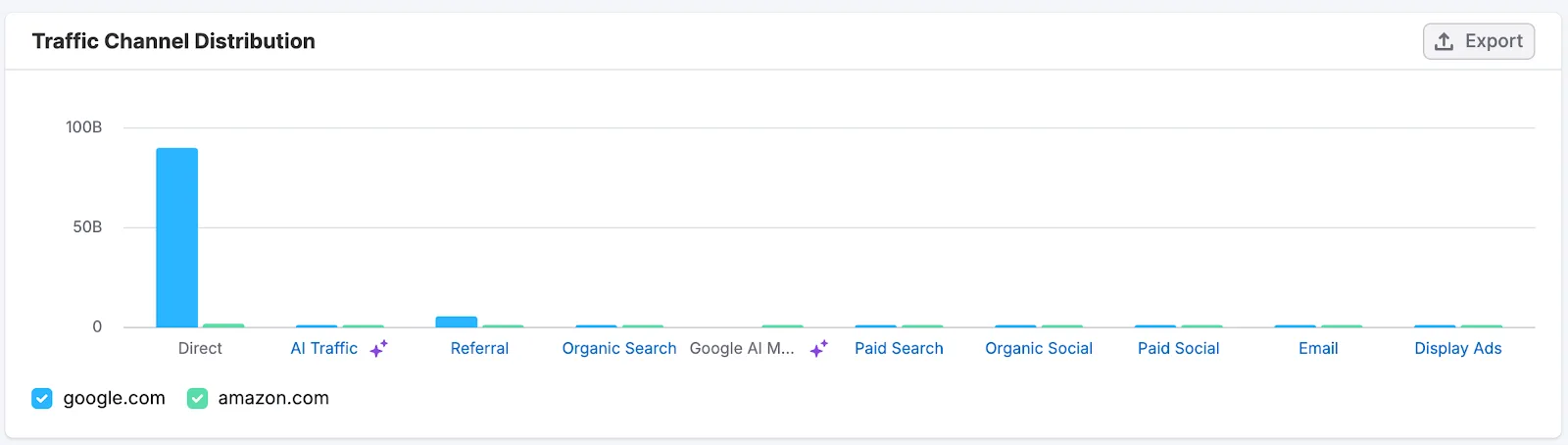
Check where competitors' visits actually come from. Traffic Analytics, in the Traffic & Market Toolkit, has a Traffic Channel Distribution chart that "shows the share of a domain's traffic by channel", AI traffic included — a way to see which rivals' coverage is turning into visits before deciding which gap to close first.
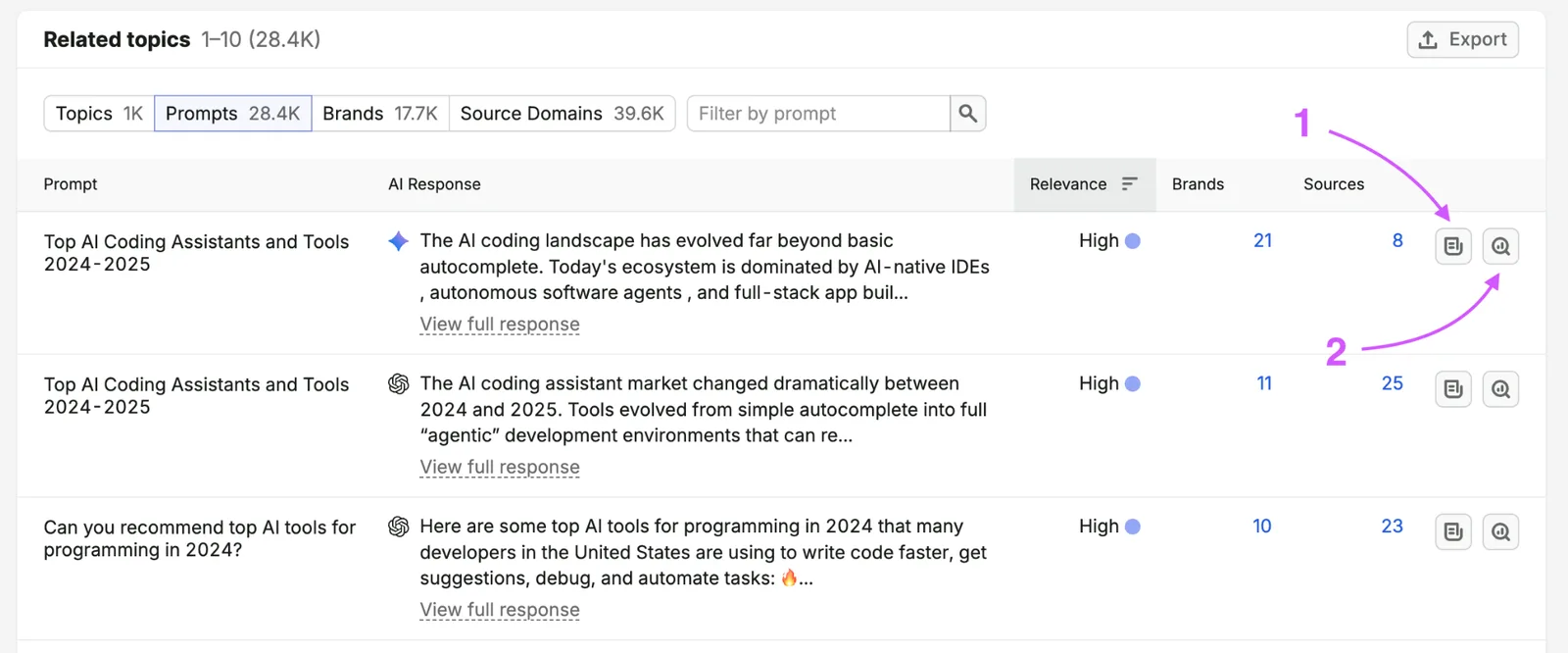
Fill both columns from data. The keyword column comes from keyword research — the Keyword Magic Tool in the SEO Toolkit — and the prompt column from Prompt Research in the AI Visibility Toolkit, which "helps you discover and prioritize the topics and prompts people use in AI-generated search". For a prompt worth targeting, its Knowledge Base says you can "Create content in one click (this integrates with the Content Toolkit and starts drafting content for you)", or track it every day in Prompt Tracking — the prompt column turning into a page and a measurement.
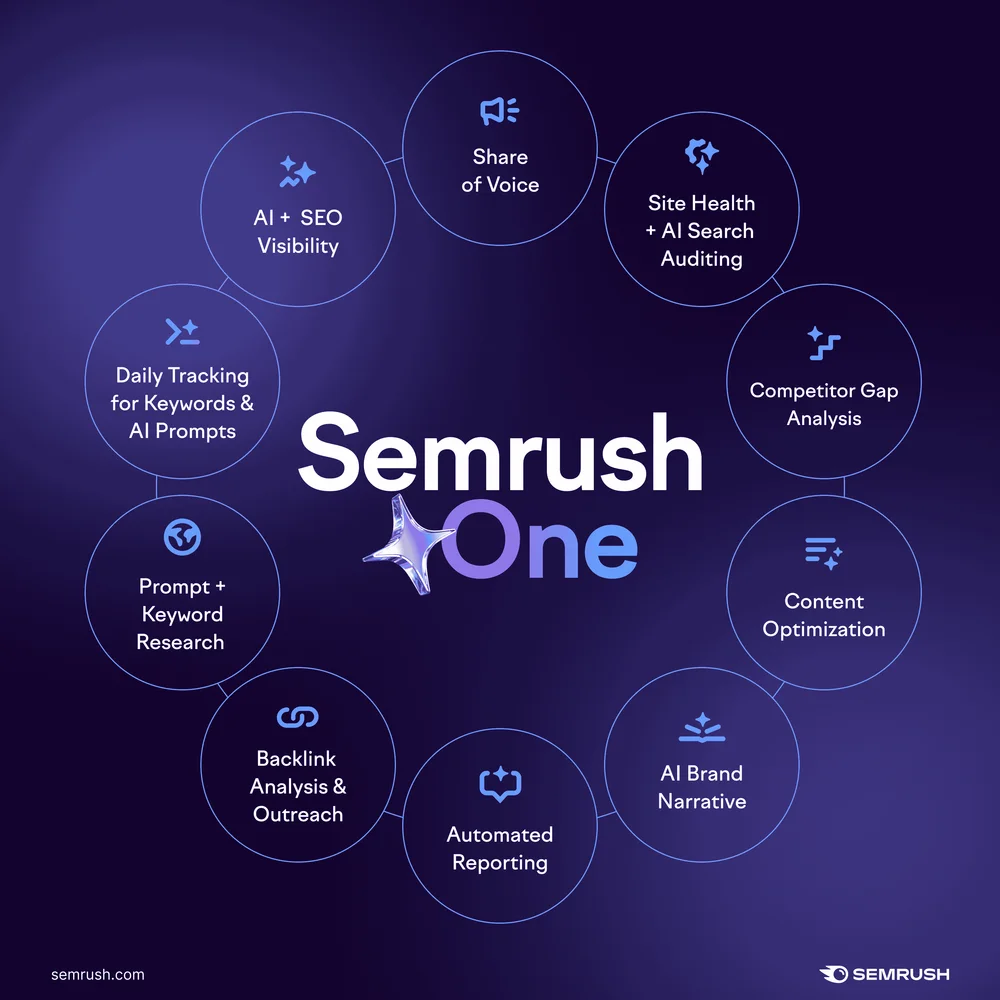
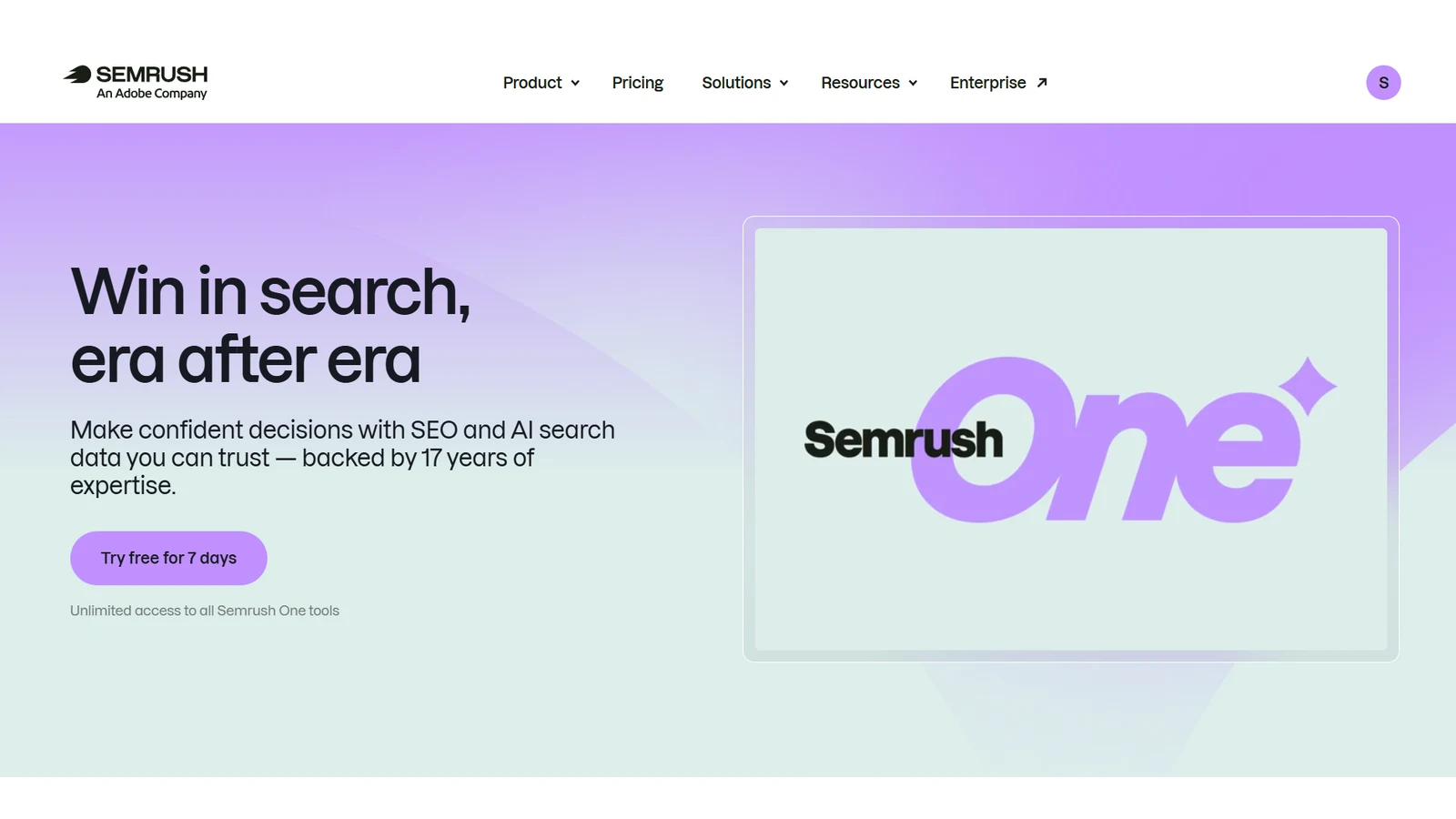
Semrush One bundles the SEO Toolkit and the AI Visibility Toolkit; Topic Finder and the SEO Writing Assistant (Content Toolkit) and Traffic Analytics (Traffic & Market Toolkit) are sold separately. The 7-day free trial is Semrush One's — the AI Visibility Toolkit has no free trial of its own. To build your own two-column map before paying, try Semrush One free for 7 days: its page offers "Unlimited access to all Semrush One tools", "Offer available to new users only", checked on 16 October 2026. Those are Semrush's published terms, not something we tested; none of the answers above came from a Semrush account.
Keyword or prompt? Plan for both
The keyword still matters: it is the only phrasing with search volume, and it is how most people still start. But the prompt is how buyers finish, and in our test it produced a different shortlist at the moment that matters most. Map the keyword, write down the prompt beside it, label the stage, and track the bottom-of-funnel prompts on their own — because that is where the brands in the answer changed with the words.
Try Semrush One free for 7 days
The Keyword Magic Tool for the keyword column and Prompt Research for the prompt column — the SEO Toolkit and the AI Visibility Toolkit together in Semrush One. Free for 7 days for new users.
Try Semrush One free for 7 daysThe 48 answers behind this
- Needs (24): eight categories × three funnel stages, each written once as a short keyword and once as the question a buyer would ask, with the details a person would add. The middle-of-funnel keywords for dating apps and car insurance name two brands ("hinge vs bumble", "geico vs progressive"), as people search them.
- Answers: ChatGPT with web search forced on, logged out, US English, through DataForSEO's LLM scraper; the model reported itself as
gpt-6every time. One answer per question, collected on 16–17 October 2026 (21:11–08:29 UTC). - Brands: the brand entities ChatGPT tagged in each answer, counted at company level ("Spot Pet Insurance" and "Spot" count once). Generic terms it sometimes tags — "homeowners insurance", a professional association — are left out.
- Search volume: Google US monthly volume for all 48 questions from DataForSEO Labs, 17 October 2026.
- What this cannot show: one answer per question, on one day, and ChatGPT's answers move between runs. The location in Finding 3 is whatever ChatGPT inferred for our logged-out session; a real user's answer would use theirs. Eight categories are a sample, not the web.
| Figure | Source | Date |
|---|---|---|
48 answers, brands, sources, hidden searches; model gpt-6 | DataForSEO LLM Scraper (ChatGPT), web search forced, US English | 2026-10-16/17 |
| Search volume for 48 questions | DataForSEO Labs, Google keyword overview, US | 2026-10-17 |
| Every count and percentage above | Our analysis of the saved answers | 2026-10-17 |
| Topic Finder, SEO Writing Assistant and Traffic Analytics descriptions; screenshots | Semrush Knowledge Base | 2026-10-17 |
| Semrush One graphic and trial terms | Creator Accelerator affiliate resources; Semrush One page | 2026-09-26 to 2026-10-16 |
Written by Sohail Akhtar. The saved answers and analysis script can be re-run.
Some links may be affiliate links. We may earn a small commission at no extra cost to you.
Related Articles
Explore more guides and reviews from our experts.