Link-Vetting Metrics, Graded: Which Ones Predicted a ChatGPT Citation Across 801 Citations
Disclosure
This article is promotional content produced as part of the Semrush Creator Accelerator programme. It contains affiliate links to Semrush — if you buy through them we may earn a commission at no extra cost to you — and we may also receive a reward from Semrush for publishing it. All measurements in this article are our own. Semrush did not supply, review or approve the data, and the conclusions we draw are ours.
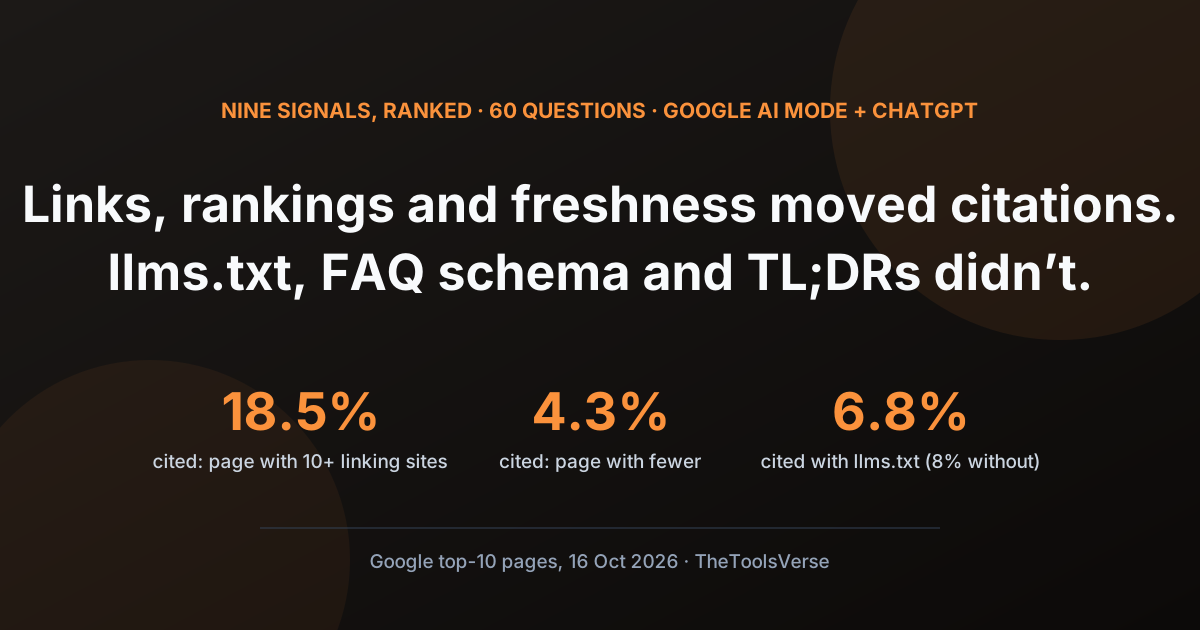
Every link builder runs a prospect through a checklist before paying for a placement: how many sites link to it, what the domain scores, how much traffic it gets, whether it ranks. Those checks were built for Google. Clients are now asking a different question. In uSERP's State of Backlinks report, a survey of 116 SEO professionals updated on 28 September 2026, 79.3% "have been asked by a client or leader to make AI citations a KPI", and 81.9% "believe backlinks influence whether AI engines cite their brand". Only 21.6% track citations as a core KPI; 51.7% track them informally.
Grade your own placements
See which sources AI answers cite in your market — and which cite your competitors but not you — with the AI Visibility Toolkit, then vet those sites' links with Backlink Analytics in the SEO Toolkit. To get both in one subscription, try Semrush One free for 7 days.
So we graded the checklist. We asked ChatGPT 50 questions where link builders' clients compete — "best" lists, head-to-head comparisons and how-to questions about business software and marketing — twice each, on 14 October 2026. We looked up the links, Domain Rank and Google traffic of every page its search turned up, plus Google's top 10 for each question: 1,538 pages on 872 websites, and the 801 citations ChatGPT gave. Then we asked of each vetting check: did the pages ChatGPT cited score better on it than the pages it found and skipped?
The report card
| Vetting check | What ChatGPT did with it | Grade |
|---|---|---|
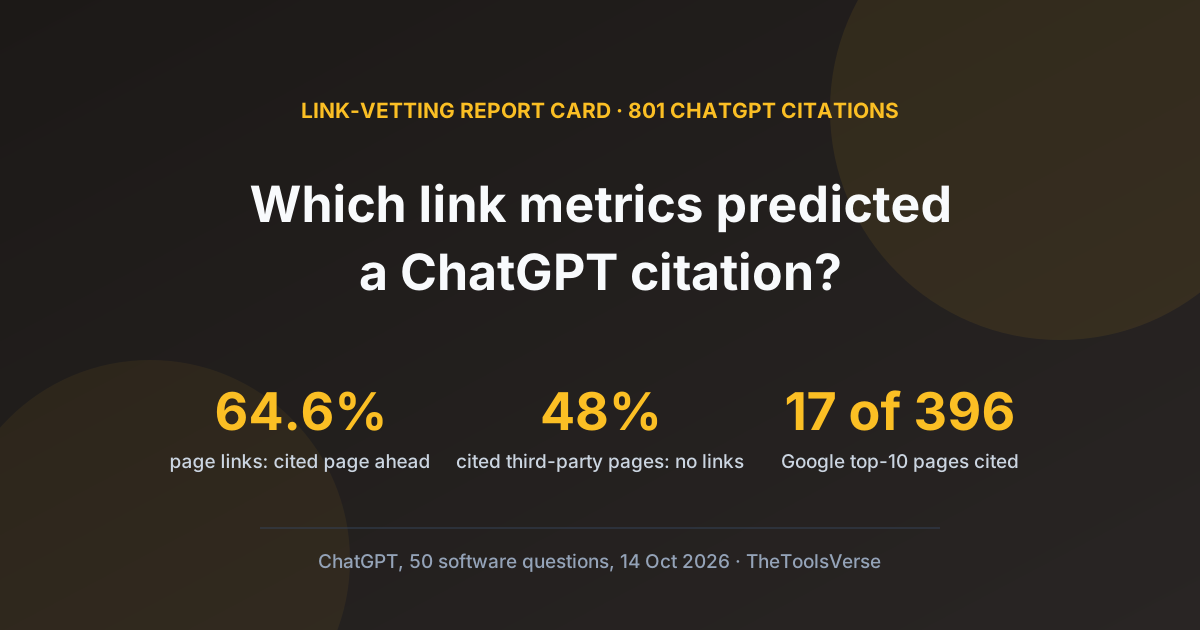
| Websites linking to the exact page | Cited page ahead of the skipped one in 64.6% of same-answer pairs | Keep — check it first |
| Domain Rank (site-wide link score) | Ahead in 62.0%, but cited rates topped out at 47% for Domain Rank 400–499 | A floor, not a target |
| The page's own Google traffic | Ahead in 61.2% | Useful second check |
| The whole site's Google traffic | Ahead in 60.2%; sites above 1 million monthly visits were cited less than mid-sized ones | Mid-sized beats massive |
| Ranks in Google's top 10 for the question | 17 of 396 top-10 pages were cited | Not a proxy |
| A famous domain | Reddit was found 25 times and cited 4 | Found is not cited |
| High score, no audience | 8 "ghost" sites; none was cited | Avoid — but rare |
| Answers the exact question | 81 of the 110 cited pages with no links at all were lists, comparisons or reviews | The check no metric covers |
"Ahead in X%" compares the cited page with each skipped page inside the same answer, so a topic where every page is strong cannot make a metric look good. 50% would mean the check says nothing. Each grade is explained below.
Before grading: set the brand sites aside
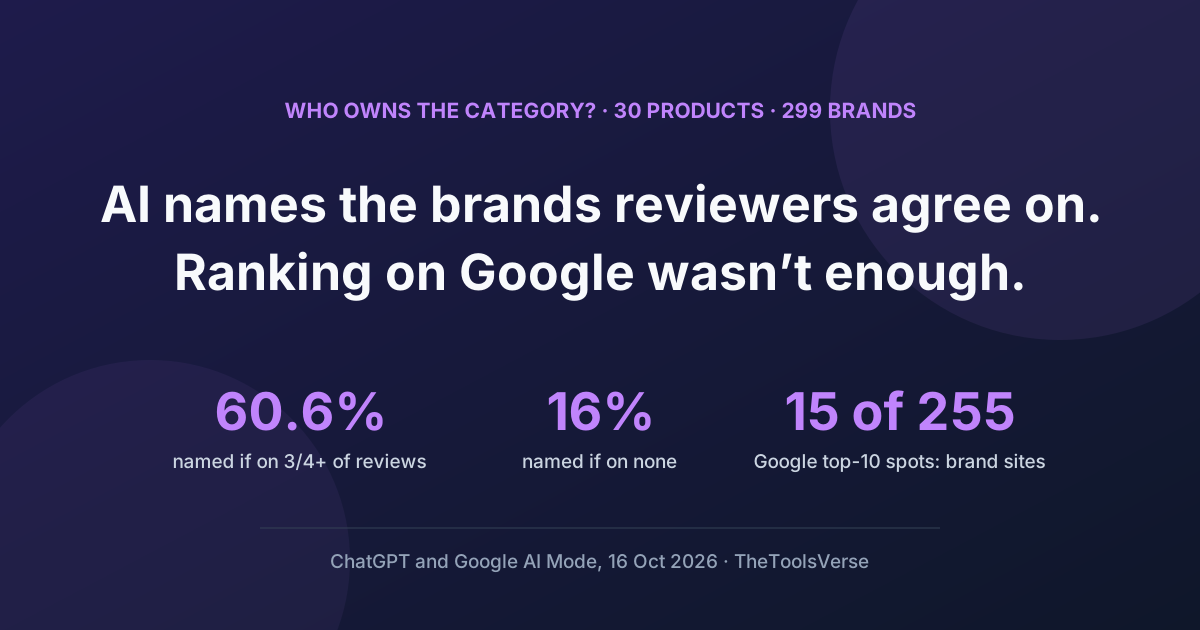
Most of what ChatGPT cited was not a placement anyone could buy. 65.2% of the 801 citations went to the recommended brands' own websites — homepages, pricing, product and help pages — and on head-to-head comparisons the two brands' own sites took 77.1%.
| Share of 801 citations | Median linking websites to the page | |
|---|---|---|
| Brand sites | 65.2% | 1,366 |
| Third-party pages | 34.8% | 1 |
Brand pages carry huge link counts simply because they are the brand, so leaving them in would make links look far more decisive than they are. Every grade on this card is about the third-party pages: reviews, comparison lists, guides, forums and publishers — the pages a link builder can actually get a client onto. ChatGPT's search turned those up 946 times across the 100 answers and cited 279 of them (29.5%).
Links to the exact page: keep it, and check it first
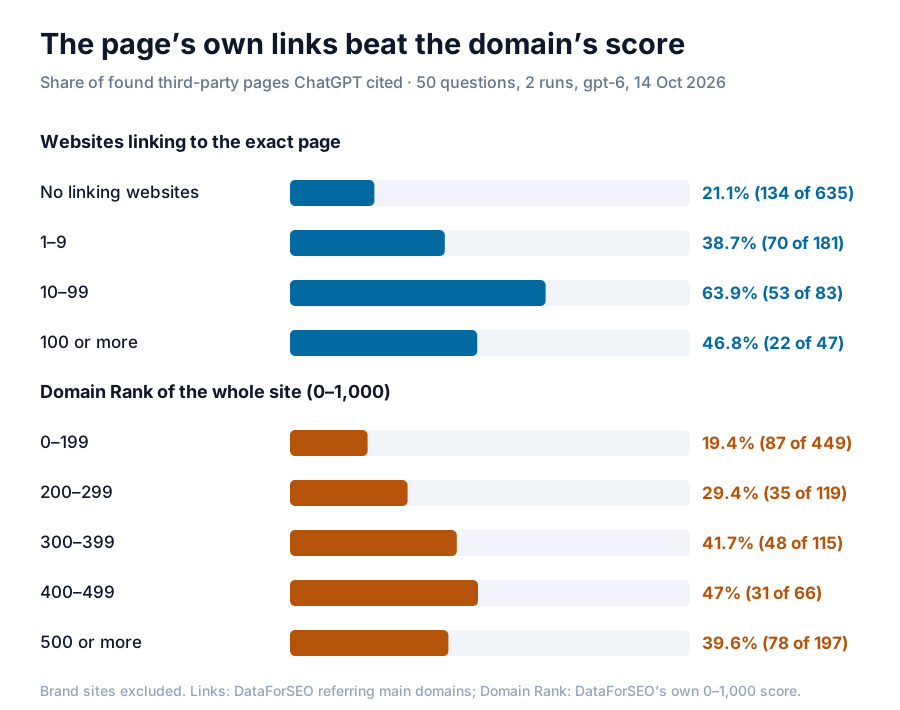
This was the best check on the card. ChatGPT cited 21.1% of the third-party pages it found that had no linking websites, 38.7% of those with one to nine, and 63.9% of those with ten to 99. Within the same answer, the cited page had more linking websites than the skipped page in 64.6% of the 2,162 pairs we could compare — the highest of the five metrics we tested.
Two limits. The rise stopped at a few dozen linking websites: pages with 100 or more were cited 46.8% of the time, in a group of only 47. And the medians are tiny — the median cited third-party page had 1 linking website, the median skipped one had 0. "More links" here means some links to that exact page, not a huge profile.
For vetting: look up the linking websites of the page your client's mention will sit on, not just the domain's homepage. A page that other sites already link to is a page that gets read.
Domain Rank: a floor, not a target
Domain Rank — DataForSEO's 0–1,000 site-wide link score, the equivalent of the DR or DA in most vetting sheets — leaned the right way: the cited page's site scored higher in 62.0% of pairs. But the cited rate rose only to a point. Pages on sites with a Domain Rank of 400–499 were cited 47% of the time; above 500 the rate fell back to 39.6%.
uSERP's respondents had already demoted it. Asked for the one factor that decides whether a link is worth acquiring, 58.6% chose topical relevance of the linking page, 13.8% the linking page's real organic traffic, 12.1% whether AI engines frequently cite the domain — and only 11.2% Domain Rating or Domain Authority. As the report puts it, "Relevance has replaced authority scores as the first filter." Our data agrees with the order: the page's own links beat the domain's score.
For vetting: use the domain score to throw out the obvious junk, then stop. Past the middle of the range it did not buy more citations.
Traffic: mid-sized beats massive
Both traffic checks pointed the right way — the cited page was ahead on its own Google traffic in 61.2% of pairs and on its site's traffic in 60.2% — but the pattern by site size was not "bigger is better":
| Site's estimated monthly Google visits | Share of found pages ChatGPT cited |
|---|---|
| Under 1,000 | 21.7% |
| 1,000–10,000 | 14.7% |
| 10,000–100,000 | 49% |
| 100,000–1 million | 57.3% |
| Over 1 million | 31.2% |
For vetting: a real audience matters — sites under 10,000 visits a month were cited least — but the best band was 100,000 to 1 million visits, not the giants above it.
"It ranks in Google's top 10": not a proxy
Link builders often treat a page that ranks for the target query as the safest placement. For ChatGPT it was not: only 17 of the 396 pages in Google's top 10 (4.3%) were cited for the same question, and only 2.8% of the pages ChatGPT cited were in that top 10 (10% shared a domain with it). We saw the same gap from the other side in our Bing study: ChatGPT searches with its own, longer queries, not the words a person types.
For vetting: a Google ranking for the head term tells you about Google. Whether the page appears in AI answers is a separate check — and it is the one the client is now asking about.
A famous domain: found far more often than cited
Big names appeared in ChatGPT's search results again and again, and were passed over most of the time. Reddit threads were among the pages it found 25 times and were cited 4 times; Capterra pages were found 27 times and cited 9 times; TechRadar 31 times and cited 12 times.
For vetting: a placement on a household-name domain is not a citation by default. Check whether that page is the one AI answers cite for your client's prompts.
High score, no audience: the ghost-site test
Practitioners worry about sites with a high authority score and no real readers. In our panel they were rare: across 787 root domains, Domain Rank and estimated Google traffic moved closely together (Spearman correlation 0.844). Only 8 had a Domain Rank of 400 or more and fewer than 1,000 monthly visits; 4 of them were among the pages ChatGPT found and none was cited.
For vetting: eight sites is too few to prove anything, but the direction is clear — a high score with no audience did not earn a single citation here.
The check no metric covers: does the page answer the question?
Here is the result that should change the checklist most. 134 of the 279 third-party citations (48%) went to pages with no linking websites at all, and 73.1% to pages with fewer than ten. That was 110 distinct pages on 84 sites:
- 81 of the 110 were "best", comparison, review or alternatives pages by their URL — the same format as the question being asked.
- 58 of the 84 sites had an estimated fewer than 100 Google visits a month, and their median Domain Rank was 85.5 out of 1,000.
None of those pages would pass a metrics-first vetting sheet, and ChatGPT cited them anyway, because they answered the exact question. That is the factor uSERP's respondents put first — topical relevance — and it is the one no link metric scores. Links raise the odds; they are not the entry ticket.
From "we believe the link worked" to a citation report
46.6% of uSERP's respondents say they have seen a backlink lead to an AI citation "with before and after evidence". The rest are where the 79.3% of KPI requests land. A monthly report that answers them needs four columns per placement: the placement page, the prompts it should help with, whether AI answers cite it, and whether the client is mentioned when it does.
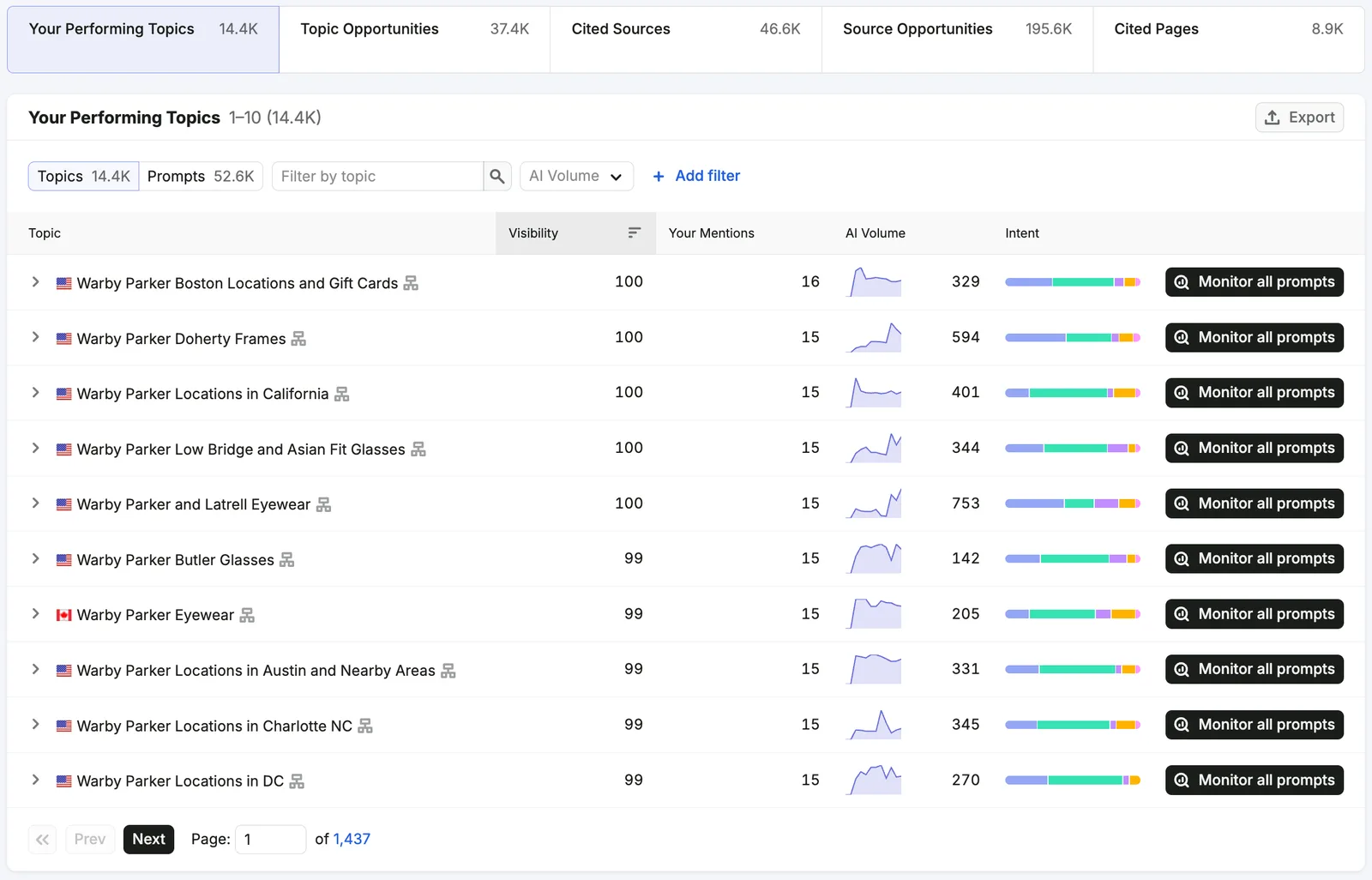
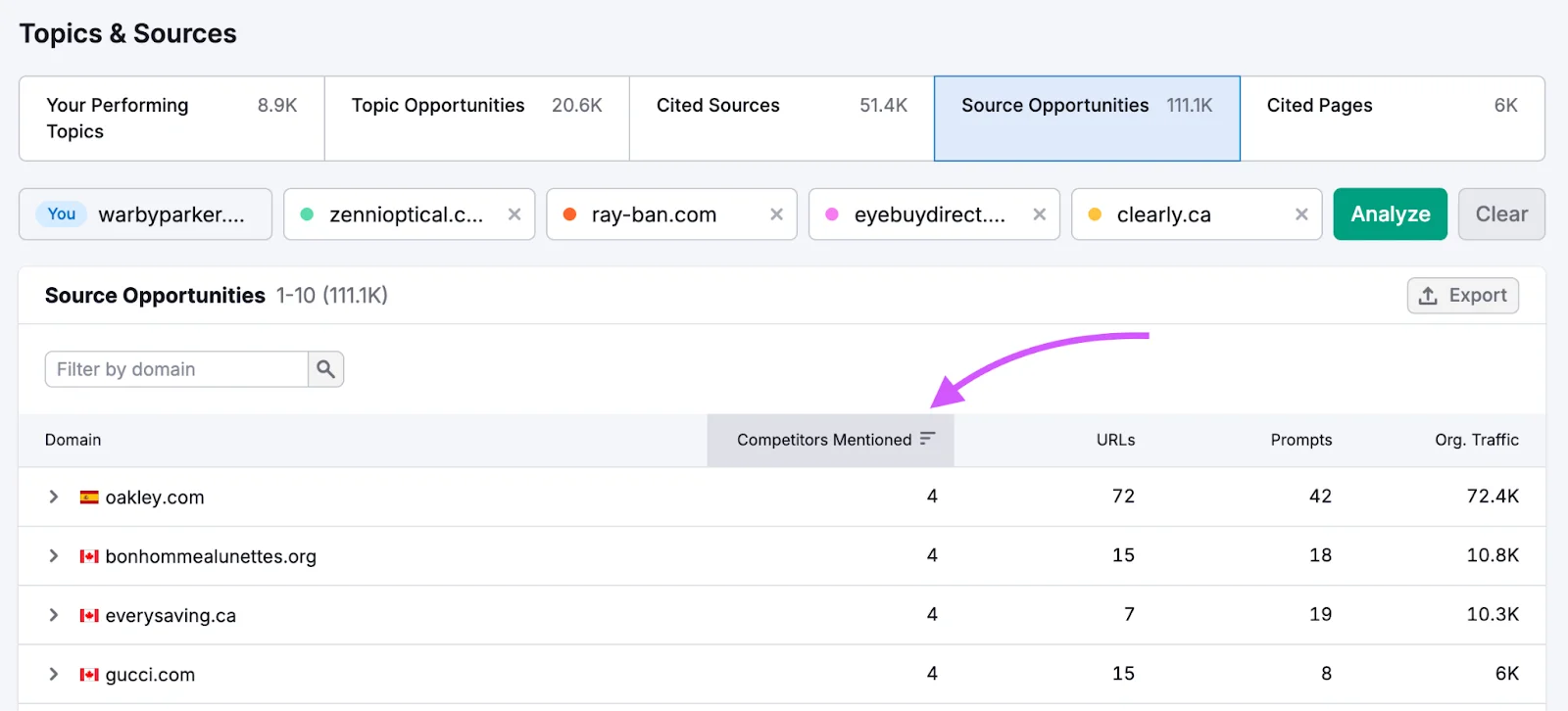
Find the pages AI already cites. Visibility Overview, in the AI Visibility Toolkit, splits a market into tabs. Cited Sources lists "The websites that AI systems reference when generating answers"; Source Opportunities lists "Sources frequently cited in AI answers that mention your competitors but not your brand." That second tab is a prospect list ranked by what AI already reads — the opposite of a vendor's DR list.
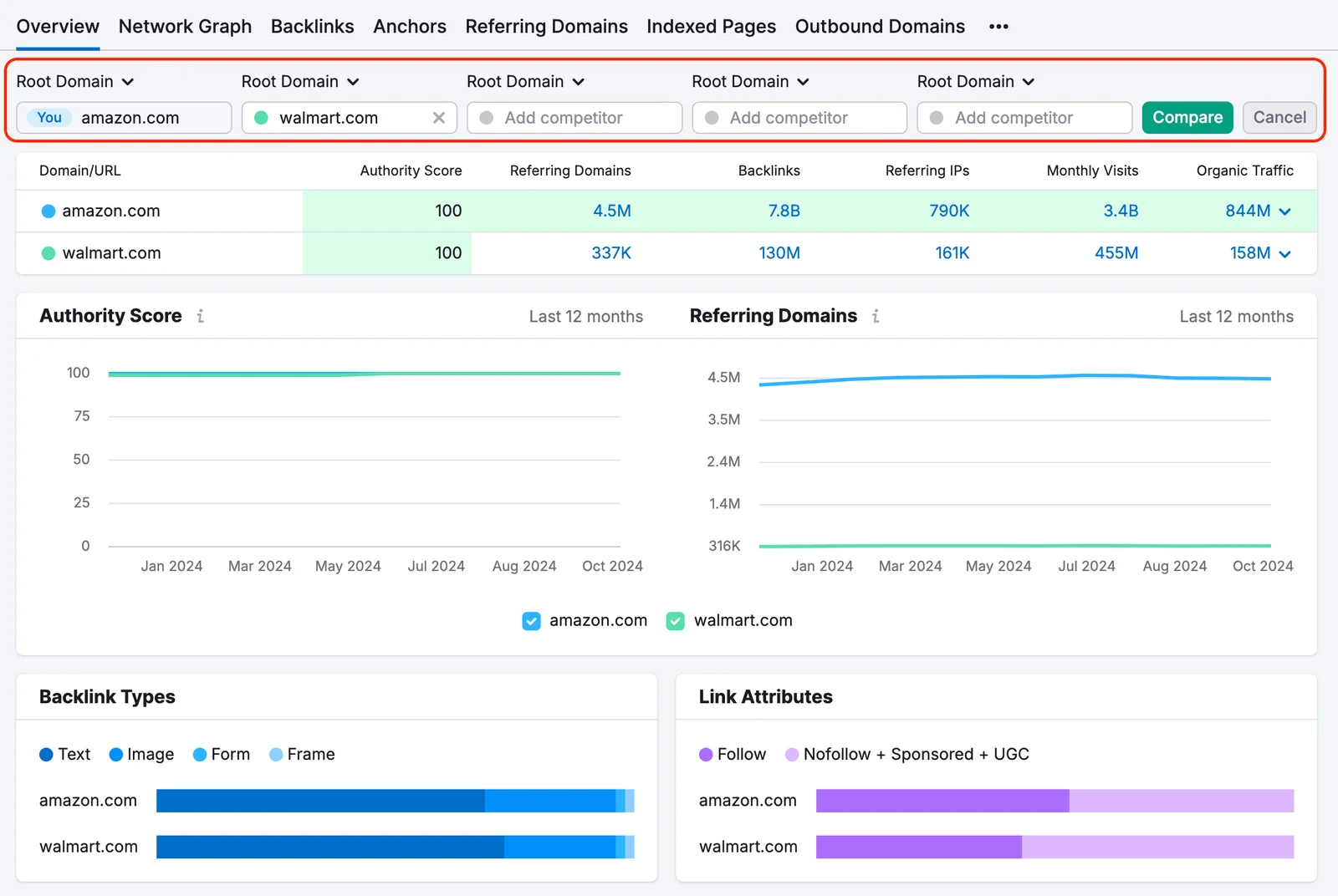
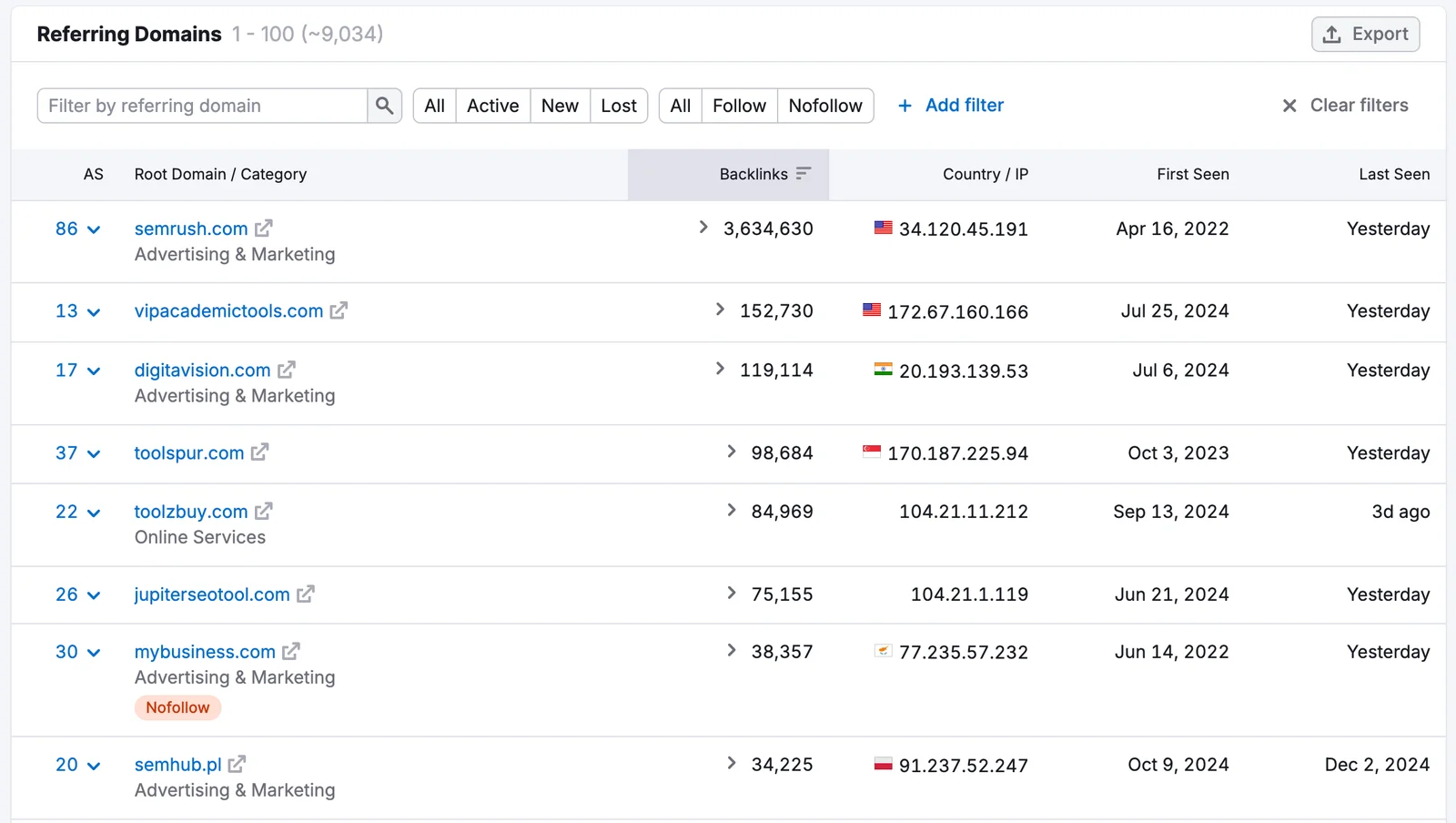
Vet the prospect's page, not its homepage. Backlink Analytics compares up to five domains by "Total referring domains, backlinks, referring IPs, monthly visits (from Traffic & Market), and organic traffic (from Organic Rankings)" — links and real traffic side by side, the two checks that graded best above. Its Backlinks report goes down to the page: "Each backlink is shown with the page Authority Score, Source page title and URL (the page the link was found on)".
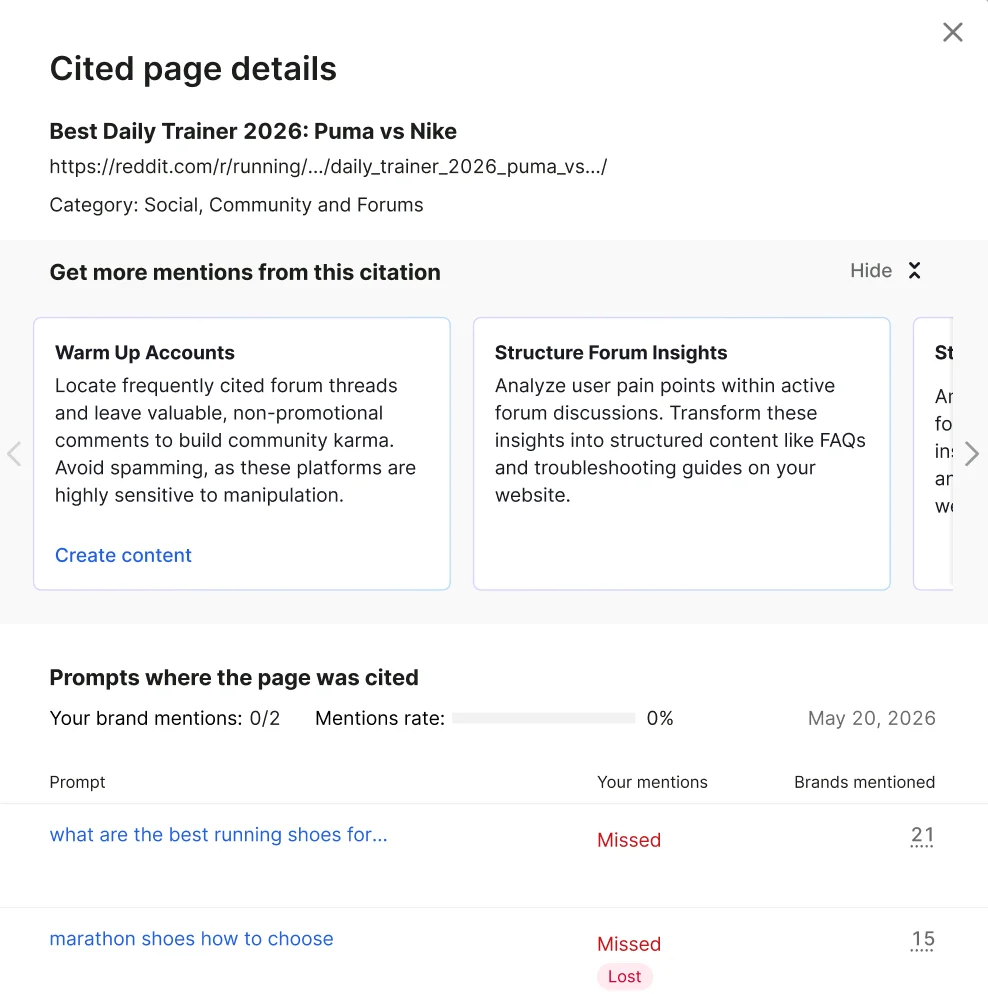
Log the citation, placement by placement. Prompt Tracking "lets you monitor your brand's daily visibility for a custom set of prompts across AI search platforms". Its Sources report shows which pages AI platforms cite for your prompts, and opening one shows "Each prompt the page was cited for, with your mention status per prompt (including lost mentions), the number of brands mentioned, and the overall mention rate for the page" — one row of the monthly report, already filled in. Visibility Overview's Citations metric counts "The number of AI responses that cite your domain as a source".
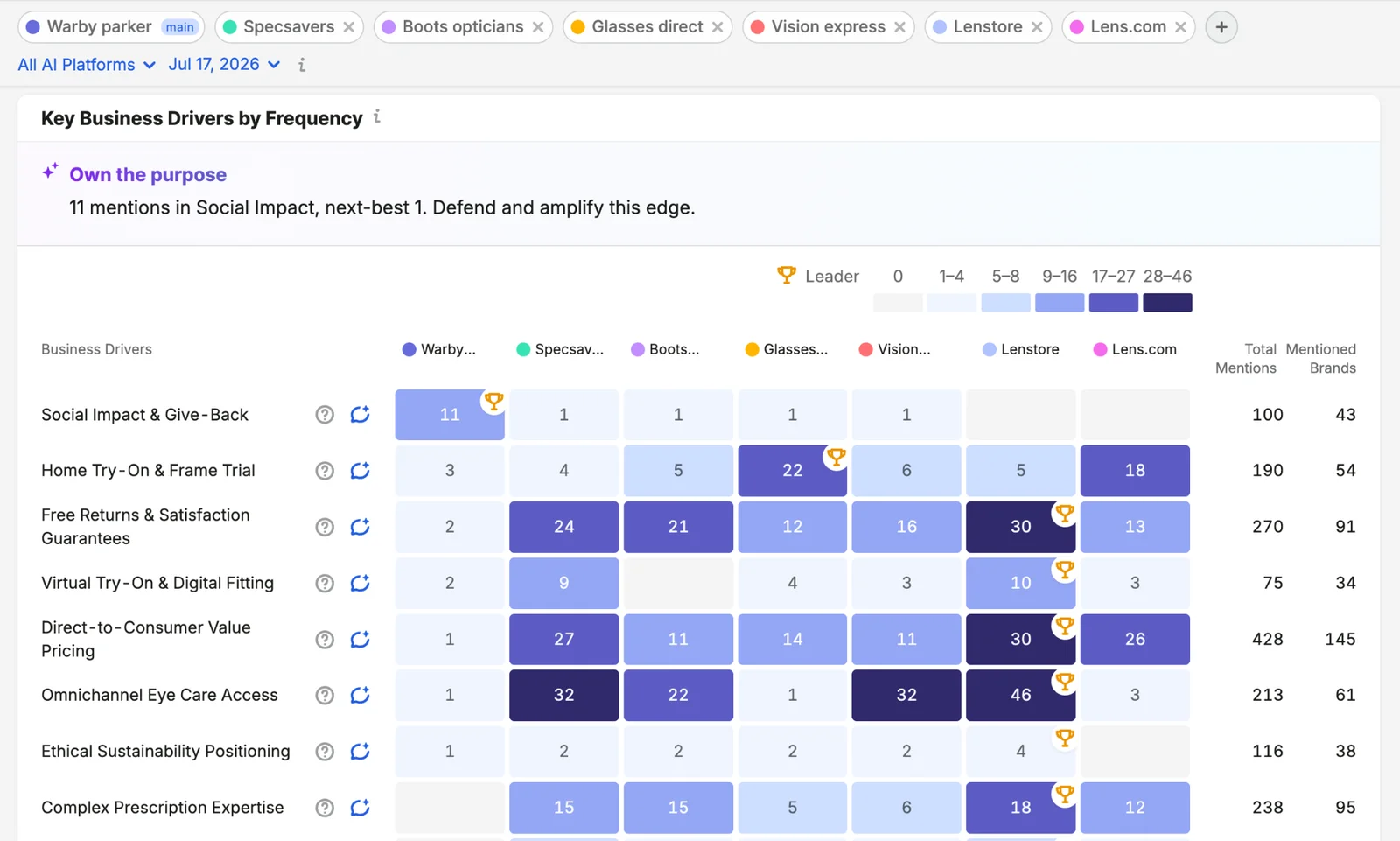
Show how the brand is described, not just whether it appears. The Brand Performance reports "show you how AI platforms perceive and position your brand against competitors", including the narrative drivers — "like brand visibility and trusted sources" — behind it. A full-feature mention on a cited page should move those; a footer link should not.
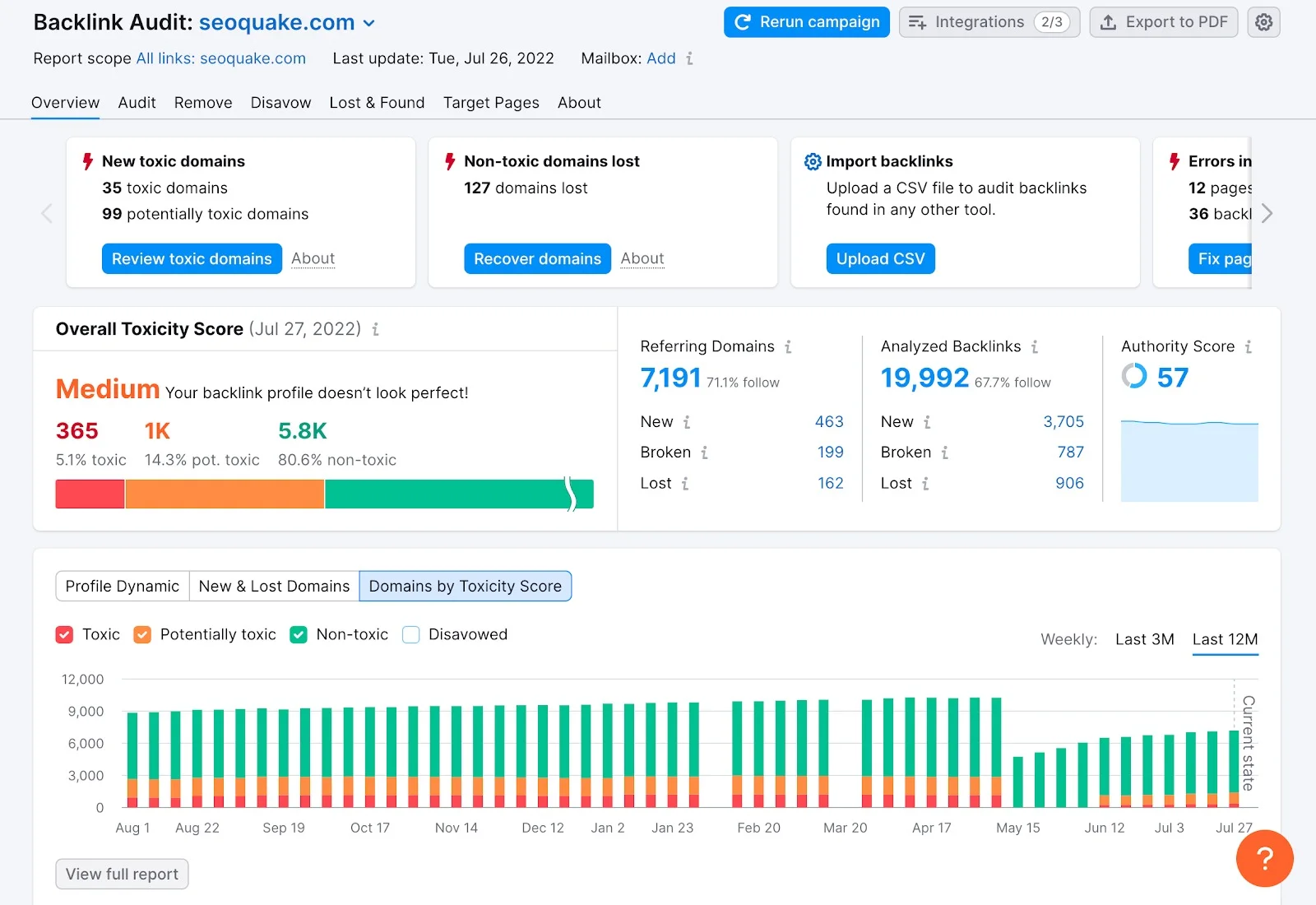
Catch the placements that disappeared. Backlink Audit has a Lost and Found report that "manages all of the domains in your profile that have been newly acquired, lost or broken"; "Lost domains are domains that you have lost backlinks from within the past 3 months". A paid placement that is gone cannot be cited.
The citation side lives in the AI Visibility Toolkit and the link side in the SEO Toolkit; Semrush One bundles both, and the 7-day free trial is Semrush One's — the AI Visibility Toolkit has no free trial of its own. To build the first report before paying, try Semrush One free for 7 days: its page offers "Unlimited access to all Semrush One tools", "Offer available to new users only", checked on 16 October 2026. Those are Semrush's published terms, not something we tested; none of the data above came from a Semrush account.
The new vetting sheet
If you rebuild your prospect sheet from this report card, the columns change order:
- Does the page answer a question your client's buyers ask AI? The check that explained most of the zero-link citations.
- Do other websites link to that exact page? The best-graded metric.
- Does the site have a real audience? Sites with 100,000 to 1 million monthly visits were cited most; the giants above them, less.
- Is the domain score above your floor? Use it to reject, not to rank.
- Is the page already cited for those prompts — or for a competitor? Then log it every month.
87.1% of uSERP's respondents "would keep building links even if Google removed them as a ranking signal". Our data says they are right to: links to the page raised the odds of a citation. But the placement that gets cited is a page that answers the buyer's question, and the only way to prove it worked is to track the citation, not the score.
Try Semrush One free for 7 days
The AI Visibility Toolkit's Source Opportunities and Prompt Tracking to see which pages AI answers cite, and the SEO Toolkit's Backlink Analytics and Backlink Audit to vet and keep the links — together in Semrush One. Free for 7 days for new users.
Try Semrush One free for 7 daysWhere every grade comes from
- Questions (50): 24 "best" lists (CRM, email marketing, payroll, help desk…), 12 head-to-head comparisons (Mailchimp vs Klaviyo, QuickBooks vs Xero…) and 14 how-to and what-is questions. We left out comparisons of SEO tools, so the sponsor of this article could not shape the sample.
- Answers: ChatGPT with web search forced on, logged out, US English, through DataForSEO's LLM scraper; the model reported itself as
gpt-6every time. Two runs, 14 October 2026, 17:17–17:32 UTC — 100 answers, 801 citations. A page counts as found if it is in the search results returned with the answer or among its sources, and cited if it is a source. - Brand sites vs third-party pages: a brand site is the website of a product the answers recommended anywhere in the panel; brand names as ChatGPT wrote them were matched to domains and every match checked by hand.
- Metrics: linking websites (referring main domains) and page rank per page from DataForSEO's Backlinks API; Domain Rank (0–1,000, DataForSEO's own score, not Semrush's Authority Score) per site; estimated monthly US Google traffic per page and per site from DataForSEO Labs. Tracking suffixes were removed from URLs before lookup.
- What this cannot show: association, not cause — pages with more links may also be older, better or better known. One engine on one day, and ChatGPT's citations change from run to run, as our study of repeated questions found. One link index: another will give different counts. And we could not score relevance directly; the URL check (81 of 110) is a hint, not a measurement.
| Figure | Source | Date |
|---|---|---|
100 answers, 801 citations; model gpt-6 | DataForSEO LLM Scraper (ChatGPT), web search forced, US English | 2026-10-14 17:17–17:32 UTC |
| Google top 10 for the 50 questions (396 pages) | DataForSEO SERP API, Google organic, US English, desktop | 2026-10-14 17:15–17:17 UTC |
| Linking websites, page rank, Domain Rank; estimated Google traffic | DataForSEO Backlinks API (bulk); DataForSEO Labs bulk traffic estimation | 2026-10-14 |
| Every percentage and count in the report card and the sections above | Our analysis of the saved answers, SERPs and metrics | 2026-10-14 |
| 116 respondents; 79.3%; 81.9%; 21.6%; 51.7%; 46.6%; 58.6% / 13.8% / 12.1% / 11.2%; 87.1%; "Relevance has replaced authority scores as the first filter." | uSERP, "The State of Backlinks in 2027: What 116 SEO Leaders Say" (Jeremy Moser), updated 28 September 2026 | 2026-09-28 |
| Visibility Overview tabs, Cited Sources, Source Opportunities, Citations; Prompt Tracking and cited page details; Brand Performance; Backlinks Overview and Backlinks report; Backlink Audit Lost and Found | Semrush Knowledge Base | 2026-10-14, 2026-10-16 |
| Screenshots (Semrush's illustrations), the Semrush One graphic and trial terms | Semrush Knowledge Base; Creator Accelerator affiliate resources; Semrush One page | 2026-09-26 to 2026-10-16 |
Written by Sohail Akhtar. The saved answers, SERPs, link metrics and analysis scripts can be re-run.
Some links may be affiliate links. We may earn a small commission at no extra cost to you.
Related Articles
Explore more guides and reviews from our experts.