Who Owns the Category in AI Answers? We Mapped 30 Products and 299 Brands
Disclosure
This article is promotional content produced as part of the Semrush Creator Accelerator programme. It contains affiliate links to Semrush — if you buy through them we may earn a commission at no extra cost to you — and we may also receive a reward from Semrush for publishing it. All measurements in this article are our own. Semrush did not supply, review or approve the data, and the conclusions we draw are ours.
Ask an AI assistant for "the best air purifier" and it names a handful of brands. The brands it names are the ones it associates with the category — and that association is not the same thing as a Google ranking. In a study of 1,094 categories Semrush ran with Kevin Indig, published on 20 July 2026, "Only 15.2% of the 1,094 categories we analyzed had a clear owner", and "Domain-level metrics like Authority Score and organic traffic correlate with ownership only about half the time."
We wanted to see what that looks like category by category, so we drew a map.
Find out who owns your category
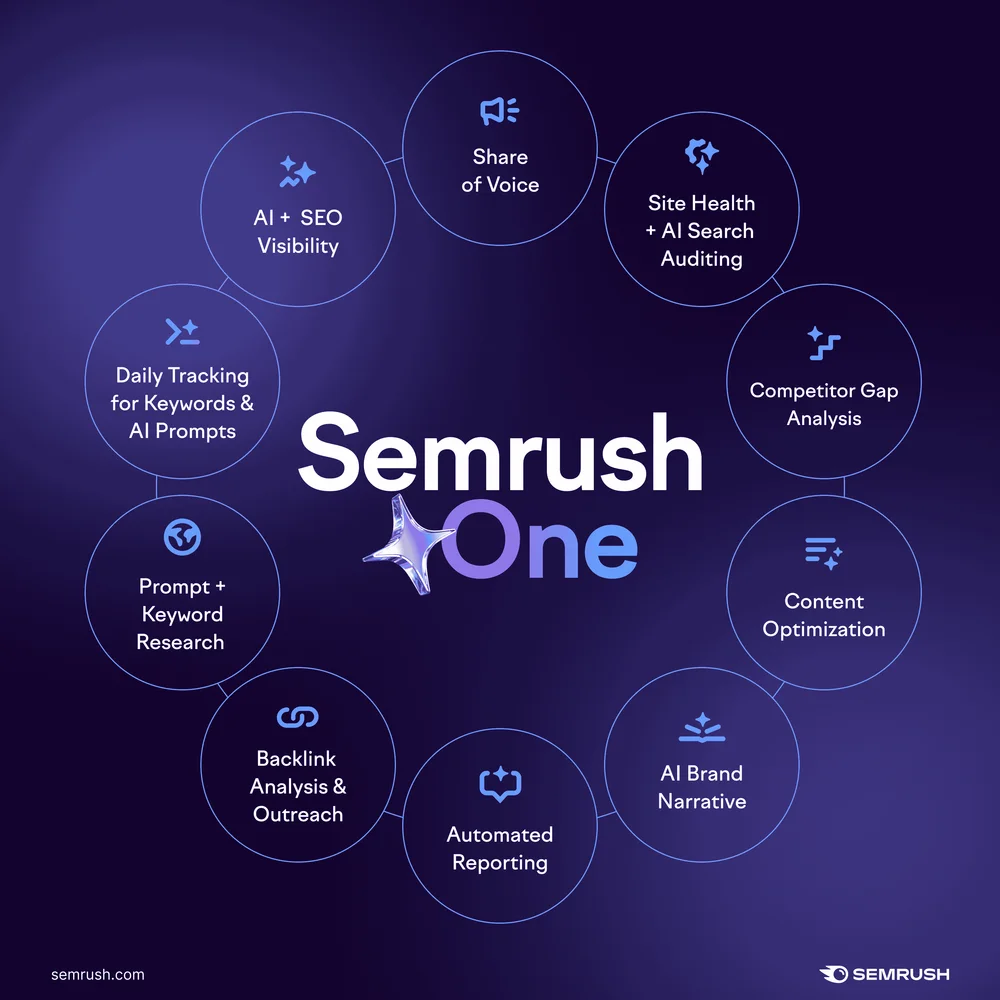
See which brands AI answers name in your market — and the prompts and sources where competitors appear and you don't — with the AI Visibility Toolkit. To get it with the SEO and content tools in one subscription, try Semrush One free for 7 days.
The map: 30 categories, and who AI names first
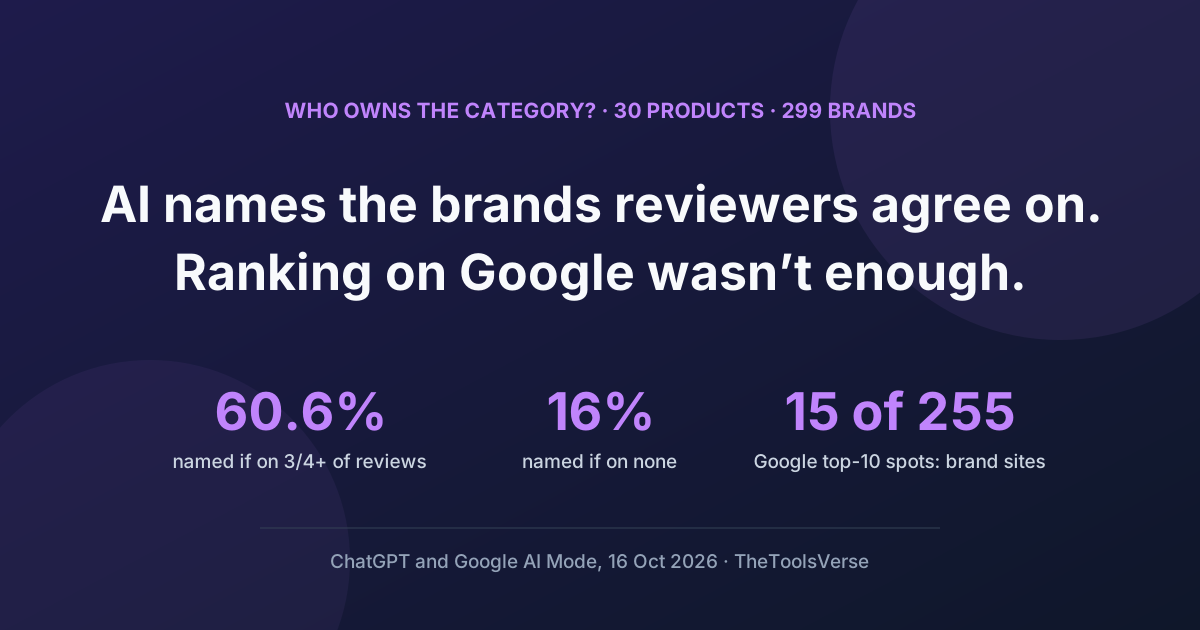
On 16 October 2026 we asked ChatGPT and Google's AI Mode for "best [category]" in 30 consumer categories — from robot vacuums and air fryers to antivirus and tax software. For each category we also listed its main brands (299 in all), collected Google's top 10 for the category name and for "best [category]", and read every review page in that second top 10 — every page that was not a shop, a brand's own site or a video, 137 in all — to see which brands each one mentions.
A category is owned here when both engines named the same brand first; contested when they did not.
| Category | ChatGPT named first | AI Mode named first | Most-mentioned in independent reviews | Verdict |
|---|---|---|---|---|
| Cordless Vacuum | Dyson | Dyson | Dyson, Shark (5 of 5) | Owned |
| Air Purifier | Coway | Coway | Coway, Winix (7 of 7) | Owned |
| Noise Cancelling Headphones | Sony | Sony | Bose, Sennheiser (4 of 4) | Owned (not by the review favourite) |
| E-reader | Amazon Kindle | Amazon Kindle | Amazon Kindle, Kobo (5 of 5) | Owned |
| Smart Thermostat | ecobee | ecobee | ecobee, Google Nest, Sensi (4 of 4) | Owned |
| Electric Toothbrush | Philips Sonicare | Philips Sonicare | Philips Sonicare, Oral-B (4 of 4) | Owned |
| Stand Mixer | KitchenAid | KitchenAid | KitchenAid (6 of 6) | Owned |
| Blender | Vitamix | Vitamix | Vitamix, Ninja, KitchenAid (4 of 4) | Owned |
| 3D Printer | Bambu Lab | Bambu Lab | Prusa, Creality (4 of 4) | Owned (not by the review favourite) |
| Gaming Headset | Audeze | Audeze | SteelSeries, Razer (7 of 7) | Owned (not by the review favourite) |
| Bluetooth Speaker | JBL | JBL | JBL, Bose, Ultimate Ears (5 of 5) | Owned |
| Electric Scooter | Segway | Segway | Segway (5 of 5) | Owned |
| Antivirus Software | Bitdefender | Bitdefender | Bitdefender, Norton, Avast +1 (6 of 6) | Owned |
| Tablet | Apple | Apple | Apple, Samsung, Amazon +1 (4 of 4) | Owned |
| Streaming Device | Roku | Roku | Roku, Apple, Amazon +1 (4 of 5) | Owned |
| Robot Vacuum | Dreame | eufy | Roborock (4 of 4) | Contested |
| Wireless Earbuds | Sony | Apple | Apple, Bose (6 of 6) | Contested |
| Mesh Wi-Fi System | Netgear | TP-Link | TP-Link, Netgear, eero +2 (4 of 4) | Contested |
| Air Fryer | Cosori | Ninja | Instant, Ninja, Cuisinart (4 of 4) | Contested |
| Portable Power Station | EcoFlow | Jackery | EcoFlow, Jackery (3 of 3) | Contested |
| Baby Monitor | Momcozy | Nanit | VTech (4 of 4) | Contested |
| Smart Lock | Schlage | Yale | Yale, Lockly, Aqara (4 of 5) | Contested |
| Soundbar | Sonos | Samsung | Sonos, Samsung (6 of 6) | Contested |
| Office Chair | Steelcase | Staples Hyken | Herman Miller, Steelcase, Sihoo (2 of 2) | Contested |
| Standing Desk | FlexiSpot | Uplift | FlexiSpot, Uplift, Fully +7 (1 of 2) | Contested |
| Carry-on Luggage | Samsonite | Away | Samsonite, Travelpro, Delsey (2 of 4) | Contested |
| Rice Cooker | Zojirushi | Aroma | Zojirushi (4 of 5) | Contested |
| Tax Software | IRS Free File | TurboTax | TurboTax, H&R Block, TaxAct (4 of 4) | Contested |
| Meditation App | Headspace | Insight Timer | Headspace, Calm, Insight Timer (6 of 6) | Contested |
| Dishwasher | Bosch | Miele | Bosch, Whirlpool, Maytag (3 of 3) | Contested |
"Most-mentioned" counts the independent review pages that name the brand anywhere on the page; ties are listed together. "Named first" is the first of the category's brands to appear in the answer's text.
15 of the 30 categories were owned, and in 12 of them the owner was the brand the reviews mentioned most (alone or tied). The other 15 were contested: ChatGPT and AI Mode put different brands first.
The pattern behind the map: brands the reviews agree on
Across all 299 brands, being named followed one signal more than any other — how many of the independent review pages mentioned the brand.
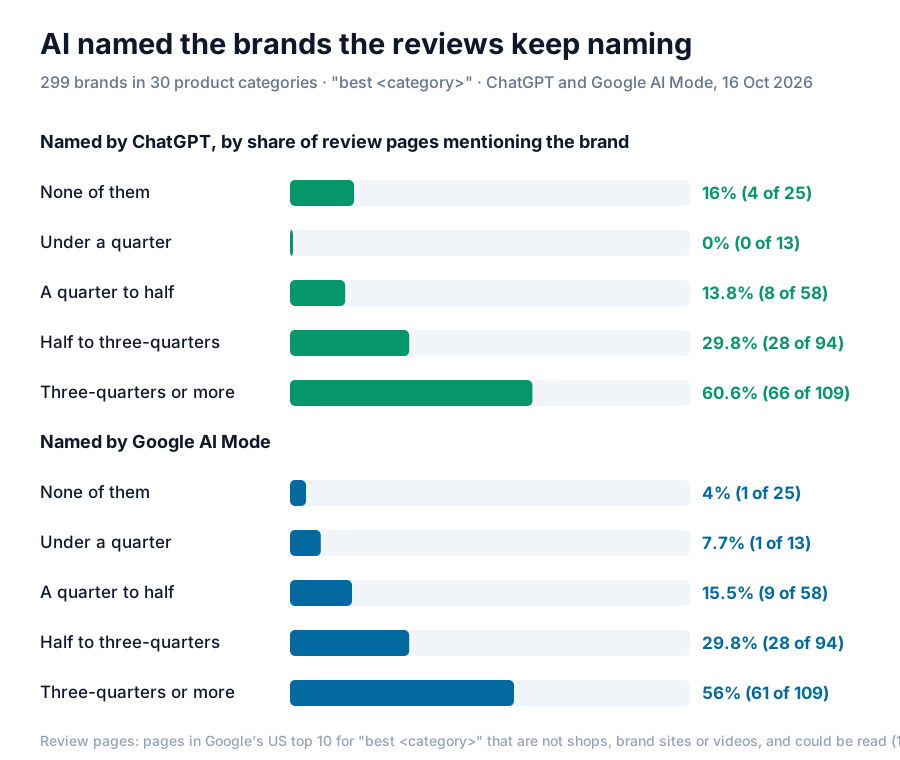
| Review pages mentioning the brand | Brands | Named by ChatGPT | Named by AI Mode |
|---|---|---|---|
| None | 25 | 16% | 4% |
| Under a quarter | 13 | 0% | 7.7% |
| A quarter to half | 58 | 13.8% | 15.5% |
| Half to three-quarters | 94 | 29.8% | 29.8% |
| Three-quarters or more | 109 | 60.6% | 56% |
The jump comes at the top. Below half the review pages, ChatGPT named a brand roughly one time in eight (12 of 96); on three-quarters or more of them, three times in five. The brand the reviews mentioned most was named by ChatGPT and by AI Mode in 28 of the 30 categories each, and it was the first brand named by each engine in 21.
Four brands that ranked on Google and weren't named
Brands' own websites were rare on Google's first page for these searches. For the 30 category names ("robot vacuum", "air fryer"), brand sites held 15 of the 255 top-10 results, in 11 categories; for "best [category]", 7 of 251. Other websites — review sites, publishers, shops, Reddit and YouTube among them — held the rest.
Where a brand did rank, it was often not the brand AI named:
| Category | Brand whose own site ranked | Google position (category name) | On review pages | Named by ChatGPT | Named by AI Mode | Named first by both |
|---|---|---|---|---|---|---|
| E-reader | Boox | #1 | 4 of 5 | No | Yes | Amazon Kindle (5 of 5) |
| Electric toothbrush | quip | #2 | 3 of 4 | No | No | Philips Sonicare (4 of 4) |
| 3D printer | Flashforge | #3 | 1 of 4 | No | No | Bambu Lab (3 of 4) |
| Stand mixer | Cuisinart | #4 | 5 of 6 | No | No | KitchenAid (6 of 6) |
In the 11 categories where a brand's own site ranked for the category name, the highest-ranking brand was named by ChatGPT in 7 and by AI Mode in 7 — and named first by ChatGPT in 4 and by AI Mode in 3. In each of the four cases above, the brand both engines named first was on every review page, or nearly every one.
Where agreement among reviewers wasn't enough
The pattern is strong, not absolute. Creality was mentioned on all 4 readable review pages for 3D printers and neither engine named it; both put Bambu Lab first. In gaming headsets, both engines named Audeze first while the reviews mentioned SteelSeries and Razer most. And in 15 categories the two engines simply disagreed on who comes first — Dreame or eufy for robot vacuums, Sony or Apple for earbuds, Samsonite or Away for carry-on luggage. Agreement among reviewers raises the odds of being named; it does not decide the order.
Ranking still counts — just not on its own
This is not a case against SEO. The 21 brands whose own site appeared in either Google top 10 were named by ChatGPT 66.7% of the time, against 33.1% for the 278 that did not. Ranking and being named go together. But only 21 of 299 brands ranked at all for these searches — the first page belonged to reviewers and retailers — so for most brands, the way into the answer runs through what other sites say about them. The SEO Toolkit covers the ranking half; the rest of this article is about the other half.
A playbook for claiming your category
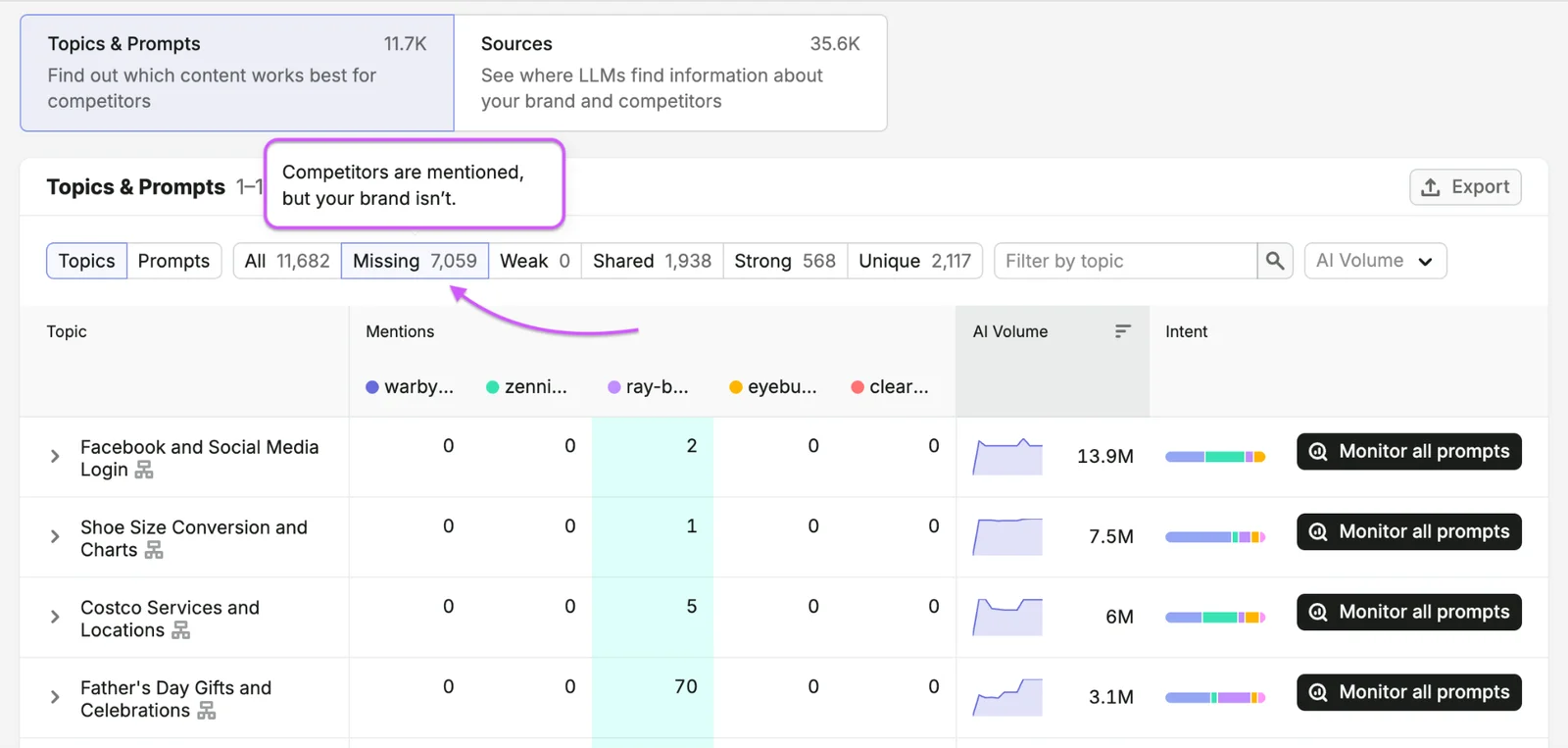
1. Find out who AI names in your category today. The AI Visibility Toolkit, its Knowledge Base says, helps you "Analyze your brand perception and sentiment compared to competitors." Its Competitor Research report flags "Topics or prompts where competitors are cited but your brand is not" — the contested and open rows of your own map.
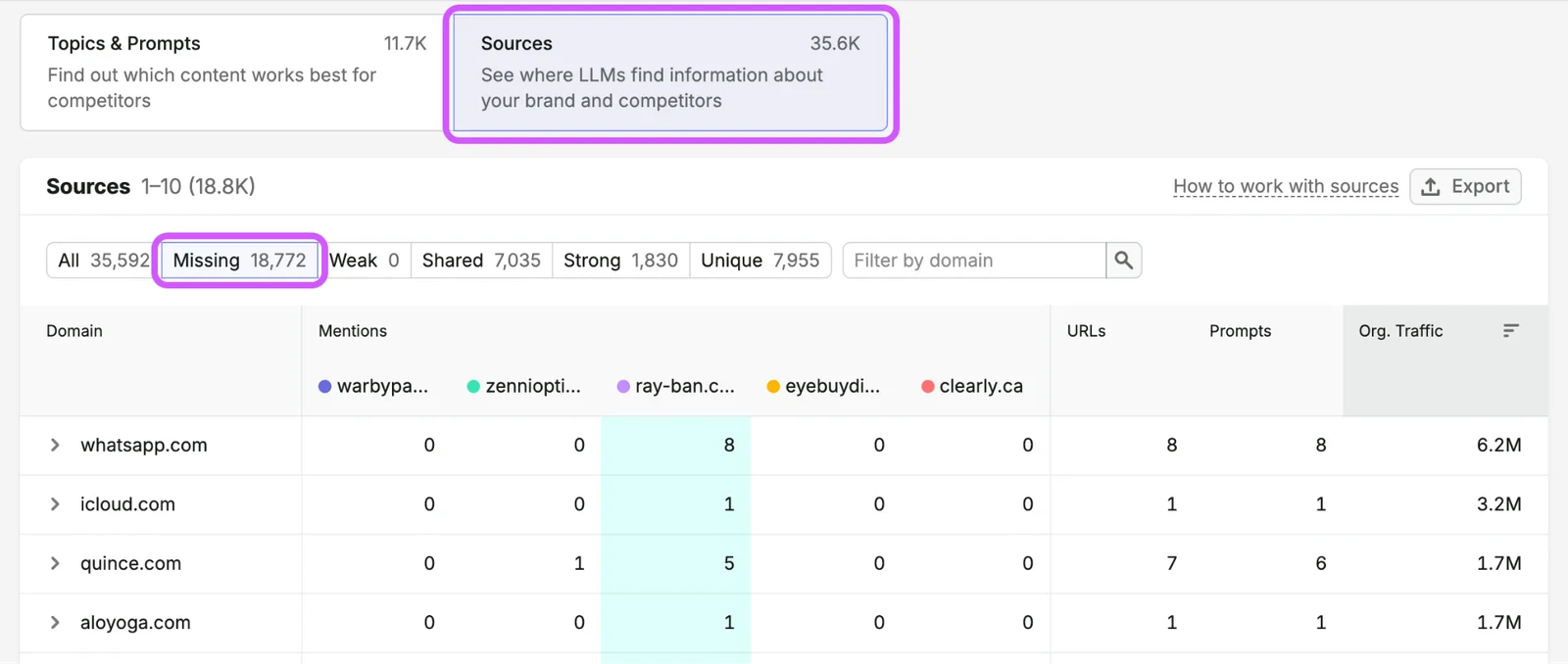
2. List the pages that decide it. The same report's Sources view, with the Missing filter, shows the external domains cited in AI answers that mention your competitors but not you; the Knowledge Base adds that "These sources represent potential outreach or content opportunities to boost your own visibility." In our map, those were the review pages: the brands on three-quarters of them were the brands that got named.
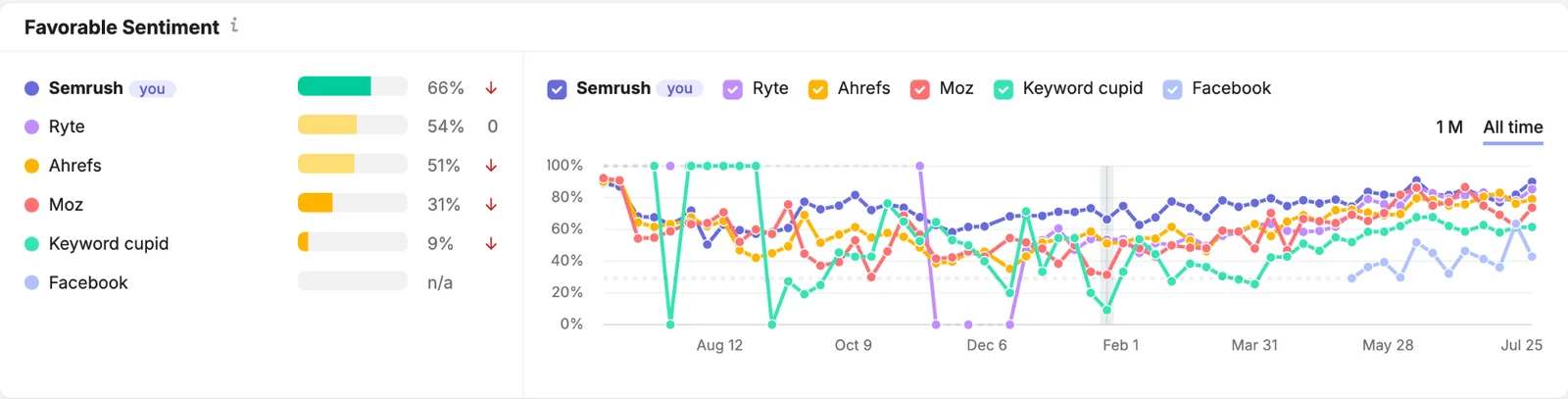
3. Check how you are described when you are named. The Brand Performance reports let you "Analyze the sentiment (favorable vs. general) associated with your brand in AI conversations", against the competitors you choose.
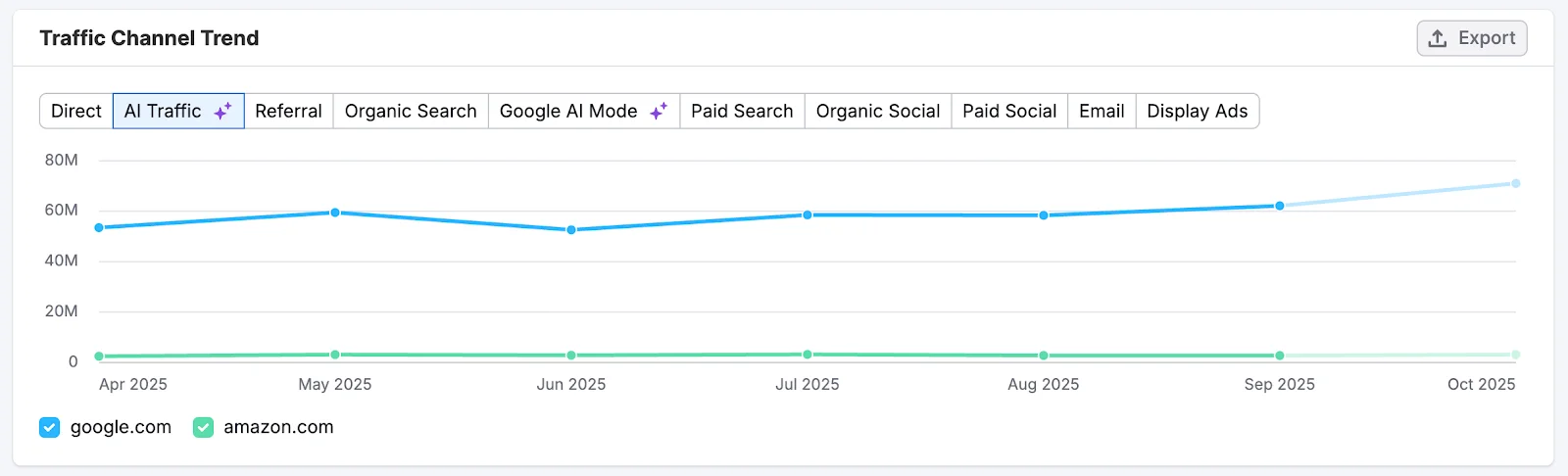
4. Decide which review sites are worth the outreach. Traffic Analytics, in the Traffic & Market Toolkit, breaks a site's visits down by channel, including "AI Traffic: Traffic from AI assistants such as ChatGPT, Gemini, or Claude" — useful for choosing between review sites that look alike from the outside.
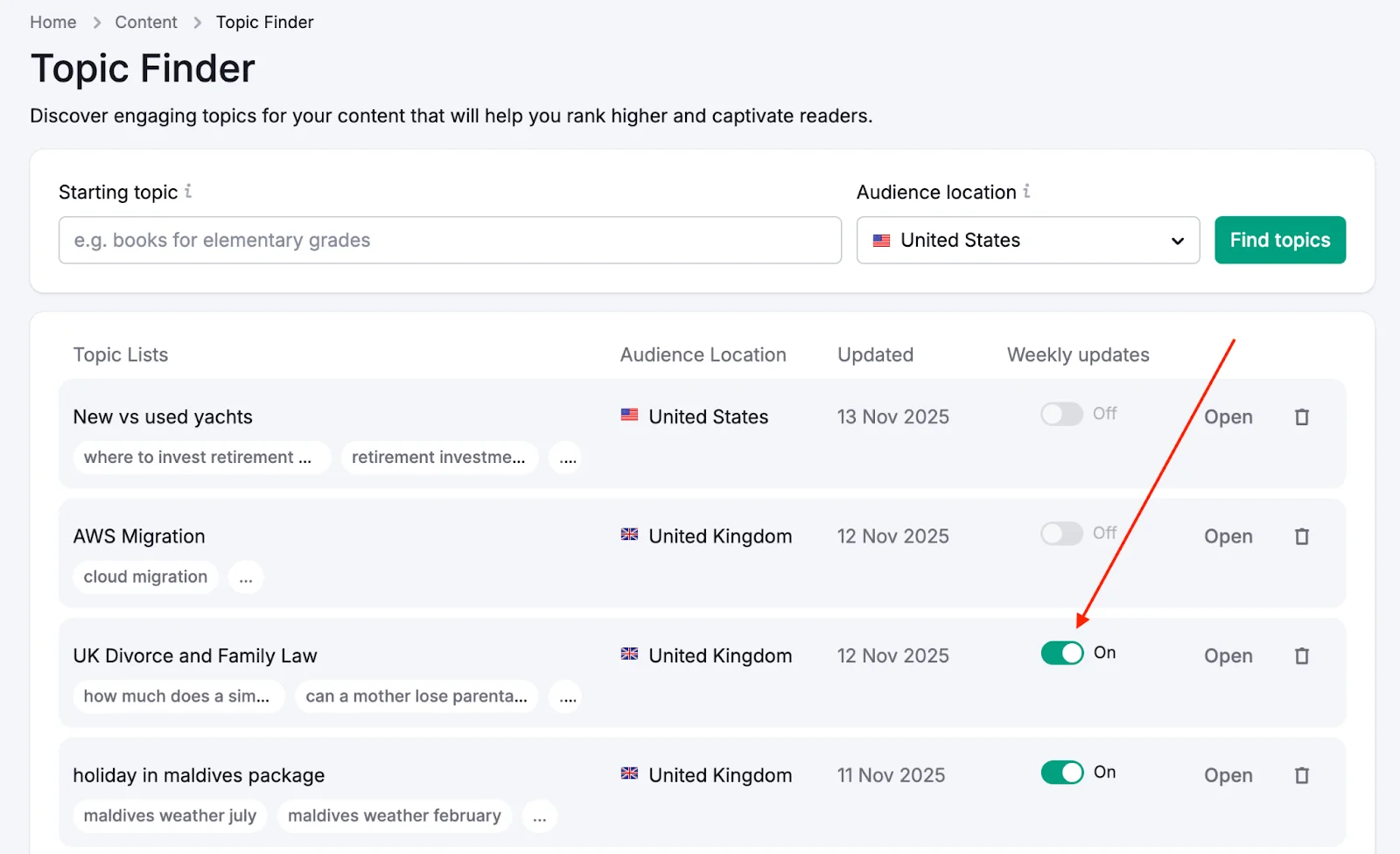
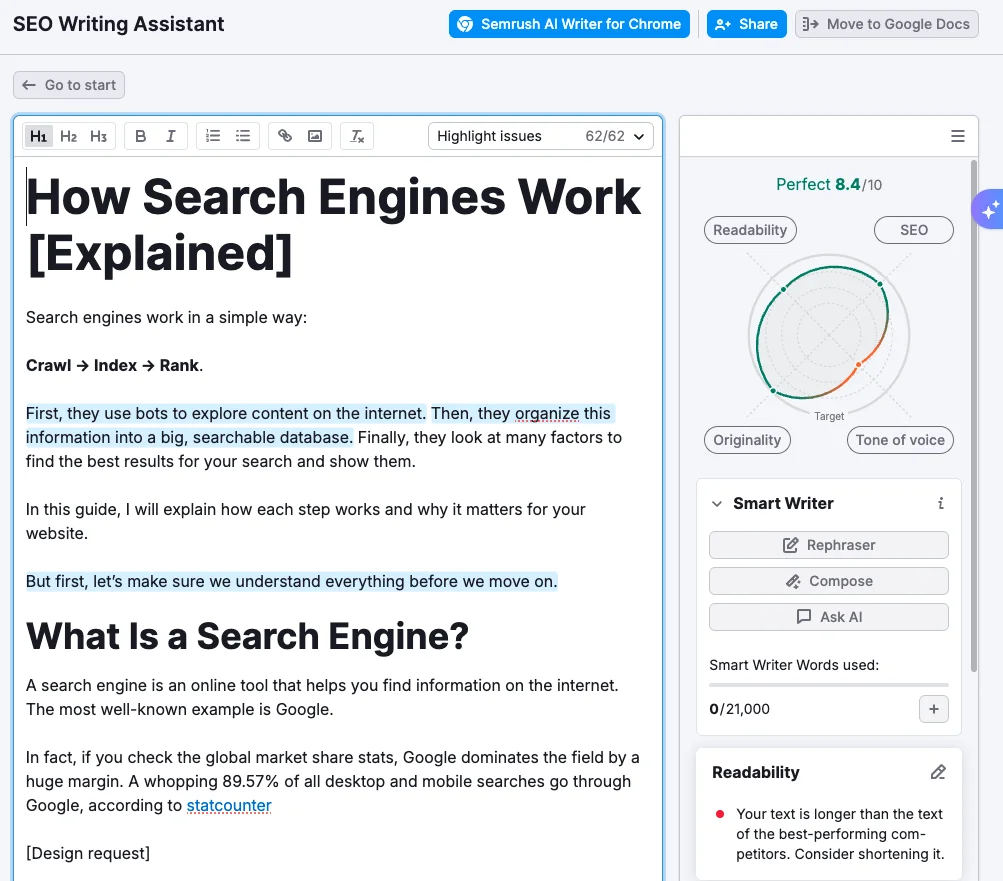
5. Give reviewers something consistent to say. Topic Finder "helps you discover high-potential content topics backed by real-time SEO data", and "With Topic Rotation, the tool automatically refreshes these suggestions weekly" — the guides and comparisons your category is missing. The SEO Writing Assistant "analyzes your content in real time and provides recommendations to improve SEO performance, readability, originality, and tone of voice", so the claims that carry your name read the same way everywhere.
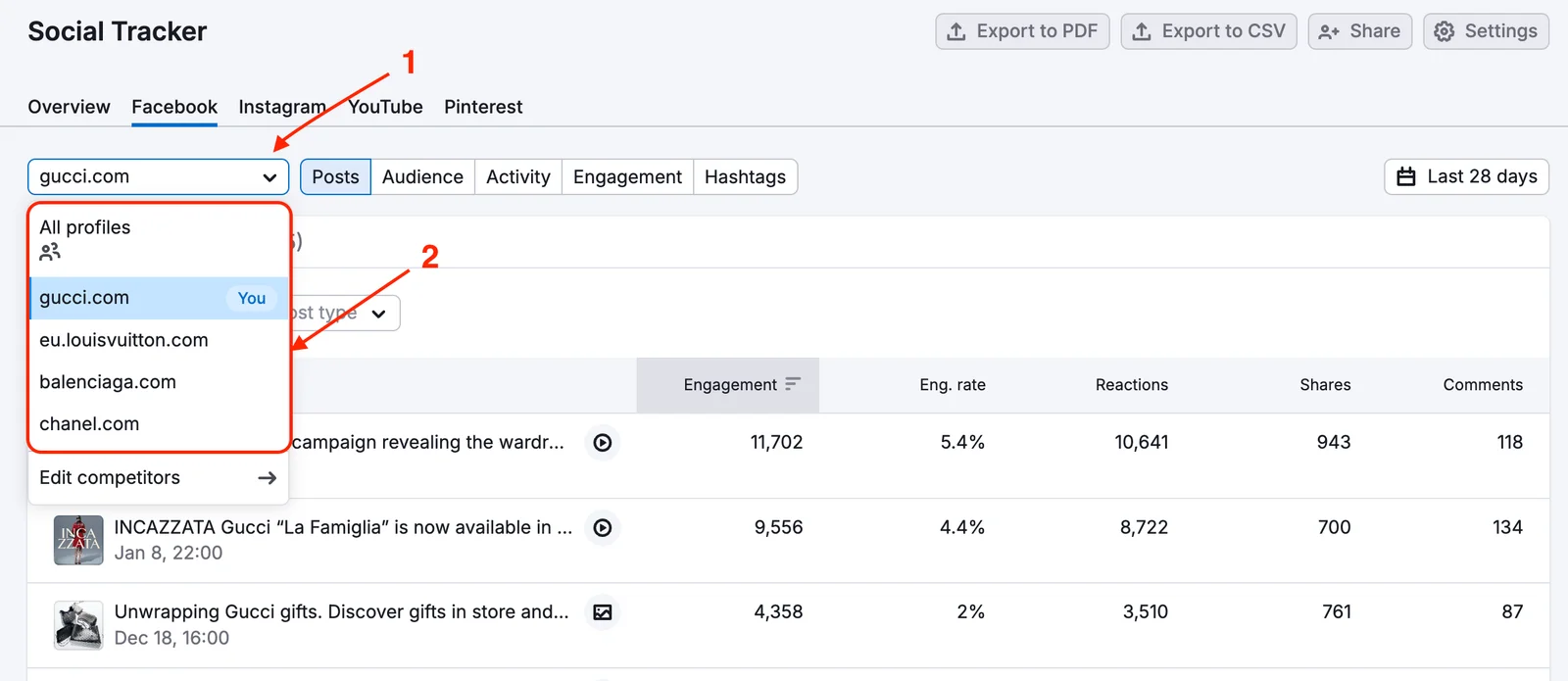
6. Watch the other surfaces that talk about you. Social Tracker "lets you monitor your competitors' social media performance and benchmark it against your own on a centralized dashboard."
The AI Visibility Toolkit, the content tools and the SEO Toolkit can be bought separately; Semrush One bundles them, and the 7-day free trial is Semrush One's — the AI Visibility Toolkit has no free trial of its own. To map your own category before paying, try Semrush One free for 7 days: its page offers "Unlimited access to all Semrush One tools", "Offer available to new users only", checked on 16 October 2026. Those are Semrush's published terms, not something we tested; none of the data above came from a Semrush account.
What owning a category means in AI answers
In 30 product categories, the brands AI named were, above all, the brands the independent reviews agreed on. ChatGPT named three in five of the brands on three-quarters of the review pages, and AI Mode more than half; brands on none were rarely named. A brand's own Google ranking helped, but almost no brands held one, and four that did — Boox, quip, Flashforge and Cuisinart — were passed over for the brand every reviewer mentioned. Half the categories had a clear owner across both engines; the other half are still contested, which is where the work pays off soonest.
Try Semrush One free for 7 days
The AI Visibility Toolkit to see who AI names in your category and which sources decide it, plus Traffic Analytics, Topic Finder, the SEO Writing Assistant and Social Tracker for the third-party side — together in Semrush One. Free for 7 days for new users.
Try Semrush One free for 7 daysHow we built the map
- Categories (30) and brands (299): consumer product and app categories chosen so that none overlaps another study of ours. For each, a fixed list of its main brands (7–12), plus any brand either engine named. Brand names that are ordinary words (Shark, Calm, Instant) count only when capitalised; some brands are matched by product line ("Kindle", "AirPods", "Galaxy Buds"), because reviews mostly use "Amazon" or "Apple" as a shop or a platform.
- Answers: "best [category]" in ChatGPT (web search forced, logged out, US English, DataForSEO's LLM scraper; model reported as
gpt-6) and in Google AI Mode (US English, DataForSEO), one answer each, 16 October 2026. A brand is named if it appears anywhere in the answer, and named first if it appears before the category's other brands. - Google: the US top 10 (desktop) for the category name and for "best [category]", 16 October 2026. A brand ranks if its own website is in either top 10; results on shops (Amazon, Walmart, Staples, Barnes & Noble) do not count as a brand ranking.
- Review pages: every page in the "best [category]" top 10 that is not YouTube, not a shop (Amazon, Best Buy, Home Depot, Walmart, Lowe's and others list products rather than review them) and not a brand's own site, fetched once — 137 readable; 31 could not be read and are left out. A brand is counted if any of its name forms appears anywhere in the page's text. Most categories had four to seven review pages; office chairs and standing desks had only two, so their rows of the map rest on little evidence.
- What this cannot show: one answer per engine on one day, and the order of brands in an answer moves between runs. Association, not cause: brands the reviews agree on may also be the bigger, better-known brands. And our brand lists, though written to include each category's main names, are ours.
| Figure | Source | Date |
|---|---|---|
30 ChatGPT and 30 AI Mode answers; model gpt-6 | DataForSEO LLM Scraper (ChatGPT) and AI Mode API, US English | 2026-10-16 |
| Google top 10 for 60 searches (255 and 251 results) | DataForSEO SERP API, Google organic, US English, desktop | 2026-10-16 |
| 137 review pages | Fetched directly, with DataForSEO OnPage for pages that refused a plain request | 2026-10-16 |
| Every count and percentage in the map and tables | Our analysis of the saved answers, SERPs and pages | 2026-10-16 |
| "Only 15.2% of the 1,094 categories we analyzed had a clear owner"; "Domain-level metrics…" | Semrush, ChatGPT topic authority study with Kevin Indig | 2026-07-20 |
| AI Visibility Toolkit, Competitor Research, Brand Performance, Traffic Analytics, Topic Finder, SEO Writing Assistant and Social Tracker descriptions; screenshots | Semrush Knowledge Base | 2026-10-15 |
| Semrush One graphic and trial terms | Creator Accelerator affiliate resources; Semrush One page | 2026-09-26 to 2026-10-16 |
Written by Sohail Akhtar. The saved answers, SERPs, review pages, brand lists and analysis script can be re-run.
Some links may be affiliate links. We may earn a small commission at no extra cost to you.
Related Articles
Explore more guides and reviews from our experts.