Which Searches Still Put a Link First? We Triaged 120 Google Results by Intent
Disclosure
This article is promotional content produced as part of the Semrush Creator Accelerator programme. It contains affiliate links to Semrush — if you buy through them we may earn a commission at no extra cost to you — and we may also receive a reward from Semrush for publishing it. All measurements in this article are our own. Semrush did not supply, review or approve the data, and the conclusions we draw are ours.
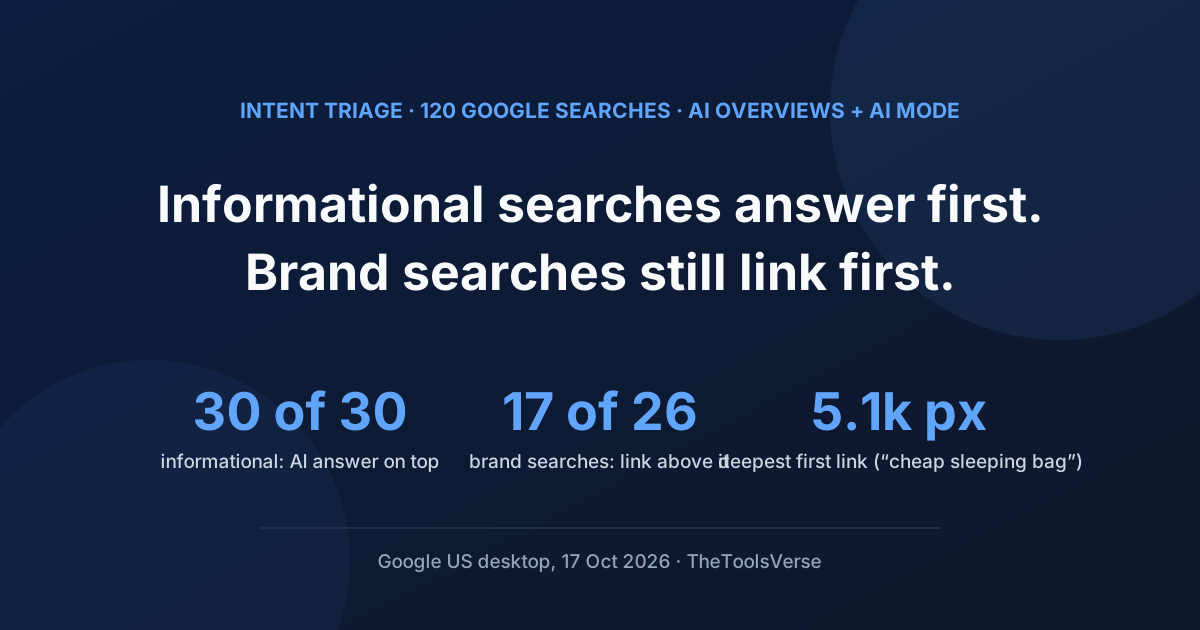
Google keeps moving more answers onto the results page — AI Overviews on top, AI Mode one click away. Traffic reports show the clicks falling, but not which searches they are falling on. So instead of counting clicks, we looked at the page itself: for 120 searches, what does a person see before the first organic link, and how far down is it?
Measure the answers, not just the rankings
Track how your brand shows up in Google AI Mode, ChatGPT and Gemini answers with Prompt Tracking in the AI Visibility Toolkit. To get it with rank tracking in one subscription, try Semrush One free for 7 days.
How we triaged 120 searches
We picked six everyday niches — hiking and camping, parenting, learning to code, home insurance, wedding planning and moving house — and wrote five searches in each for four intents:
- Informational: "how to swaddle a baby", "what does homeowners insurance cover"
- Commercial: "best convertible car seat", "u-haul vs penske"
- Transactional: "buy trekking poles", "cheap movers", "graco car seat price"
- Navigational: "alltrails login", "zola registry", "usps change of address"
On 17 October 2026 we loaded each one on Google (US, desktop, AI Overviews loaded) and recorded the on-screen position of everything on the page, and asked the same 120 questions of Google AI Mode. One screen here means 900 pixels — about what a laptop browser shows before you scroll.
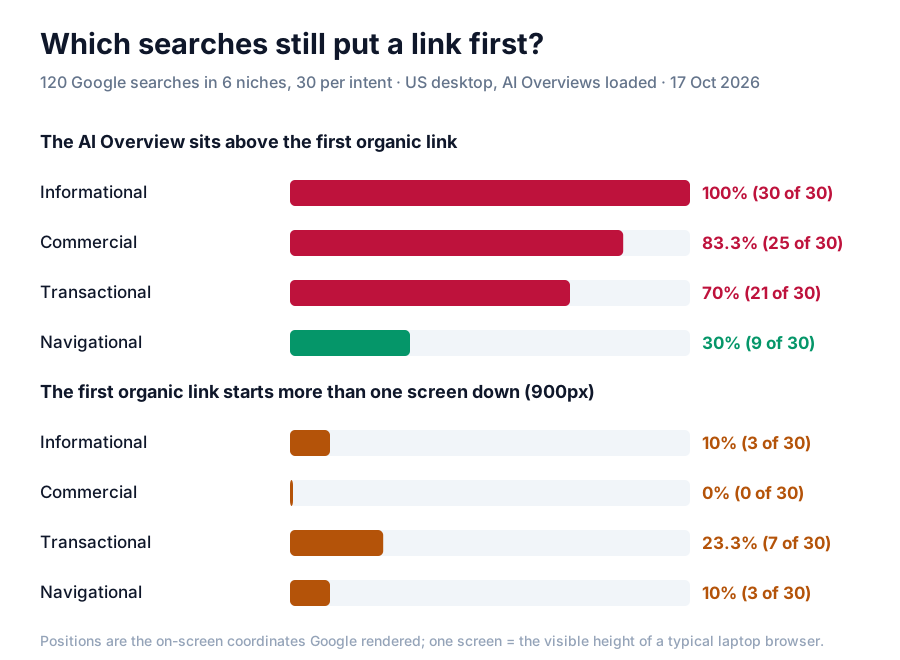
The triage board
| Intent | AI Overview shown | AI Overview above the first link | Typical first-link position | First link below one screen | Sources in an AI Mode answer (median) |
|---|---|---|---|---|---|
| Informational | 30 of 30 | 30 of 30 | 614 px | 3 of 30 | 7 |
| Commercial | 26 of 30 | 25 of 30 | 614 px | 0 of 30 | 4 |
| Transactional | 25 of 30 | 21 of 30 | 647 px | 7 of 30 | 4 |
| Navigational | 26 of 30 | 9 of 30 | 184 px | 3 of 30 | 7 |
"Typical" is the median position of the top edge of the first organic result, in pixels from the top of the page.
Three tiers, three different problems.
Red: informational searches — the answer comes first
All 30 informational searches showed an AI Overview, and in all 30 it sat above the first organic link. The typical first link started 614 pixels down — still on the first screen, but under a block of text that has already answered the question. For "how to swaddle a baby" or "what does homeowners insurance cover", the person has what they came for before they reach a link.
This is the content Google now summarises: explainers, definitions, step-by-step guides. A ranking here still matters — the AI Overview cited a median of 9 sources on these searches, and AI Mode 7 — but the prize has moved from the click to being one of the sources the answer is built from.
Amber: commercial and transactional — answers plus shopping blocks
Commercial searches looked like informational ones: an AI Overview above the first link on 25 of 30, with the link still on the first screen every time. Transactional searches were where the link went deepest. On 7 of 30 transactional searches the first organic link started below the first screen, and on 6 it was more than two screens down — pushed there by product carousels, local packs and the AI Overview together:
| Search | First organic link | What came before it |
|---|---|---|
| cheap sleeping bag | 5,074 px | three product carousels and an AI Overview |
| graco car seat price | 3,188 px | product carousels, an AI Overview and People also ask |
| wedding bands for sale | 2,244 px | three local packs |
| buy trekking poles | 2,220 px | a product carousel and an AI Overview |
For a shopper this is fine — the products are the answer. For a site that relies on ranking for "buy" and "price" searches, the first organic link can be several scrolls away.
Green: navigational — the brand's link survives
Brand searches were the exception. Google still showed an AI Overview on 26 of 30, but on 17 of those 26 the first organic link came before it, and the typical first link started 184 pixels down — the top of the page. Someone searching "babylist registry" or "zola registry" still sees the brand's own site first.
That is the clearest argument for brand demand in this data: the searches people make for you are the ones where the link still leads.
What triage means for a content plan
- Informational (red): write to be cited, not just to rank. The AI Overview is on top every time; the goal is to be among its sources. Clear answers, current facts and pages that other sites already cite are what that takes.
- Commercial (amber): keep fighting for the click, but measure the answer. The link is still on the first screen; the AI Overview is above it 25 times out of 30. Track both.
- Transactional (amber): check the page, not the rank. A #1 ranking 5,000 pixels down is not the #1 it used to be. Product feeds, local listings and the shopping blocks are where these searches are won.
- Navigational (green): grow the searches for your name. The link still leads there. Everything that makes people search for the brand directly protects traffic that AI answers do not take.
Measuring what Google's own reports don't show
A rank report says where your link is, not what sits above it — so the triage above has to be measured from the answers themselves.
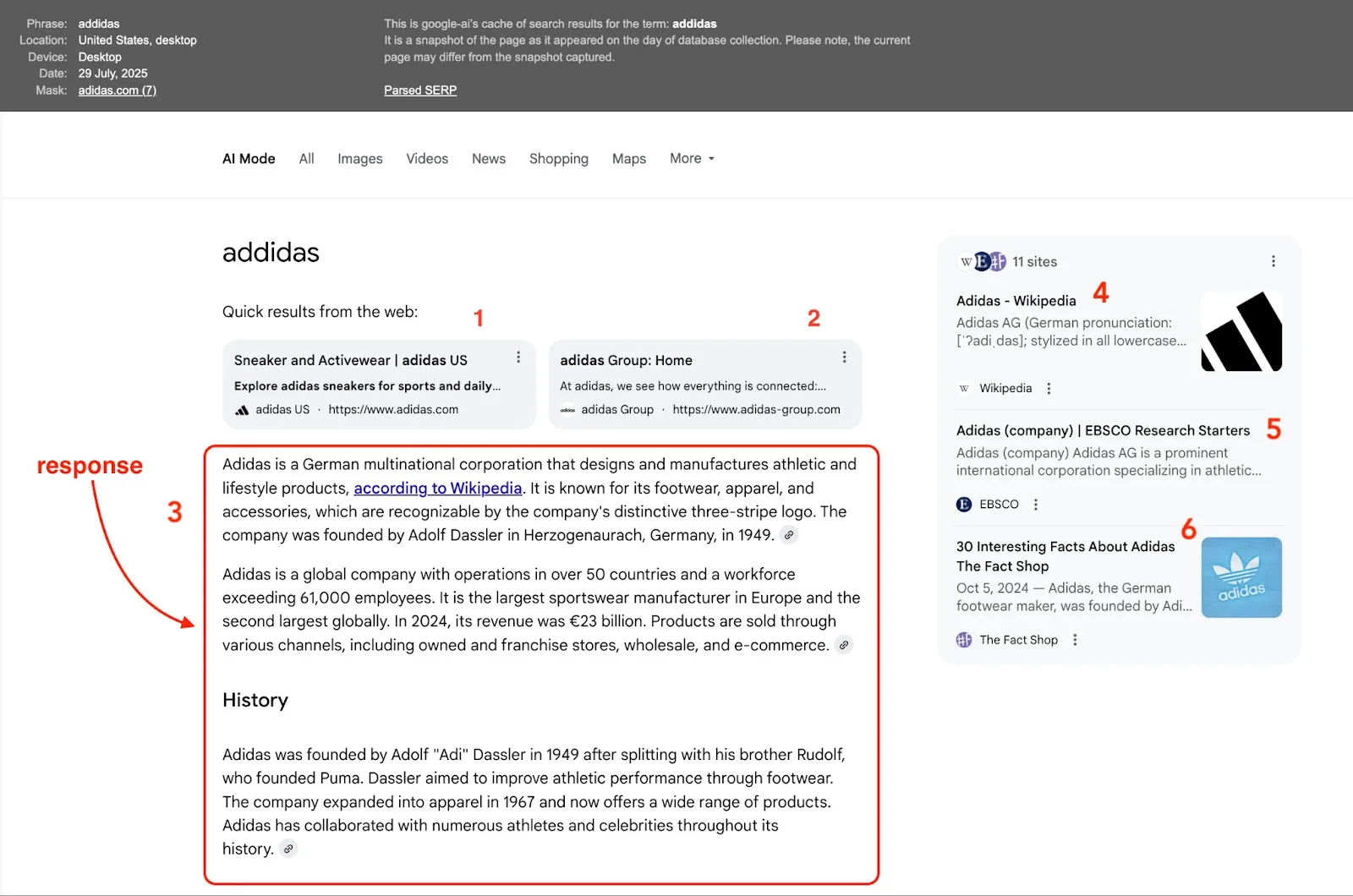
Track the AI answers themselves. Prompt Tracking, in the AI Visibility Toolkit, can track Google AI Mode as its own search engine, and counts positions the way the page looks: "In Google AI Mode, the response area itself is treated as position 1, with citations counted as positions 2, 3, and so on."
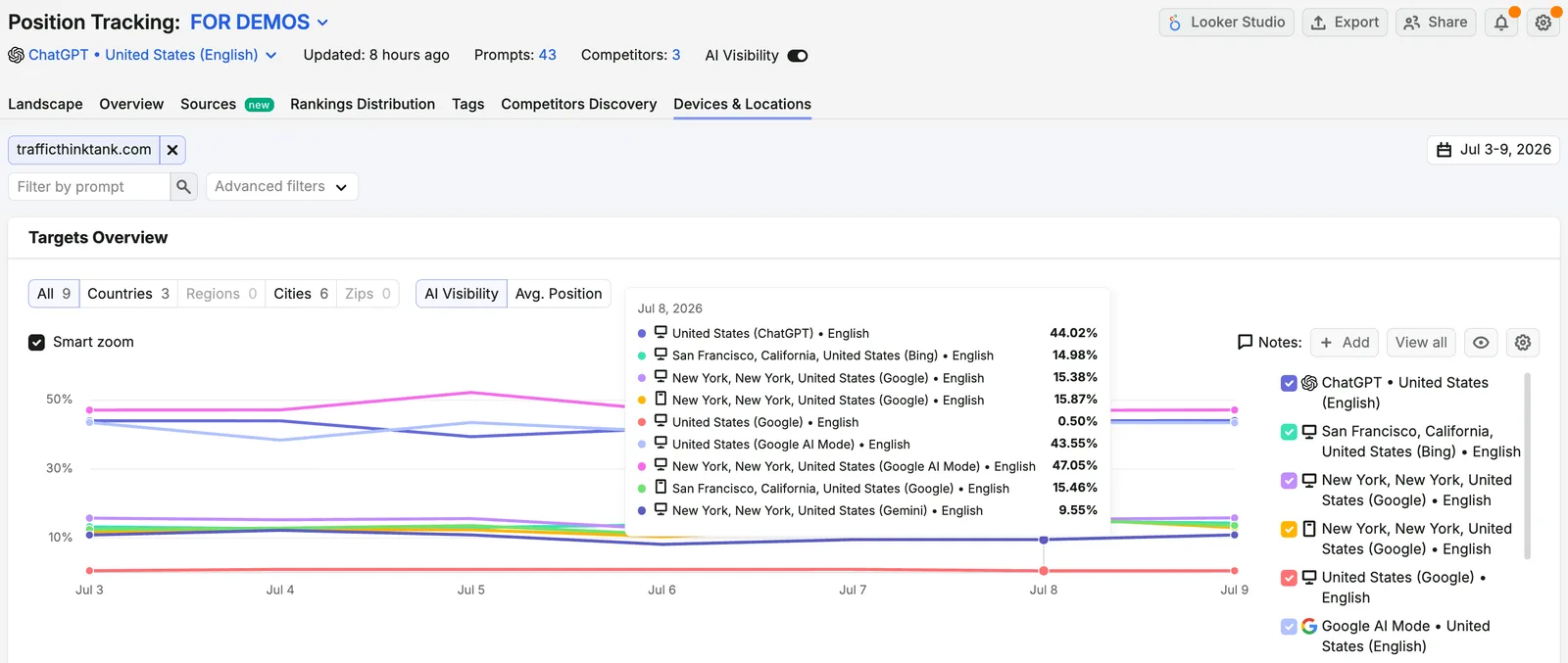
Compare AI search with the classic results, prompt by prompt. In Prompt Tracking's Devices & Locations report you can "Compare your AI search platforms' rankings with your traditional search results on Google, Baidu, and Bing" and "Identify prompts where your performance differs significantly between traditional and AI search" — the triage board above, for your own queries.
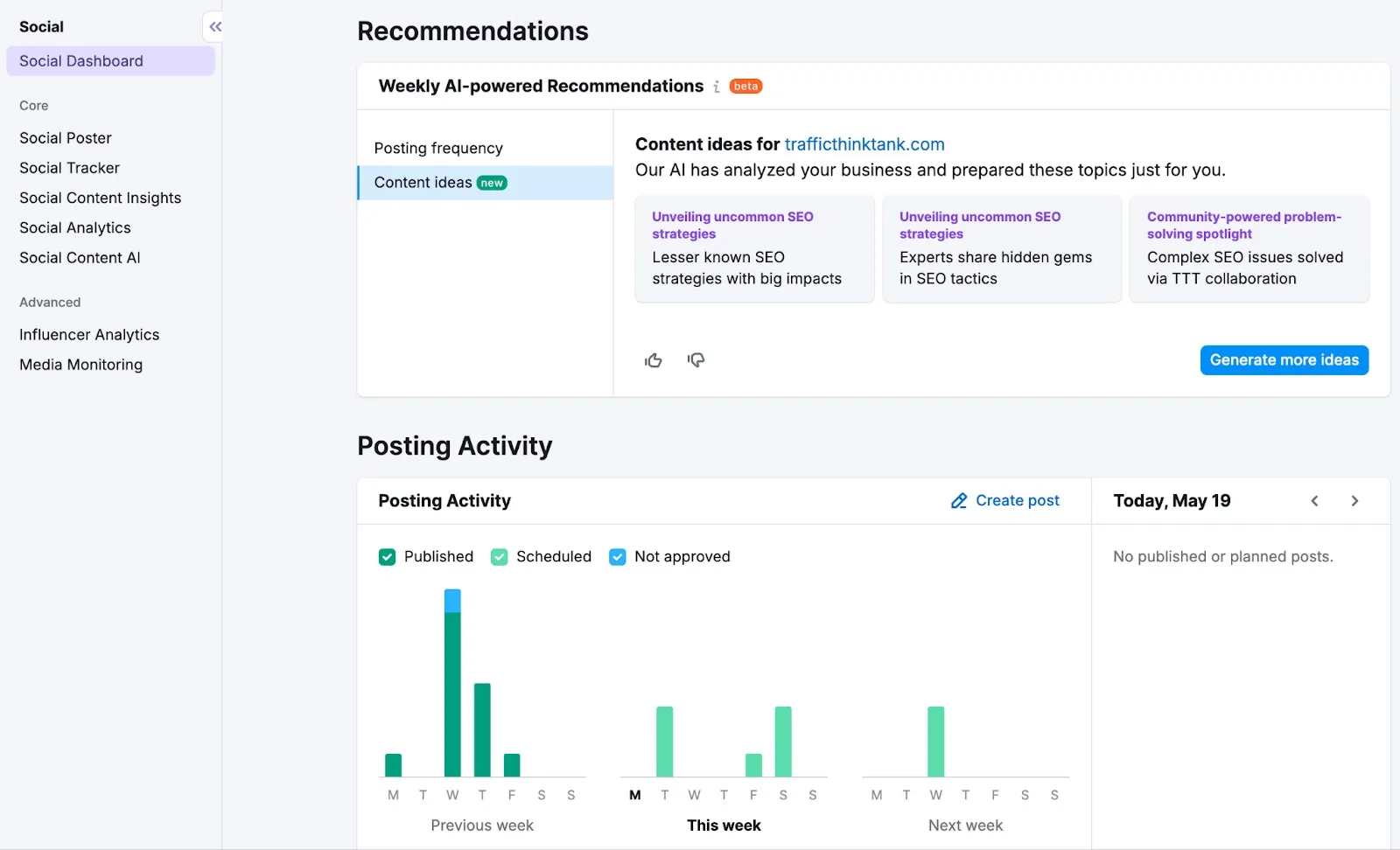
Build the demand that keeps the link on top. The green tier is the searches people make for you, and some of that demand is built off search. The Social Toolkit's Social Dashboard "is your real-time command center for tracking progress across all platforms before you jump into planning."
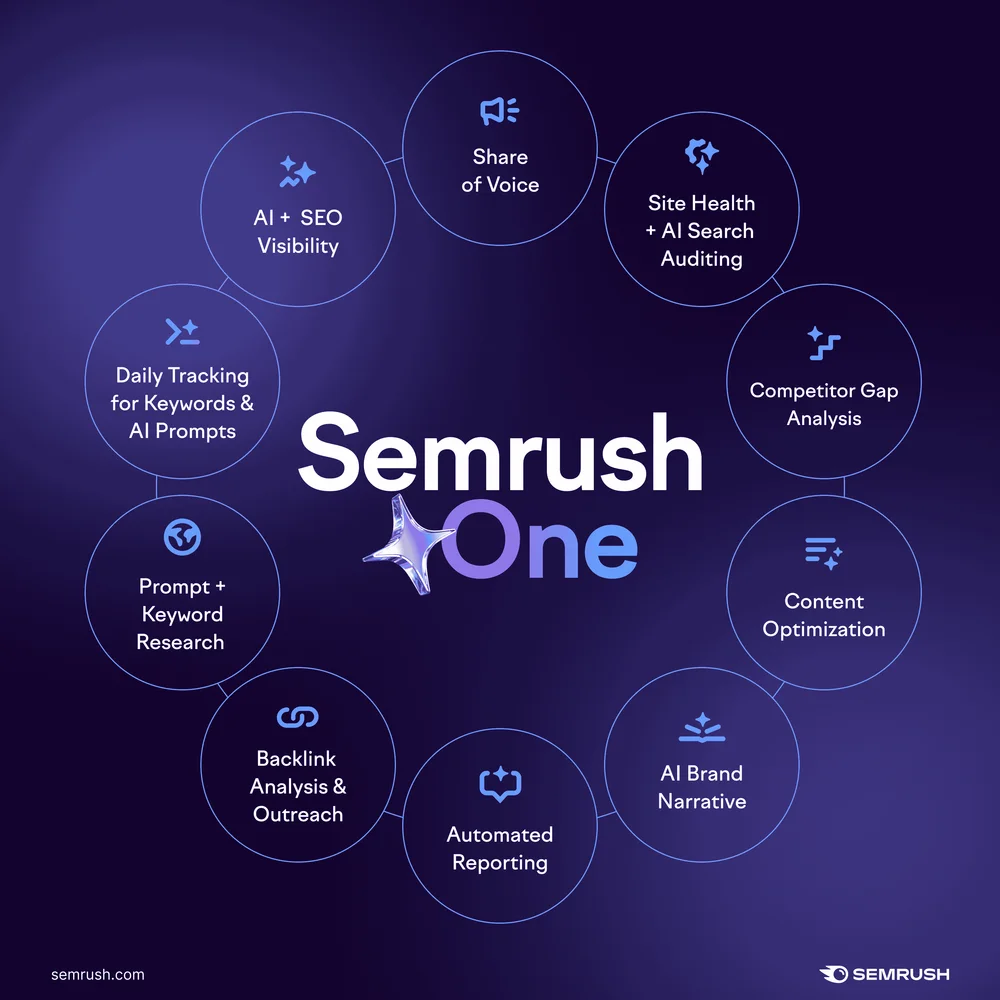
Semrush One bundles the SEO Toolkit (rank tracking) and the AI Visibility Toolkit (Prompt Tracking for AI Mode, ChatGPT and Gemini); its Knowledge Base says "Semrush One bundles the SEO and AI Visibility toolkits into three subscription plans (Starter, Pro+, and Advanced)". The Social Toolkit is sold separately. The 7-day free trial is Semrush One's — the AI Visibility Toolkit has no free trial of its own. To triage your own searches before paying, try Semrush One free for 7 days: its page offers "Unlimited access to all Semrush One tools", "Offer available to new users only", checked on 16 October 2026. Those are Semrush's published terms, not something we tested; none of the data above came from a Semrush account.
The search page has a new first answer
On 120 Google searches, the AI Overview was the first thing on the page for every informational query and most commercial and transactional ones; only searches for a brand reliably kept a link on top. That is a triage, not a collapse: explainers now compete to be cited, shopping searches compete with product blocks, and brand searches still send the click. Plan, and measure, each tier for what it has become.
Try Semrush One free for 7 days
Prompt Tracking for Google AI Mode, ChatGPT and Gemini answers, alongside rank tracking for the classic results — the AI Visibility Toolkit and the SEO Toolkit together in Semrush One. Free for 7 days for new users.
Try Semrush One free for 7 daysField notes
- Searches (120): six niches × four intents × five searches, chosen so that no niche overlaps another study of ours. The intent of each search was set when we wrote it, before any results were collected.
- Google: DataForSEO's SERP API, Google US English, desktop, AI Overviews loaded, with the on-screen rectangle of every element; 17 October 2026, 08:27–08:32 UTC. "First organic link" is the first standard organic result; "above" means it appears earlier on the page.
- AI Mode: the same 120 questions in Google AI Mode through DataForSEO, US English, the same day; sources are the links in each answer, excluding Google's own.
- One screen = 900 pixels, roughly the visible height of a laptop browser window. Real screens vary; the pixel positions in the tables are exact.
- What this cannot show: clicks. We measured what a person sees, not what they do. One collection on one day; Google's layout changes by query, location and time.
| Figure | Source | Date |
|---|---|---|
| 120 Google results with element positions; AI Overview presence and sources | DataForSEO SERP API, Google organic, US English, desktop | 2026-10-17 |
| 120 AI Mode answers and their sources | DataForSEO AI Mode API, US English | 2026-10-17 |
| Every count, position and median above | Our analysis of the saved results | 2026-10-17 |
| Prompt Tracking, Devices & Locations, Social Dashboard and Semrush One bundle descriptions; screenshots | Semrush Knowledge Base | 2026-10-17 |
| Semrush One graphic and trial terms | Creator Accelerator affiliate resources; Semrush One page | 2026-09-26 to 2026-10-16 |
Written by Sohail Akhtar. The saved results and analysis script can be re-run.
Some links may be affiliate links. We may earn a small commission at no extra cost to you.
Related Articles
Explore more guides and reviews from our experts.