We Read 1,921 Blog Titles From 136 AI Tool Companies. 39% Are the Generic Posts AI Now Answers Itself; 1.2% Are Original Research
Disclosure
This article is promotional content produced as part of the Semrush Creator Accelerator programme. It contains affiliate links to Semrush — if you buy through them we may earn a commission at no extra cost to you — and we may also receive a reward from Semrush for publishing it. All measurements in this article are our own. Semrush did not supply, review or approve the data, and the conclusions we draw are ours.
The argument has become familiar in content marketing: when an AI answer can write a competent "how to" or "best tools for" response on the spot, the generic version of that article loses its reason to exist. What keeps earning attention is what an AI cannot synthesize — original research, real tests, case studies, demonstrations, the voice of someone who did the work.
If anyone should be acting on that, it is AI tool companies. They sell the generators. So we read what they publish on their own blogs.
See which content formats are gaining or losing ground
Watch your rankings move format by format with Position Tracking, and see which of your URLs AI answers cite with Visibility Overview in the AI Visibility Toolkit. To get both in one subscription, try Semrush One free for 7 days.
What we read
On 29 October 2026 we looked for a blog feed (RSS or Atom) on the website of every AI tool company in our catalogue that answered — 613 sites. 136 publish one. From each feed we took the most recent posts, up to 20, and kept the English titles: 1,921 post titles from 136 companies.
Then we sorted the titles into four groups, using rules applied to the title alone:
| Group | What it catches | Examples of the patterns |
|---|---|---|
| Generic | Definitions, how-tos, listicles, guides, comparisons and alternatives | "How to…", "10 best…", "What is…", "The complete guide to…", "X vs Y", "…alternatives" |
| Product news | Launches, releases, updates, funding, events | "Introducing…", "Now available", "What's new", "Announcing…" |
| Original | Studies, surveys, benchmarks, data reports, tests and case studies | "We analyzed…", "A 4,670-brand study", "…benchmarks", "case study" |
| Everything else | Tutorials for the company's own product, opinion, commentary |
The result: four in ten generic, one in eighty original
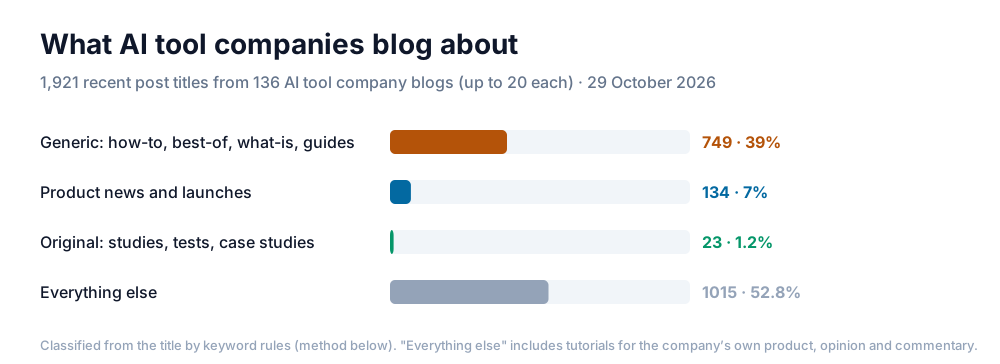
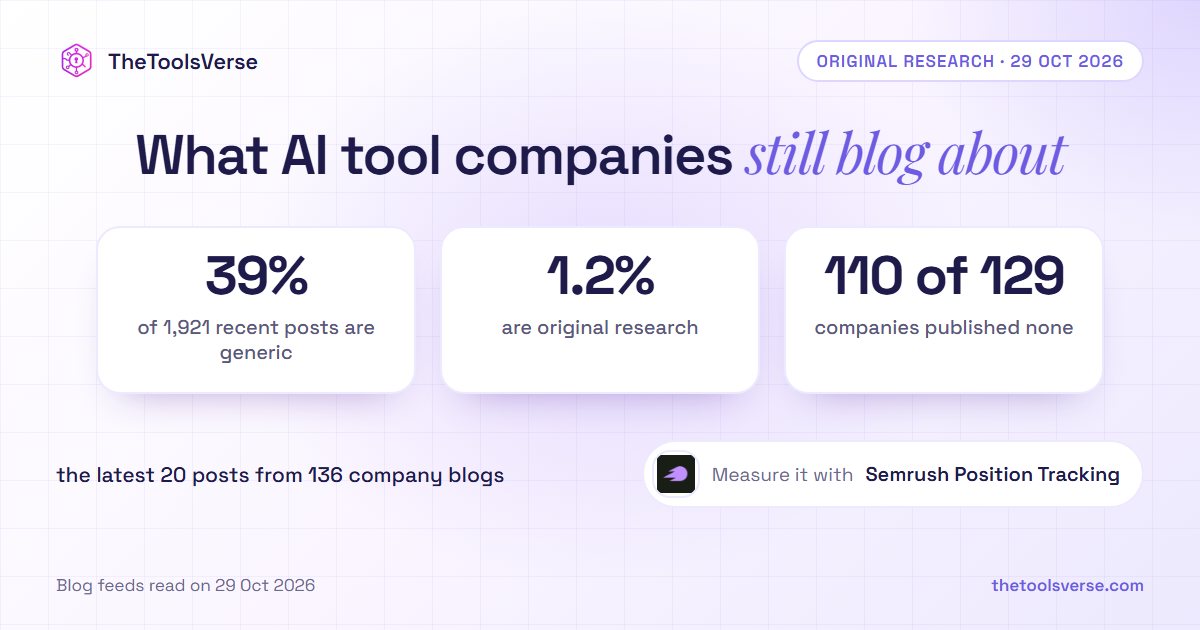
749 of the 1,921 titles (39%) are generic — the formats an AI answer now covers directly. "How to…" alone opens 216 of them, "N best…" 77, "Best…" 46 and "What is…" 43. Only 23 titles (1.2%) announce original research, a test or a case study. Product news accounts for 7%.
The large "everything else" group deserves a fair word: much of it is product tutorials and commentary, some of it genuinely distinctive. Our rules only count research that says so in the title. Even so, the gap between the two named groups is wide: for every original study in these feeds there are more than thirty generic posts.
Company by company
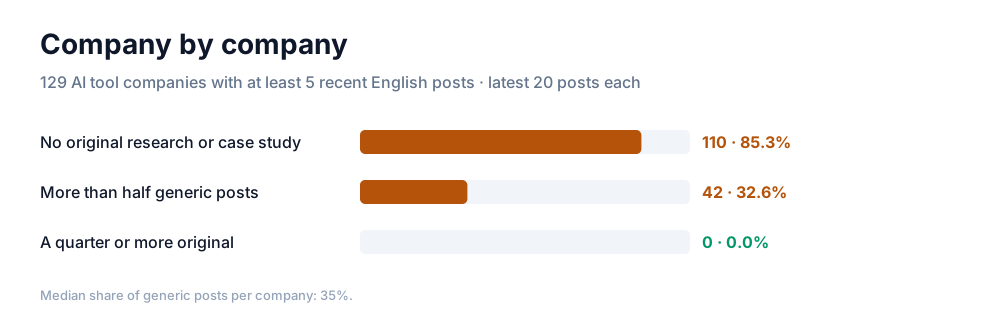
Among the 129 companies with at least five recent English posts, 110 (85.3%) published no original research or case study among their latest posts, and 42 (32.6%) published more generic posts than everything else combined. None had original work in a quarter or more of its recent output. The median company's recent posts were 35% generic.
What the exceptions look like
The 23 original titles are worth reading as a list, because they show how little it takes to stand out from the other 1,898:
- Clay: "We asked 6,346 companies for a demo. Most never wrote back."
- Hostinger: "We analyzed 213 million AI email actions. Only 2.5% were sends"
- Writesonic: "Claude Changed Its Search Index, And Told No One. So We Measured It." and "What Separates Brands Gaining AI Visibility From Those Losing It? A 4,670-Brand Study"
- Nanonets: "We ran 16 AI Models on 9,000+ Real Documents. Here's What We Found."
- Rank Prompt: "YouTube Citations in AI Search: A 29,635-Citation Study"
Each one has a number nobody else has, a method behind it, and a finding a reader cannot get from asking an AI. None of them is a better-written "how to". They are a different kind of post.
Turning a generic post into one AI can't write
Most teams do not need to stop publishing how-tos. They need some of them to carry something only they have:
- Add one dataset to an existing guide. Your product's own usage data, a survey of your customers, a test you ran. A guide with a number in it is a source; a guide without one is a summary.
- Replace "best tools" with "we tested." Same topic, same keyword, a method section and results.
- Publish the customer's version. A case study with a named customer and a measured outcome answers the "does it work?" question that generic content cannot.
- Put the finding in the title. All 23 original posts above say what they found or measured. Readers — and AI systems choosing a source — see it before they click.
- Measure the formats, not just the posts. Track generic and original pieces separately, in rankings and in AI citations, and let the results set the mix.
Measure which formats still earn visibility
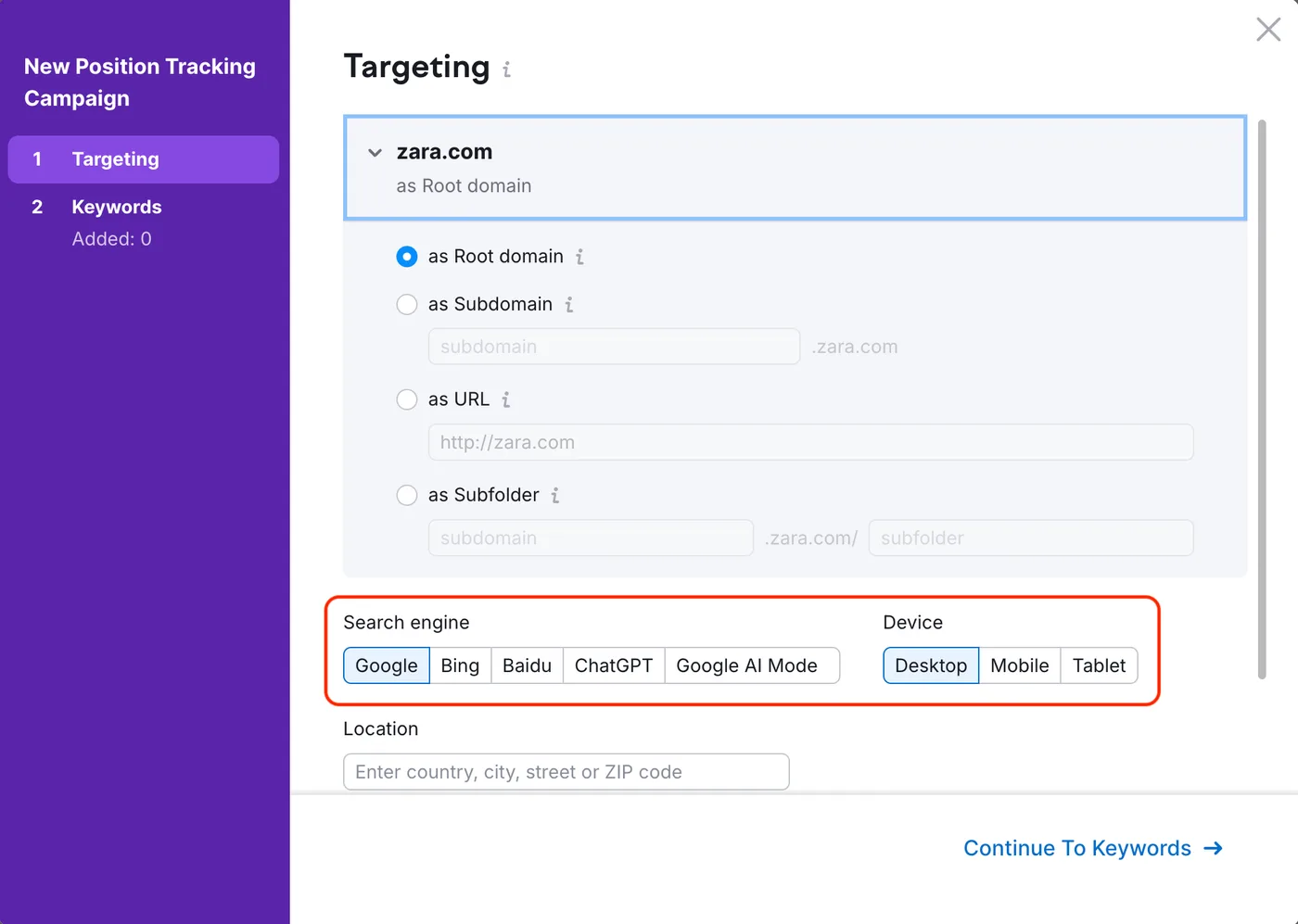
Track rankings by content type. Position Tracking follows chosen keywords daily, and can track them in Google, Bing, ChatGPT and Google AI Mode — tag your how-to keywords and your research keywords separately and the trend lines answer the format question for your own site.
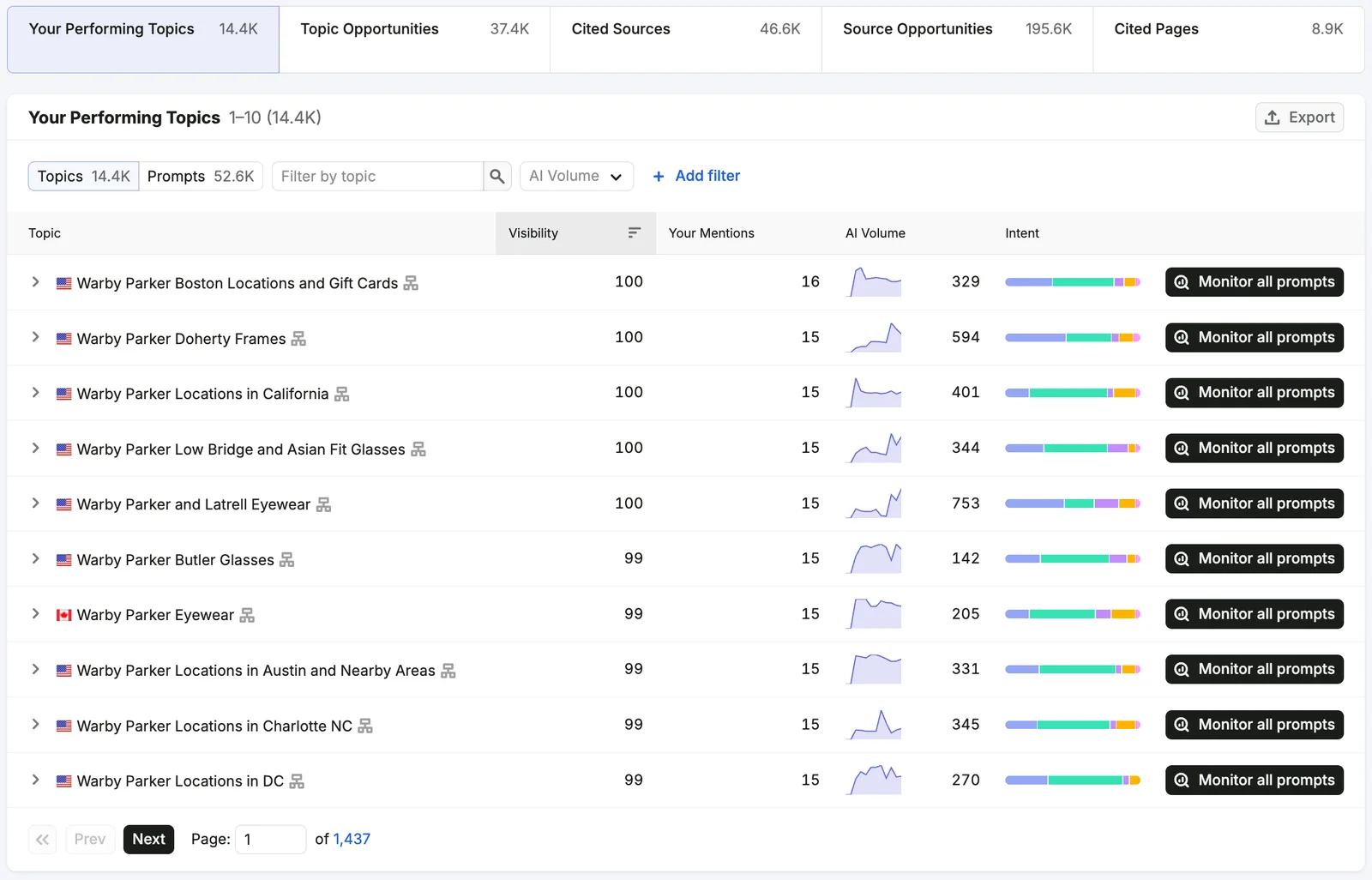
See which URLs AI answers cite. Visibility Overview, in the AI Visibility Toolkit, has tabs for your performing topics, cited sources and cited pages — the place to check whether your original research is the content AI actually picks up.
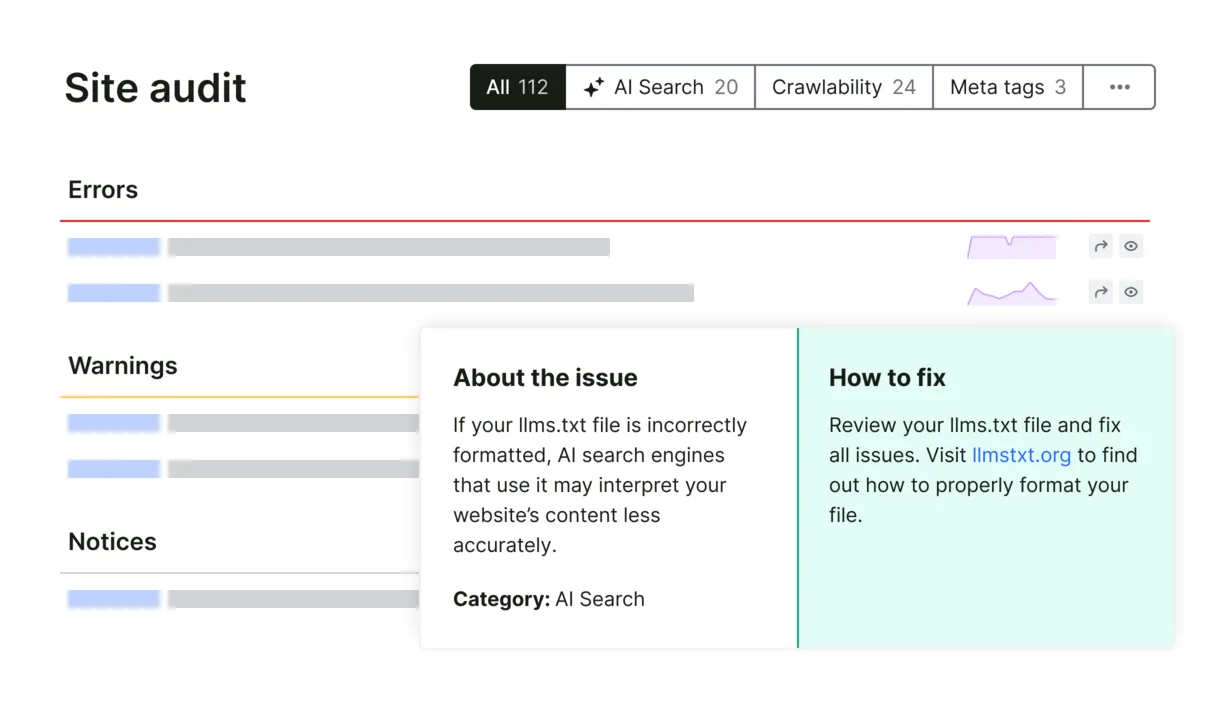
Find the thin pages. Site Audit flags thin and duplicate pages among its issues — useful for finding the generic posts that overlap each other and are best merged or upgraded.
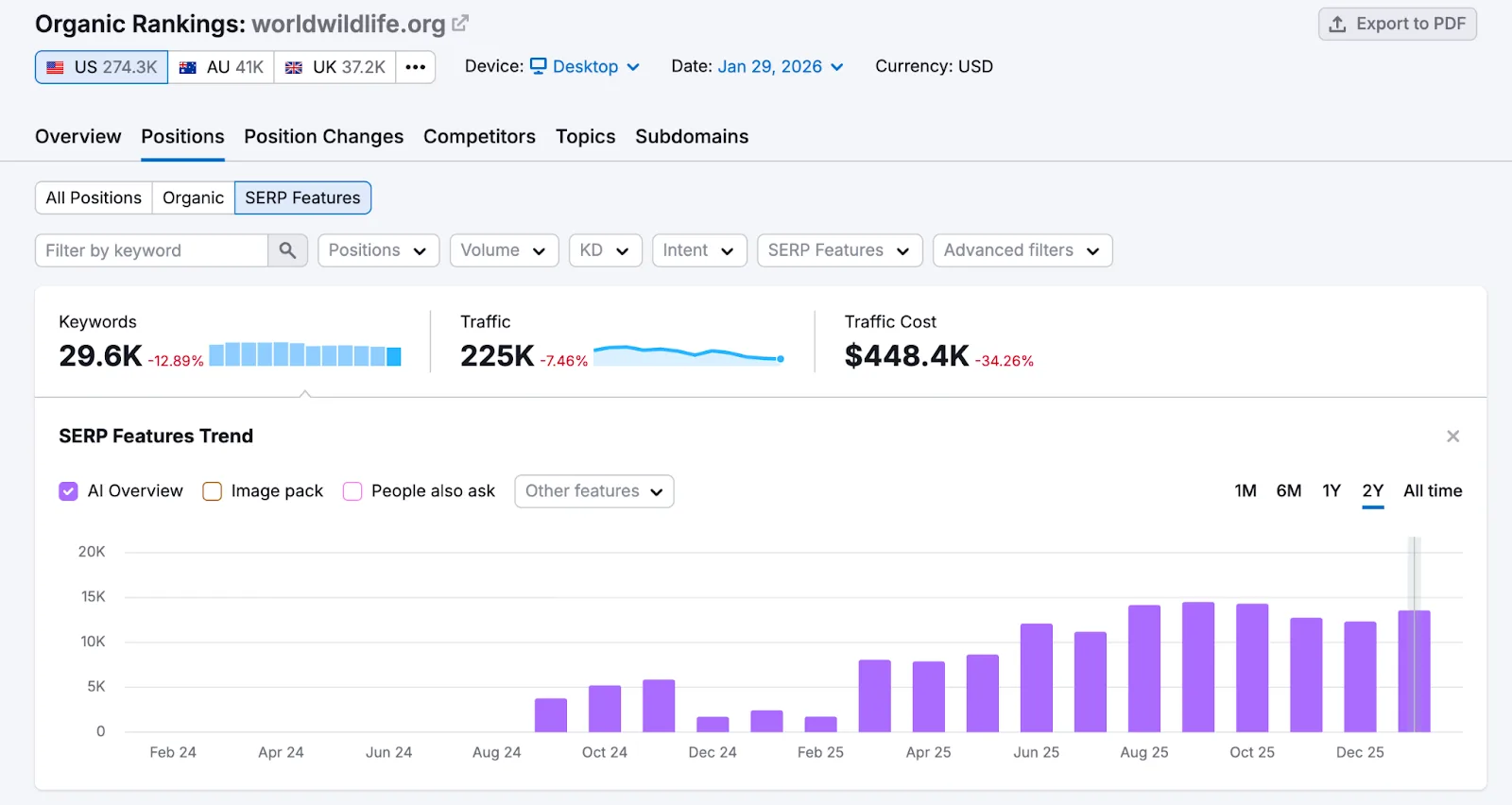
Check what competitors publish. Organic Rankings, in the SEO Toolkit, shows a competitor's ranking pages and positions, so you can see whether their gains come from guides or from research.
Semrush One bundles the SEO Toolkit and the AI Visibility Toolkit, and the 7-day free trial is Semrush One's — the AI Visibility Toolkit has no free trial of its own. To audit your own content mix before paying, try Semrush One free for 7 days: its page offers "Unlimited access to all Semrush One tools" and notes "Offer available to new users only", checked on 28 October 2026. Those are Semrush's published terms, not something we tested; none of the data above came from a Semrush account.
The companies that sell the generators are still writing for them
AI tool companies publish generic posts at more than thirty times the rate they publish original research, and 85% of them published no research or case study among their recent posts. The opening is obvious for anyone willing to take it: one dataset, one real test, one named customer — the things a generator can't write for you. (This article is our attempt at the same thing.)
Try Semrush One free for 7 days
Position Tracking and Organic Rankings to see which content formats gain ground, Visibility Overview to see what AI answers cite, and Site Audit to find thin pages — the SEO Toolkit and the AI Visibility Toolkit together in Semrush One. Free for 7 days for new users.
Try Semrush One free for 7 daysMethod and sources
- Feeds (613 sites checked, 136 with a feed): the RSS or Atom feed linked from each AI tool company's home page, or found at a common path (
/feed,/rss.xml,/blog/rss.xmland similar), fetched once on 29 October 2026. Up to the 20 most recent items per feed; non-English titles excluded, leaving 1,921 titles. - Classification: keyword rules on the title, applied in order — product news first, then generic title shapes ("how to", "best", "top N", "explained", "vs"), then original-research signals ("we analyzed", "study", "survey", "benchmark", "case study", large counts of things measured), then the remaining generic patterns. We read every title classified as original; a few borderline ones remain (for example a post summarising another organisation's report).
- What this cannot show: what the posts contain. A generic title can hide original data and an "original" title can oversell. Companies without a feed — most of the 613 — are not represented, and feeds may include only part of a blog.
| Figure | Source | Date |
|---|---|---|
| 1,921 post titles from 136 feeds | Each company's own RSS or Atom feed | 2026-10-29 |
| Every count and percentage above | Our classification of the saved titles | 2026-10-29 |
| Position Tracking, Visibility Overview, Site Audit and Organic Rankings descriptions; screenshots | Semrush Knowledge Base and feature pages | 2026-10-29 |
| Semrush One graphic and trial terms | Creator Accelerator affiliate resources; Semrush One page | 2026-10-28 |
Written by Sohail Akhtar. The saved feeds, titles and classification script can be re-run.
Some links may be affiliate links. We may earn a small commission at no extra cost to you.
Related Articles
Explore more guides and reviews from our experts.
28% of AI Image, Video and Voice Generators Sell "No Watermark". 2 of 143 Tell You Their Output Is Marked as AI
We Read 493 AI Tool Home Pages Like an AI Would. 79% of the Big Claims Link to Nothing That Could Check Them