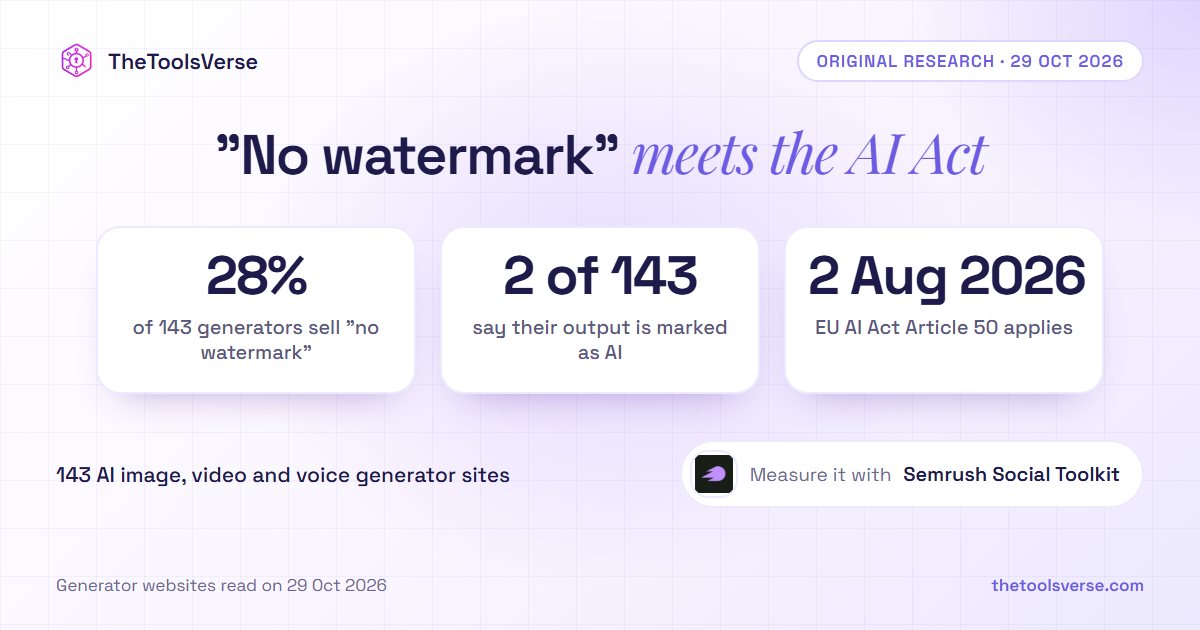
28% of AI Image, Video and Voice Generators Sell "No Watermark". 2 of 143 Tell You Their Output Is Marked as AI
Disclosure
This article is promotional content produced as part of the Semrush Creator Accelerator programme. It contains affiliate links to Semrush — if you buy through them we may earn a commission at no extra cost to you — and we may also receive a reward from Semrush for publishing it. All measurements in this article are our own. Semrush did not supply, review or approve the data, and the conclusions we draw are ours.
There are two kinds of watermark in AI-generated media, and the market is selling one while the law is about the other.
The first is the visible watermark: a logo in the corner of a free-plan video or image. Removing it is one of the most common reasons to upgrade. The second is the machine-readable mark that identifies content as AI-generated — an invisible watermark in the pixels or audio, or provenance metadata such as C2PA Content Credentials. That is the one the EU AI Act asks for. Its Article 50, which applies from 2 August 2026, says providers of AI systems "generating synthetic audio, image, video or text content, shall ensure that the outputs of the AI system are marked in a machine-readable format and detectable as artificially generated or manipulated."
We list a lot of AI image, video and voice generators, so we read what they tell their users about both.
Make content that is expensive to fake
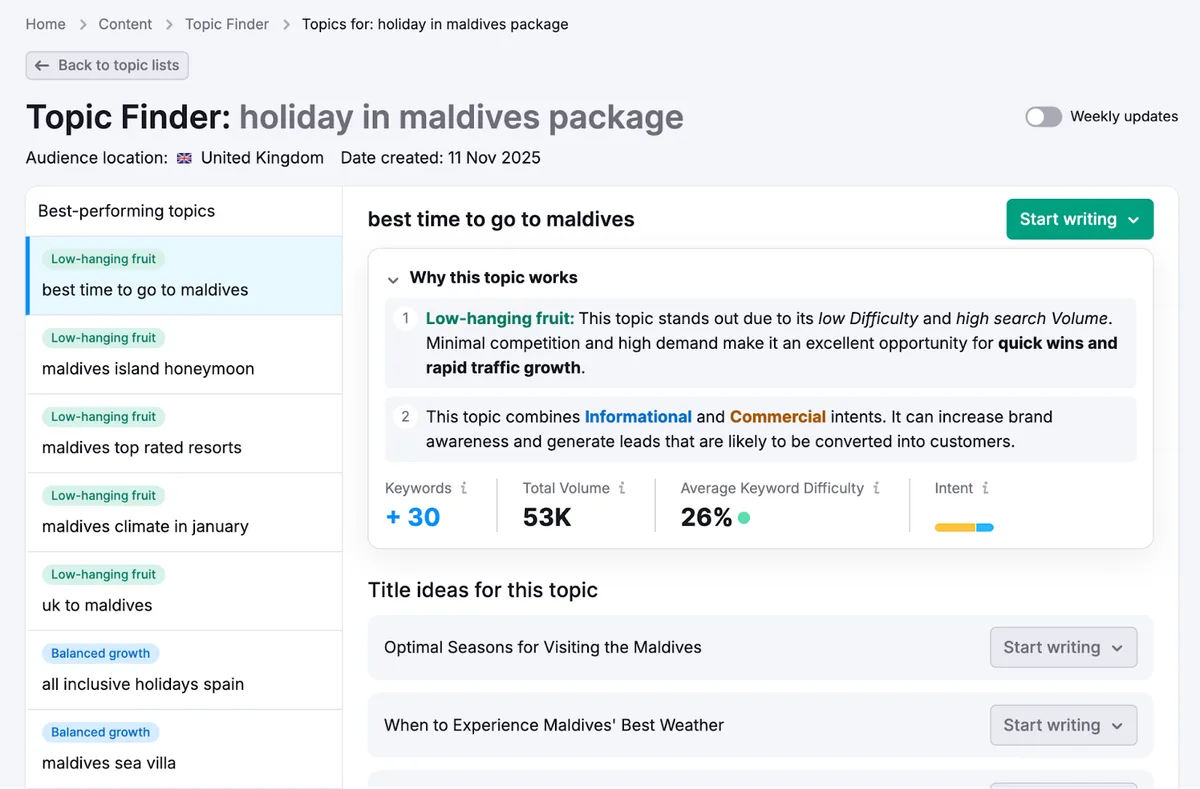
Find topics with real demand to build original work around with Topic Finder in the Content Toolkit, and track how your posts perform across social platforms with the Social Toolkit. To get SEO and AI visibility tools in one subscription, try Semrush One free for 7 days.
What we read
On 29 October 2026 we fetched the home page and the /pricing page of every company in our catalogue whose tools generate images, video, avatars, face swaps, voice, speech or music — 174 websites — and kept the 143 that showed at least 200 words of text. Pricing pages are where watermark terms usually sit, and 101 of the 143 had one at /pricing.
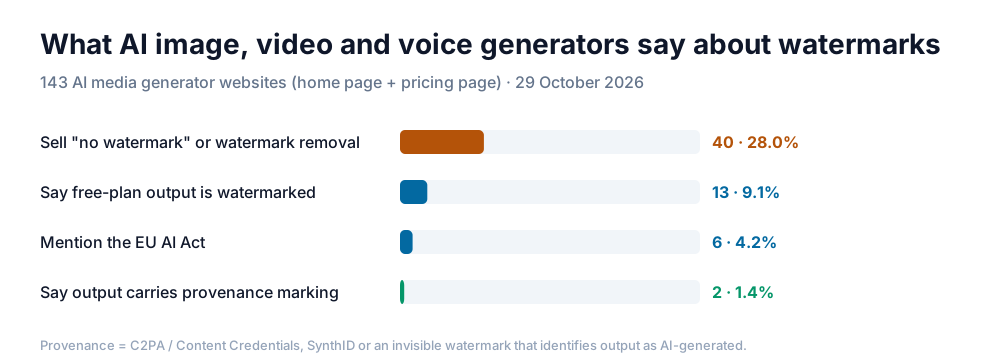
40 of the 143 websites (28%) advertise "no watermark", "watermark-free" output or watermark removal — "no watermark" alone appears on 17 of them, "watermark-free" on 14. Thirteen say plainly that free-plan output is watermarked, which is the same offer seen from the other side.
Only 2 of the 143 tell users that their output carries a machine-readable or invisible mark identifying it as AI-generated. DeepFakesWeb says it embeds "invisible digital watermarks so common detection tools can identify our videos as AI-generated"; Resemble AI lists "Watermarking" and "Provenance and C2PA compliance" among its features. Two other sites matched our search terms for the opposite reason — one is a watermark remover that advertises handling "near-invisible watermarks", and one uses "digital watermark" to mean the visible stamp on free output — so we did not count them.
Six mention the EU AI Act at all: Creatus, HeyGen, Humva, Resemble AI, Synthesia and Wondercraft — avatar, video and voice companies, mostly on trust or compliance pages.
"No watermark" by type of generator
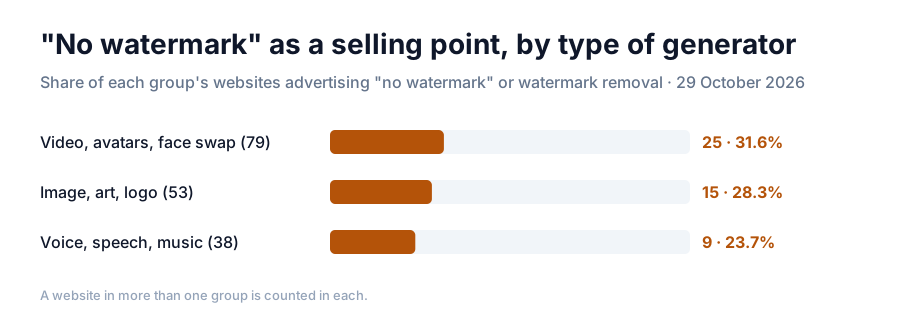
Video, avatar and face-swap generators lean on it most: 25 of 79 (31.6%). Image generators follow at 28.3% and voice tools at 23.7%.
Why the two watermarks are getting confused
A user who pays to remove a corner logo has removed the watermark they can see. They have not removed — and usually cannot see — any machine-readable mark the provider adds, and under Article 50 providers must add one. That is a reasonable thing for the law to require and an awkward thing for marketing copy that says "no watermark" without saying which.
For marketers who publish AI-generated images, video and voiceovers, three practical consequences follow:
- Assume generated media may carry a mark you cannot see. Upgrading a plan removes the logo, not necessarily the provenance.
- Ask your tools what they embed. Of the 143 websites we read, 2 say. The rest leave you to find out from the output.
- Label AI media yourself where it matters. It is the honest default, and it means a platform's label never contradicts yours.
The bigger shift is the one this points to. When generated media is cheap and increasingly identifiable, what keeps content worth distributing is what a generator cannot produce: your own data, your own tests, your own people.
Build what a generator can't, and watch where it lands
Start from topics people actually search. Topic Finder, in the Content Toolkit, suggests topics with their keyword count, volume, difficulty and intent, and explains why each one is worth covering — the starting point for original work rather than another generated summary.
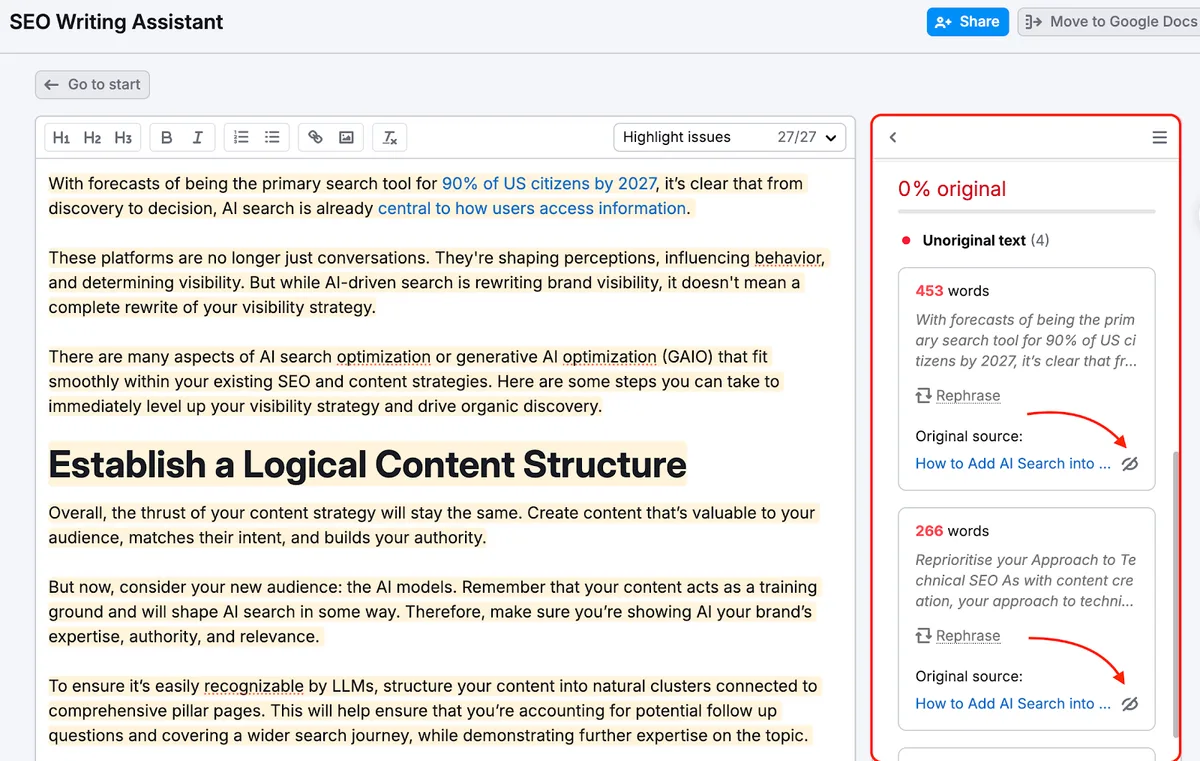
Check that a draft is your own. SEO Writing Assistant includes an originality check that marks unoriginal passages and shows the source each one matches.
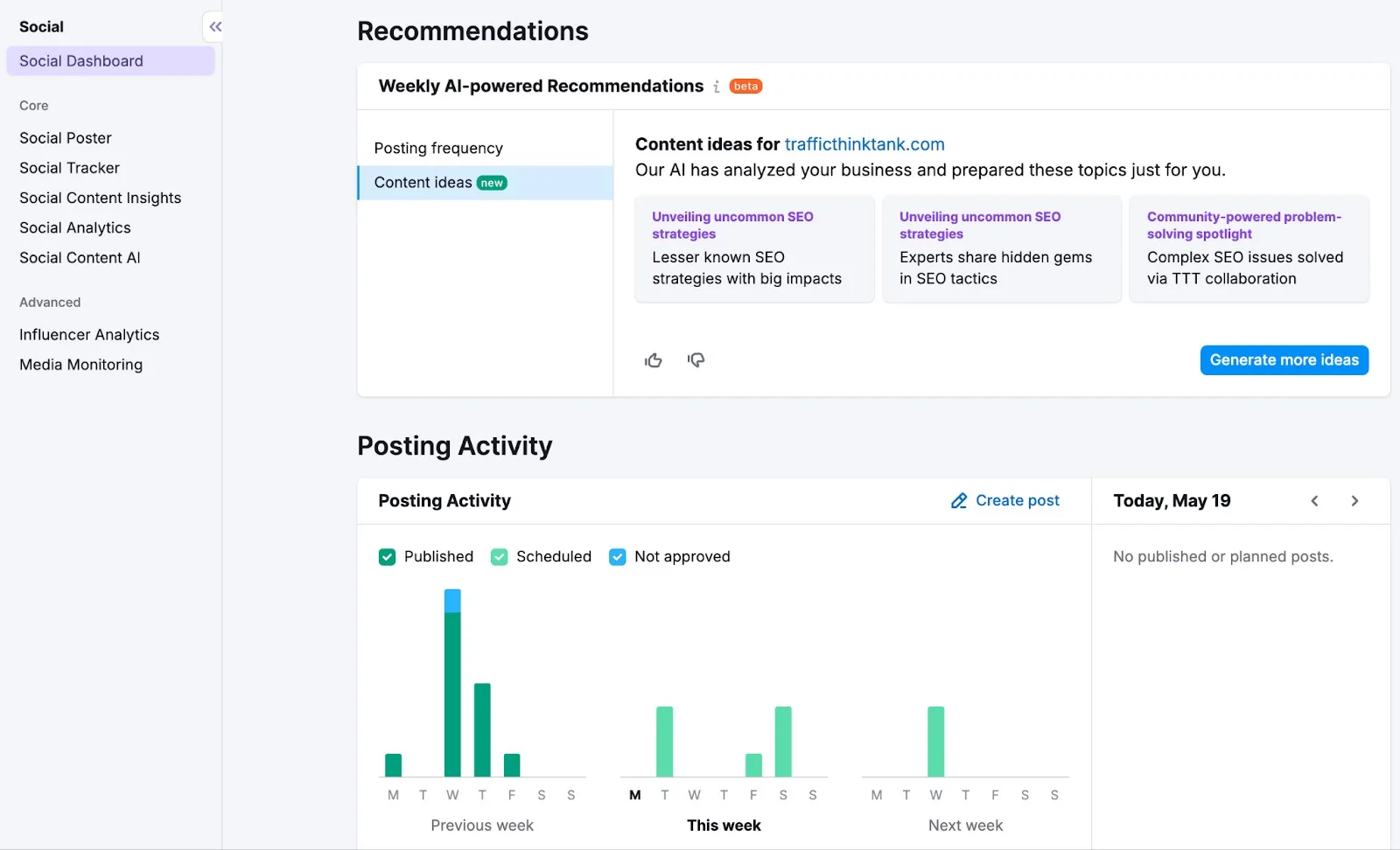
See what still performs on social platforms. The Social Toolkit brings your posting activity and content recommendations into one dashboard, so a change in how your posts perform shows up as a trend rather than a hunch.
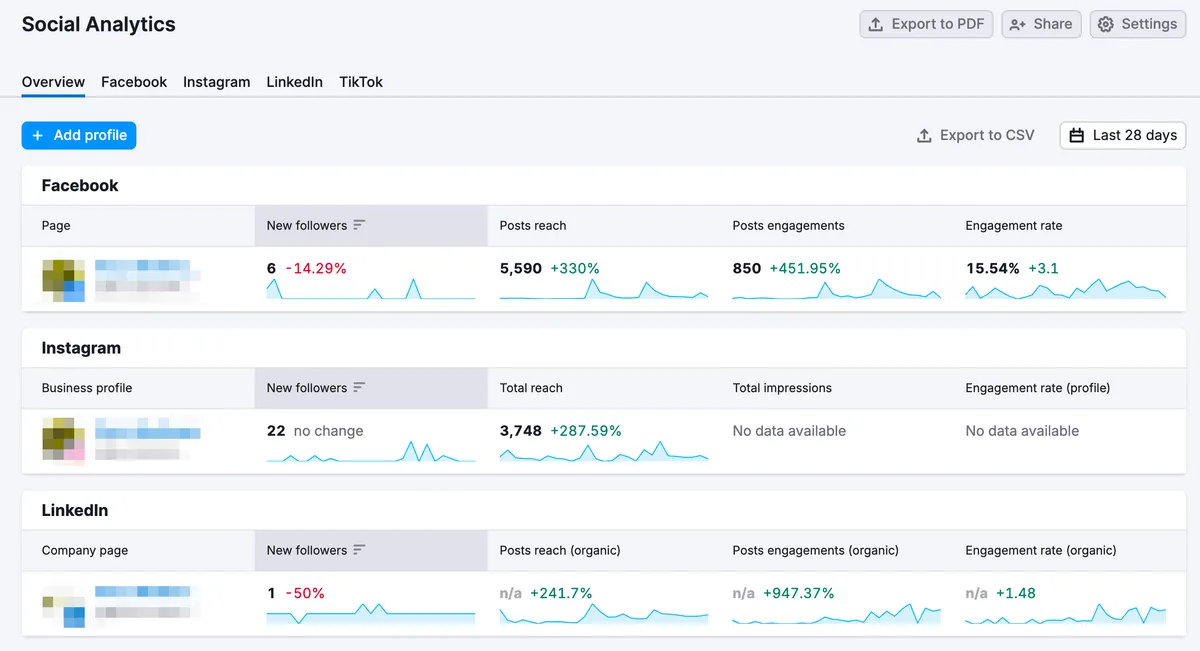
Keep a baseline for reach. Social Analytics tracks followers, reach, engagement and engagement rate for your Facebook, Instagram, LinkedIn and TikTok profiles over time. If a platform starts holding back content it reads as generated, the drop shows up against your own history, not as a rumour.
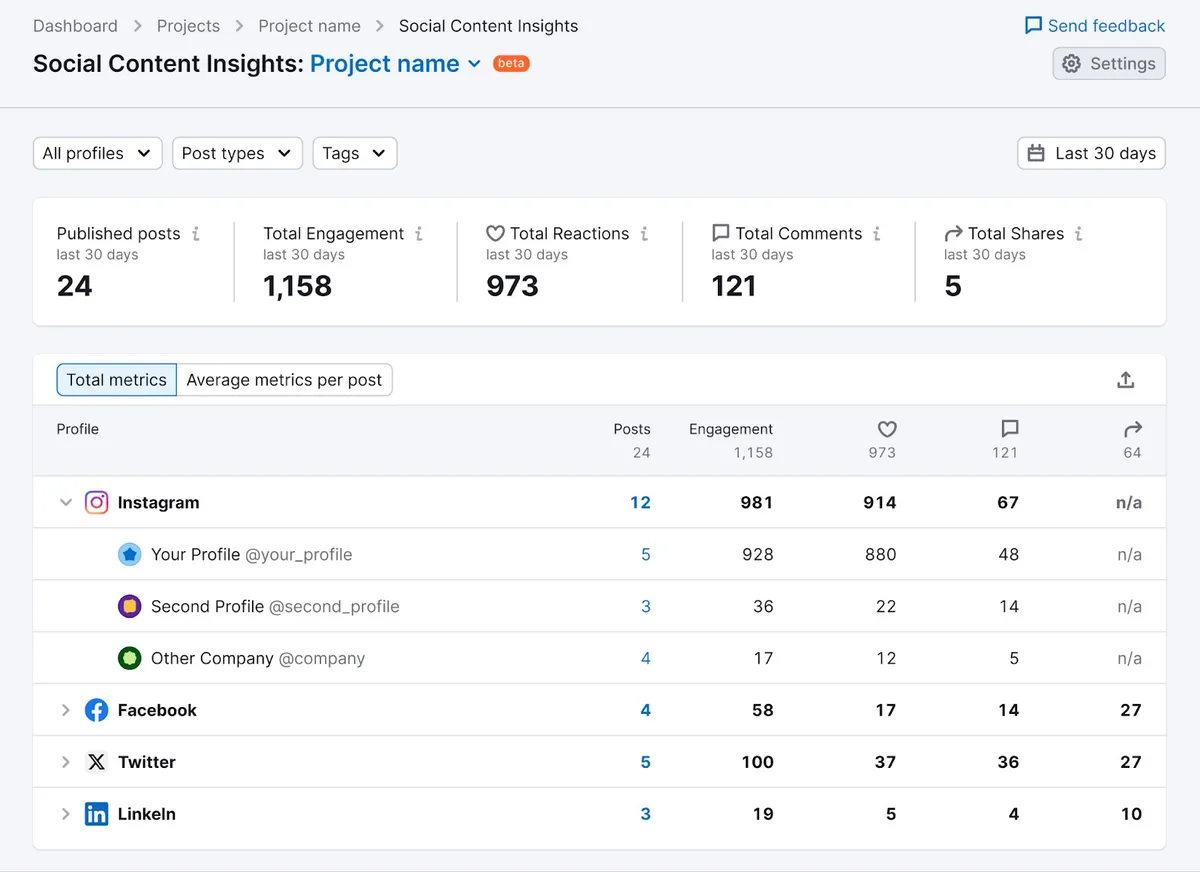
See which posts still earn distribution. Social Content Insights breaks engagement down by profile, platform and post type, so you can compare the posts built on your own material with the ones that could have come from anyone.
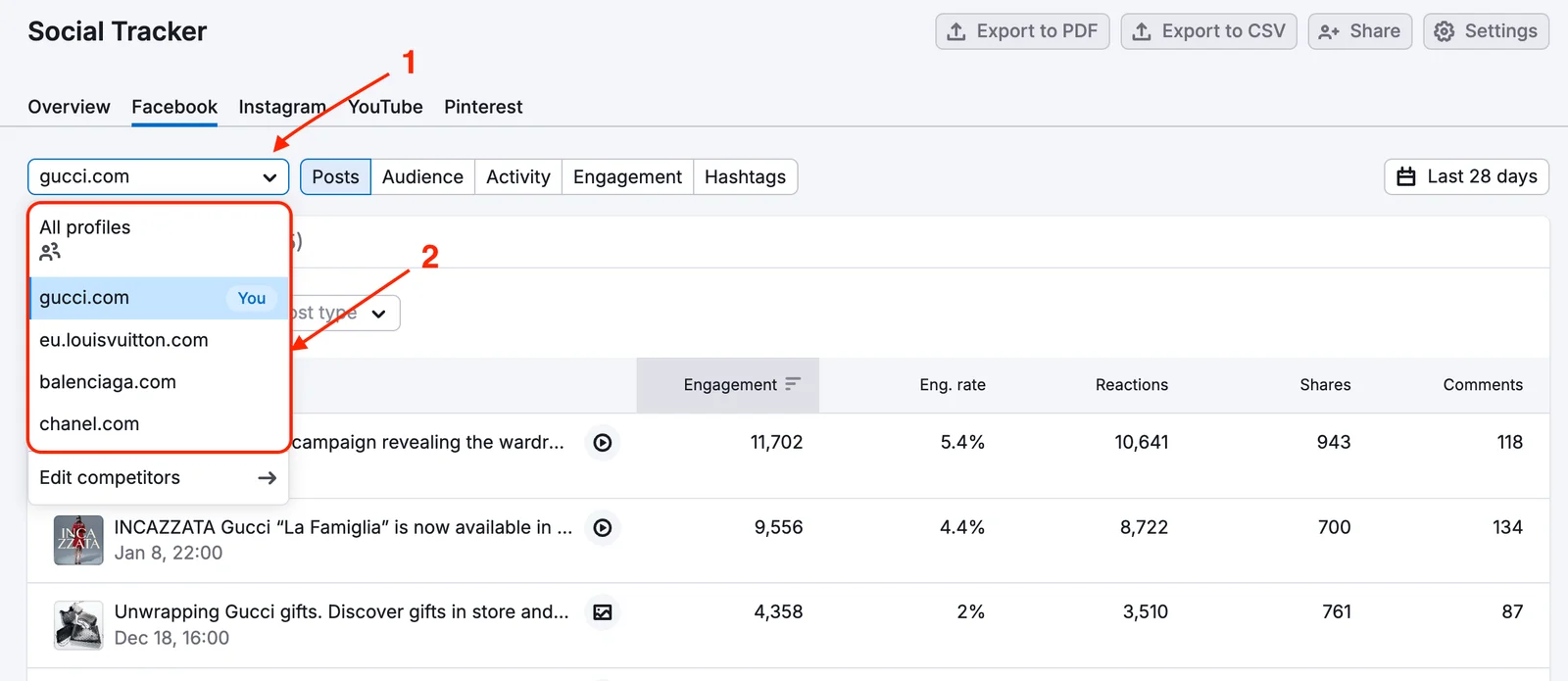
Benchmark competitors' posts. Social Tracker shows competitors' posts with their engagement, so you can see which formats keep earning reactions and shares. When you shift your mix, Social Poster schedules and publishes posts across your profiles from one calendar.
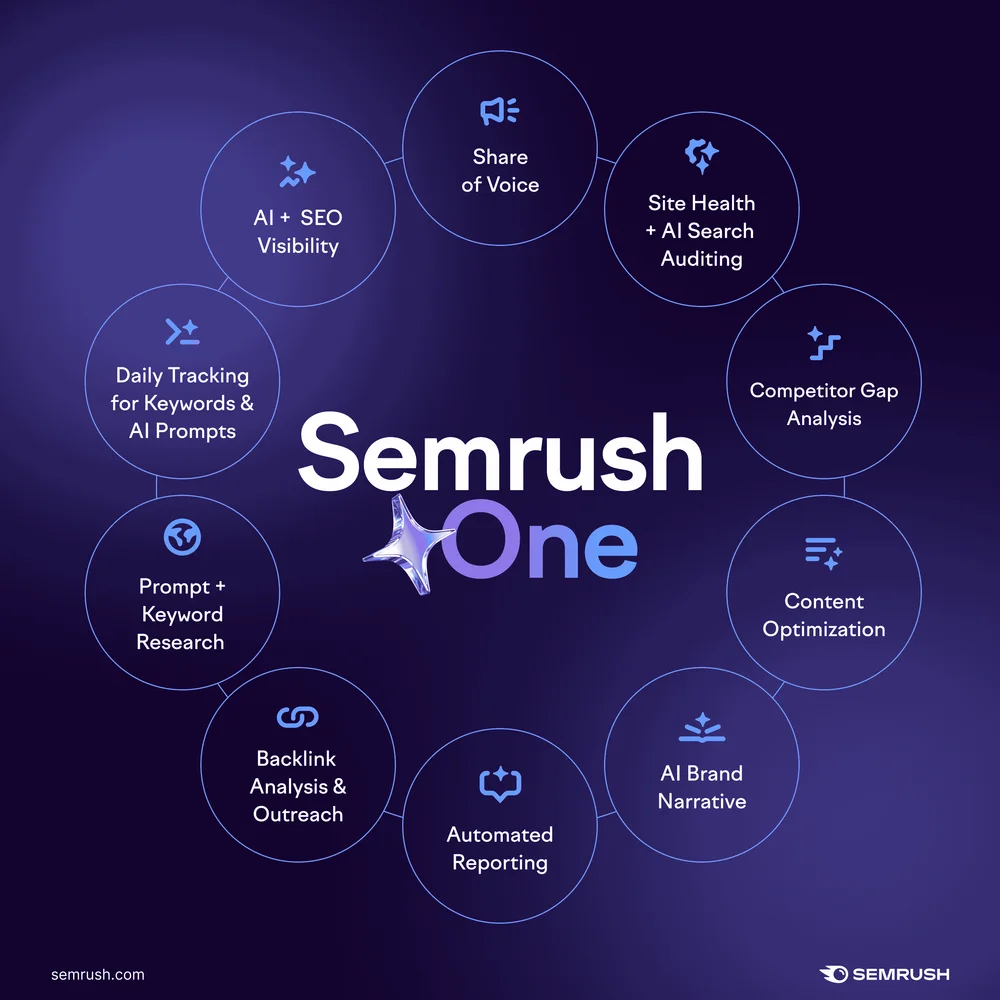
Semrush One bundles the SEO Toolkit and the AI Visibility Toolkit, and the 7-day free trial is Semrush One's; the Content Toolkit and the Social Toolkit are sold separately. To try the SEO and AI visibility side before paying, try Semrush One free for 7 days: its page offers "Unlimited access to all Semrush One tools" and notes "Offer available to new users only", checked on 28 October 2026. Those are Semrush's published terms, not something we tested; none of the data above came from a Semrush account.
The watermark nobody is selling
Removing the visible watermark is a feature on 28% of the AI media generator websites we read. Telling users about the invisible one is a feature on two. With Article 50 now in force, "no watermark" needs a second sentence — and the content that holds its value is the kind no generator could have made for you.
Try Semrush One free for 7 days
The SEO Toolkit and the AI Visibility Toolkit together — track rankings, AI Overview appearances and AI visibility for the original content you publish. Free for 7 days for new users.
Try Semrush One free for 7 daysMethod and sources
- Websites (174 fetched, 143 analysed): every company in the TheToolsVerse catalogue with at least one tool in an image, video, art, avatar, face-swap, voice, speech, music or logo category, whose home page answered on 28 October 2026. Home page and
/pricingfetched once on 29 October 2026 with a desktop browser user agent, without running JavaScript; websites with fewer than 200 words of visible text excluded. - Phrases: "no watermark" and its variants ("watermark-free", "without watermarks", "remove watermark"); free-plan watermark statements ("watermarked", "includes a watermark"); provenance terms (C2PA, Content Credentials, SynthID, content provenance, invisible, digital or imperceptible watermark, AI-generated label); "AI Act". Every provenance match was read in context; two were excluded as explained above.
- What this cannot show: what any tool actually embeds in its output — only what its website tells users. Terms on help centres, legal pages or inside the app are not covered, and pages that render with JavaScript are under-counted.
| Figure | Source | Date |
|---|---|---|
| Article 50(2) wording and application date | EU AI Act, Article 50 (artificialintelligenceact.eu) | read 2026-10-29 |
| Watermark statements on 143 websites | Our fetch of each home and pricing page | 2026-10-29 |
| Every count and percentage above | Our analysis of the saved pages | 2026-10-29 |
| Topic Finder, SEO Writing Assistant, Social Toolkit, Social Analytics, Social Content Insights, Social Tracker and Social Poster descriptions; screenshots | Semrush Knowledge Base | 2026-10-29 |
| Semrush One graphic and trial terms | Creator Accelerator affiliate resources; Semrush One page | 2026-10-28 |
Written by Sohail Akhtar. The saved pages and analysis script can be re-run.
Some links may be affiliate links. We may earn a small commission at no extra cost to you.
Related Articles
Explore more guides and reviews from our experts.
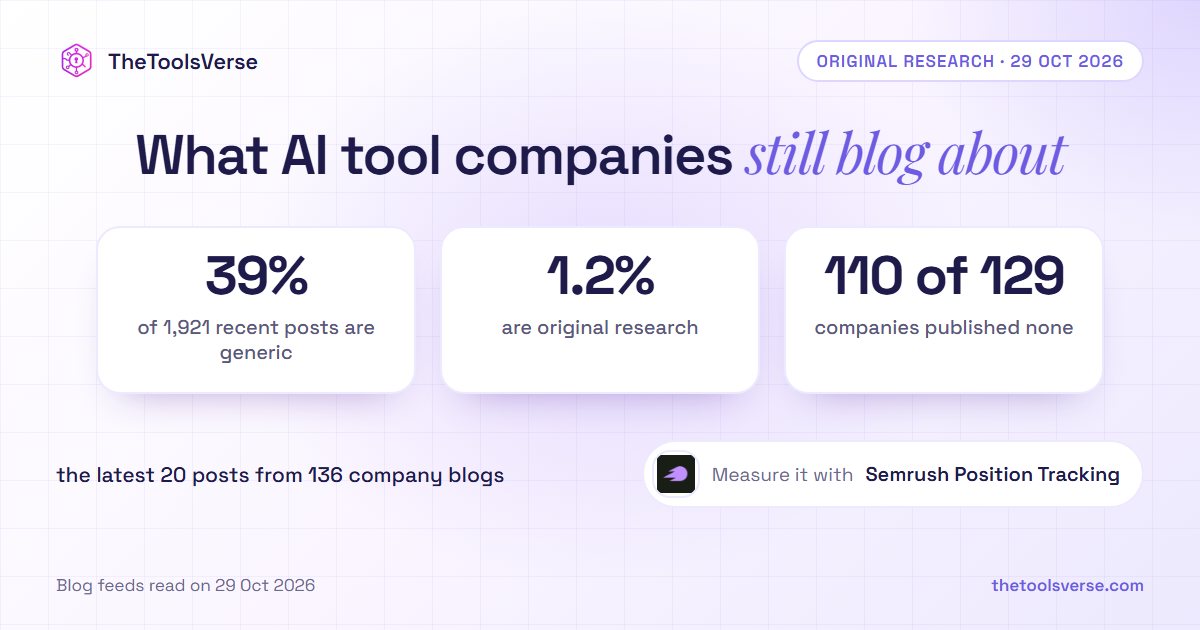
We Read 1,921 Blog Titles From 136 AI Tool Companies. 39% Are the Generic Posts AI Now Answers Itself; 1.2% Are Original Research
We Read 493 AI Tool Home Pages Like an AI Would. 79% of the Big Claims Link to Nothing That Could Check Them