Is Gemini Overtaking ChatGPT? In Developer Downloads, Gemini's Share Peaked in March and Anthropic Passed OpenAI: 17 Months of SDK Data
Disclosure
This article is promotional content produced as part of the Semrush Creator Accelerator programme. It contains affiliate links to Semrush — if you buy through them we may earn a commission at no extra cost to you — and we may also receive a reward from Semrush for publishing it. All measurements in this article are our own. Semrush did not supply, review or approve the data, and the conclusions we draw are ours.
You can hear a version of this at any SEO conference: most GEO work is aimed at ChatGPT, while Gemini is where the market is moving. It is easy to say and hard to check, because market-share charts for AI assistants come from panels and surveys of different kinds.
So we looked for a number that nobody has to estimate. Every developer who builds on an AI platform installs its official software development kit (SDK) from a public package registry, and both registries publish download counts. We pulled them for the three platforms people compare: OpenAI, Anthropic and Google's Gemini.
This is not a measure of consumer market share. It is a measure of where builders are putting their effort, which is one input to where products, and later answers, will come from.
Do not guess which AI matters to your brand
Measure how ChatGPT, Gemini, AI Overviews and AI Mode mention you, side by side, with Visibility Overview in the AI Visibility Toolkit. To get it with the SEO Toolkit in one subscription, try Semrush One free for 7 days.
What we counted
- npm (JavaScript and TypeScript):
openai,@anthropic-ai/sdk, and Google's@google/genaiplus its older@google/generative-ai, for every day from 8 May 2025 to 8 November 2026. - PyPI (Python):
openai,anthropic,google-genaiand the oldergoogle-generativeai, for the 216 days its public statistics returned (8 April to 9 November 2026), with mirror downloads excluded.
We added the two Google packages together, then took each platform's share of the three for every full calendar month.
Gemini rose, then fell back
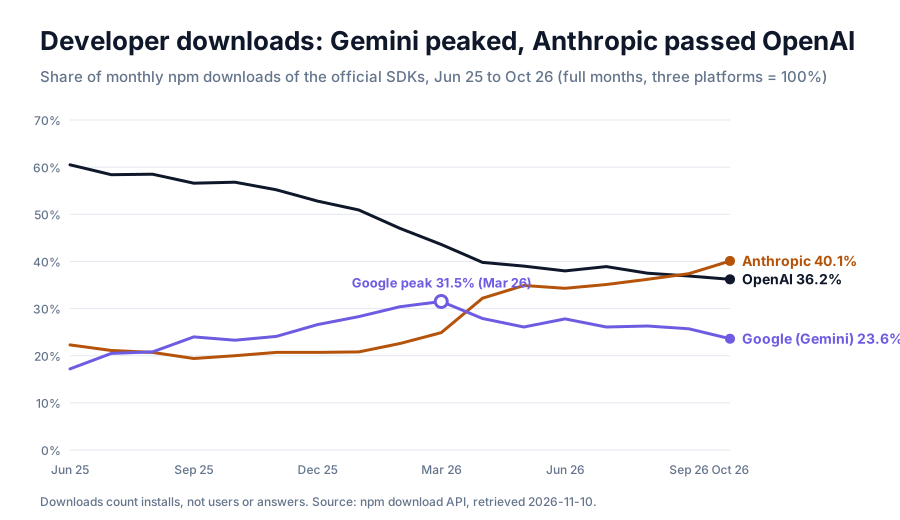
On npm the first half of the story matches the claim. Google's share of the three rose from 17.2% in June 2025 to 31.5% in March 2026, nearly doubling, while OpenAI's slid from 60.5% to 43.6%.
The second half does not. Since March, Google's share has fallen back to 23.6% in October 2026, and the platform that gained is Anthropic: its share went from 24.9% in March to 40.1% in October. Anthropic overtook OpenAI in September 2026 (37.4% to 36.9%), and by October the gap was 40.1% against 36.2%.
Python tells a similar story over the months we can see.
| Share of three platforms | May 2026 | October 2026 |
|---|---|---|
| OpenAI (PyPI) | 44.4% | 49.6% |
| Anthropic (PyPI) | 18.1% | 26.8% |
| Google (PyPI) | 37.5% | 23.6% |
| Google (npm) | 26.1% | 23.6% |
Both ecosystems show Google's share lower in October than in the spring. They do not agree on OpenAI: on npm it keeps losing share, and on PyPI it gains. We read that as two different developer populations, not as a contradiction.
Why this is not a market-share chart
- Downloads are installs, not users. Automated builds, test pipelines and caching can multiply downloads, and one developer can account for thousands.
- The OpenAI package talks to other models too. Google documents that "Gemini models are accessible using the OpenAI libraries (Python and TypeScript / JavaScript) along with the REST API" (Google's OpenAI compatibility page). A developer calling Gemini that way adds to OpenAI's number, so OpenAI's share is probably somewhat overstated and Google's understated.
- We counted the main SDKs, not everything. Cloud-specific packages and frameworks that wrap several providers are not in this data.
- The old Google packages are mostly gone. The legacy Google SDK was 4.6% of Google's PyPI downloads on 9 November and 13.4% on npm on 8 November, so the move to the new packages is not hiding a Google decline.
- Scale changed a lot. Total monthly npm downloads of the three rose about 15.8 times between June 2025 and October 2026, so shares moved while volumes soared.
What it means for Gemini-first GEO
The data cannot tell you where your customers ask questions. It can say something about the claim.
- There is no clean developer move to Gemini. Gemini's share rose and then fell, and the platform gaining share since spring is a different one. If "Gemini-first" is justified, it has to be justified by distribution (where Google's AI features appear), not by developer adoption.
- Platforms are trading places quickly. In 17 months, OpenAI went from 60.5% to 36.2% of npm downloads of the three. A strategy aimed at one platform's lead is aimed at a number that moves.
- The sensible unit is your own visibility per platform. What matters is whether each AI answer mentions and cites your brand, and that is measurable.
Measure each AI surface, not one
Track AI Overviews. Position Tracking records whether your tracked keywords show an AI Overview and whether your page is cited in it.

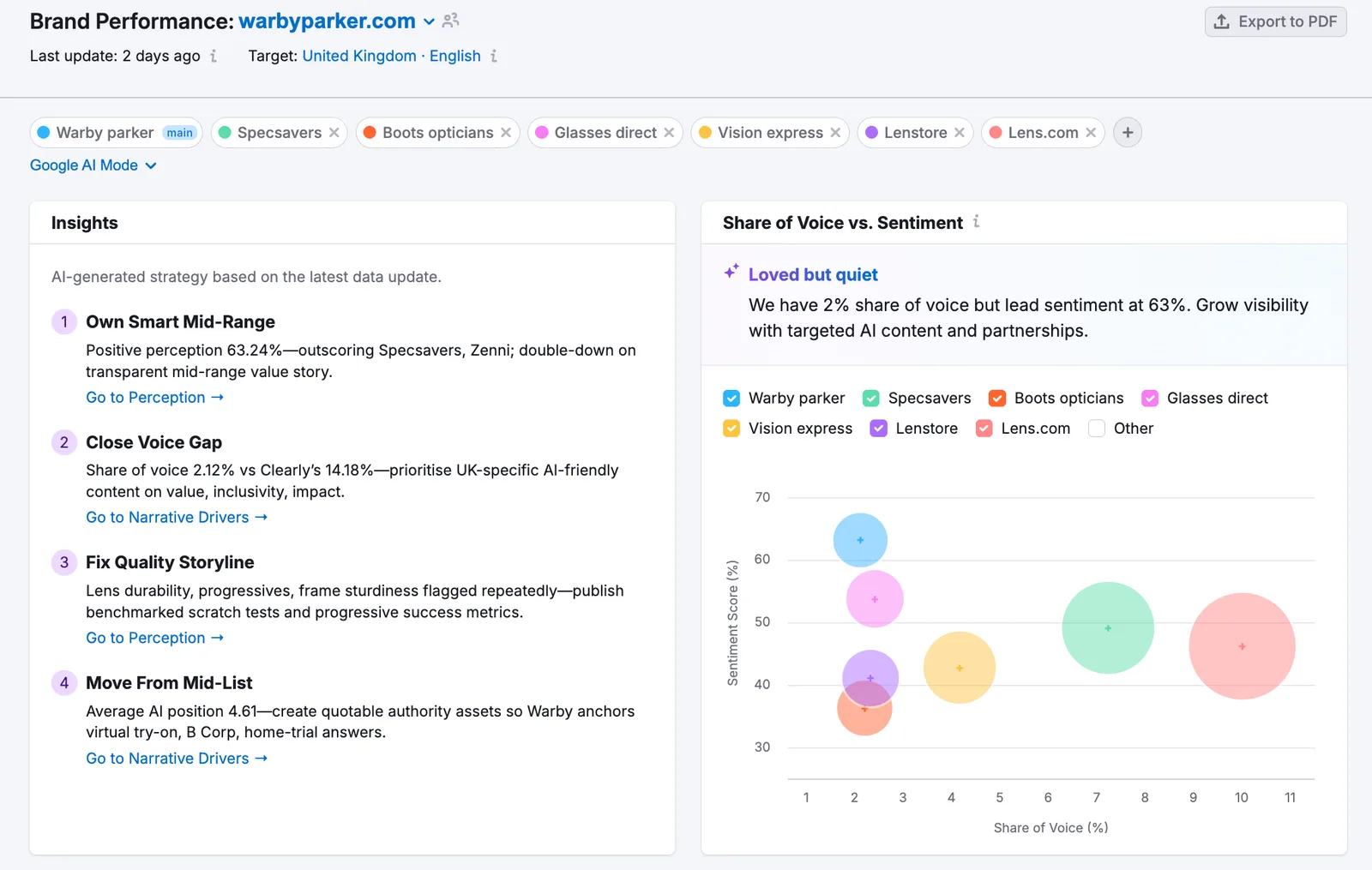
See your brand across Google's AI surfaces and the others. Brand Performance in the AI Visibility Toolkit shows share of voice and sentiment for your brand and competitors in AI answers, including in Google AI Mode, and the Brand Monitoring app tracks mentions of your brand across the web.
Compare platforms in one view. Visibility Overview breaks mentions down by ChatGPT, AI Overview, AI Mode and Gemini, over time, which is what a Gemini-first or ChatGPT-first decision needs.
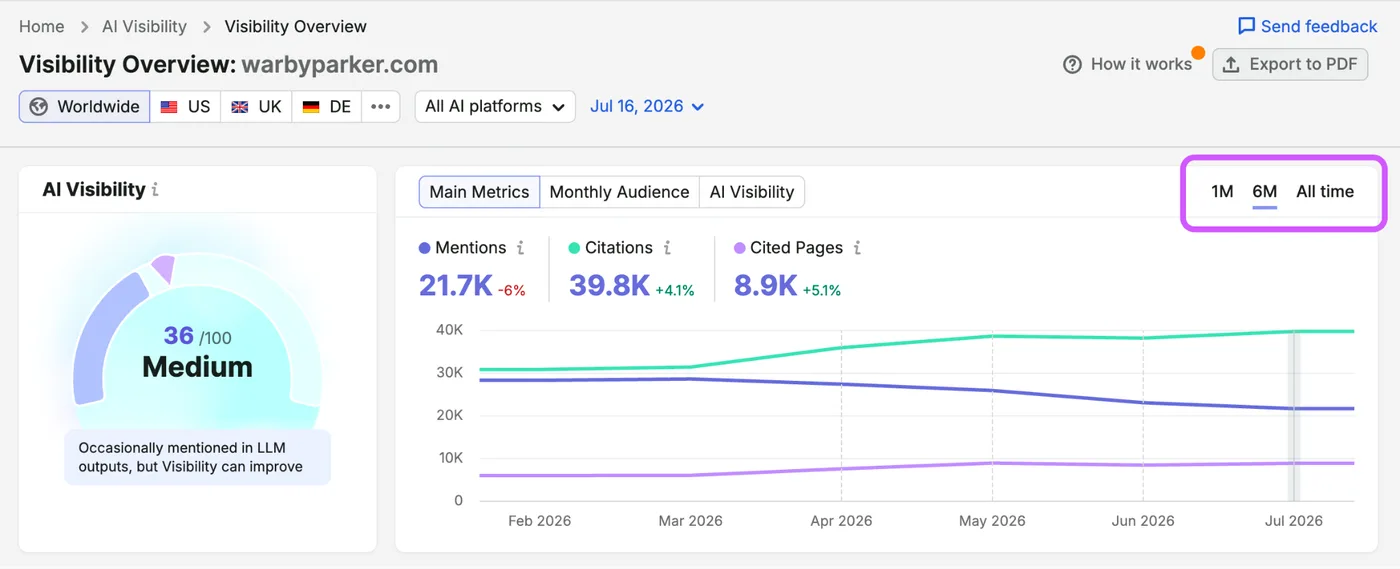
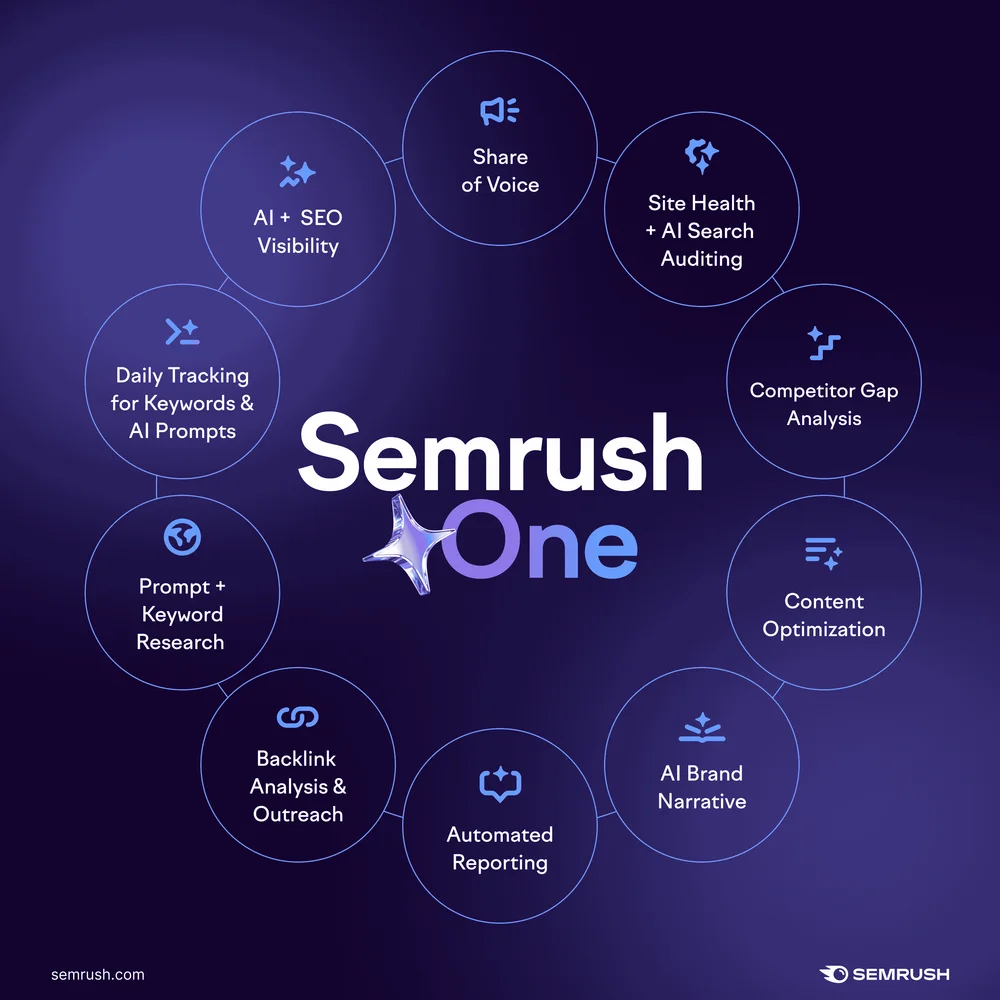
The AI Visibility Toolkit has no free trial of its own; the 7-day free trial is Semrush One's, which includes it alongside the SEO Toolkit. To set your own cross-platform baseline before paying, try Semrush One free for 7 days: its page offers "Unlimited access to all Semrush One tools", checked on 16 October 2026. Those are Semrush's published terms, not something we tested; none of the data above came from a Semrush account.
Follow your visibility, not the headline
Developers are not rushing to Gemini. They moved towards it for a year, and since March the share has gone to Anthropic. That is a reason to measure your own presence on every AI surface and to distrust any plan that rests on a single platform's lead.
Try Semrush One free for 7 days
Visibility Overview and Brand Performance to compare how ChatGPT, Gemini, AI Overviews and AI Mode mention your brand, beside Position Tracking in the SEO Toolkit, together in Semrush One. Free for 7 days for new users.
Try Semrush One free for 7 daysWhere the numbers come from
- npm: the public download API (
api.npmjs.org), daily counts for each package from 8 May 2025 to 8 November 2026, retrieved on 10 November 2026. Shares use full calendar months from June 2025 to October 2026 (17 months). - PyPI: the public statistics API (
pypistats.org), daily downloads with mirrors excluded, 8 April to 9 November 2026. Shares use the six full months May to October 2026. - Share: for each ecosystem and month, a platform's downloads divided by the sum of OpenAI, Anthropic and Google (new and legacy SDK). Platforms outside these three are not in the denominator.
- Not shown: consumer use of any assistant, how often each model is cited in answers, and the reasons behind the shifts.
- Reproduce it: the saved counts and script are in our research folder (
research/r2-c3-gemini-adoption/).
Some links may be affiliate links. We may earn a small commission at no extra cost to you.
Related Articles
Explore more guides and reviews from our experts.
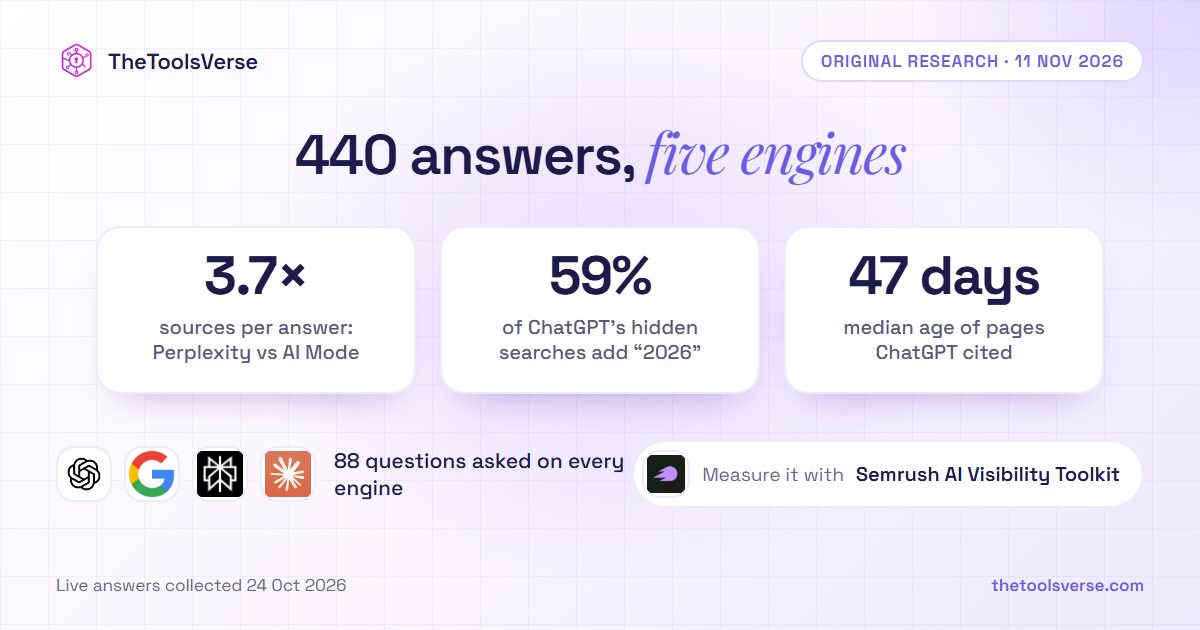
We Asked 88 Questions on 5 AI Engines. Perplexity Cited 3.7 Times as Many Sources as Google AI Mode, and ChatGPT's Hidden Searches Add "2026" to 59% of Queries
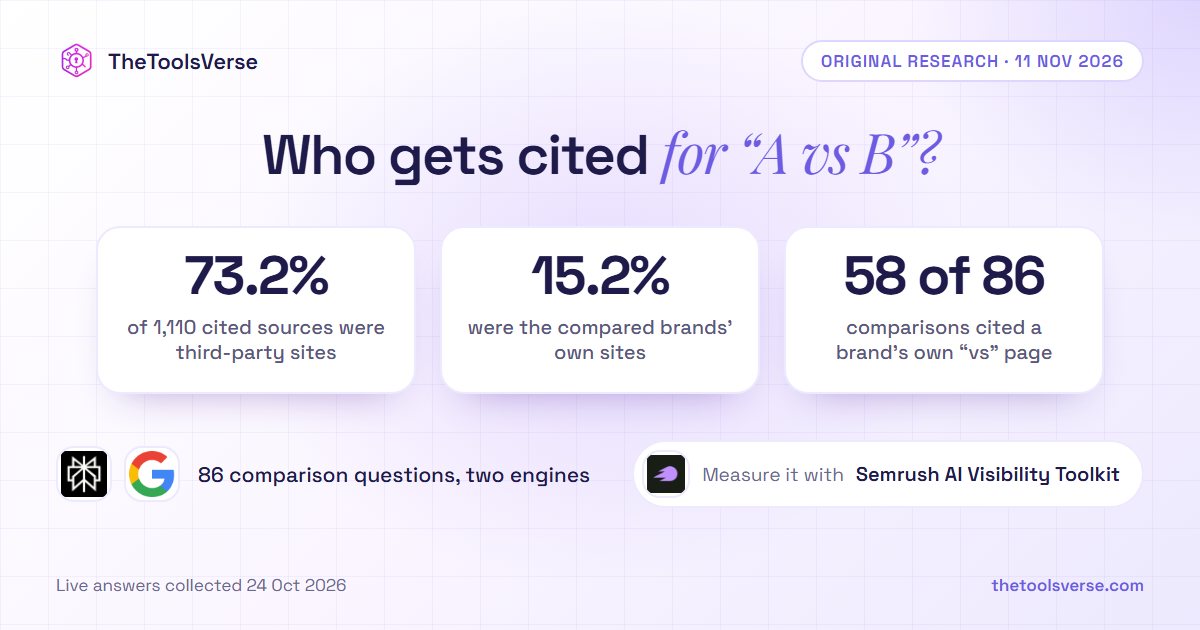
73% of the Sources AI Cited for 86 "A vs B" Questions Were Third-Party Sites and 15% the Brands' Own. Yet Two Comparisons in Three Still Cited a Brand's Own Page