Company Blogs Did Not Collapse Together, They Split: Of 120 Company Blogs, 30% Now Publish Half as Much as in 2022 or Nothing at All, While 24.2% Publish at Least Twice as Much
Disclosure
This article is promotional content produced as part of the Semrush Creator Accelerator programme. It contains affiliate links to Semrush — if you buy through them we may earn a commission at no extra cost to you — and we may also receive a reward from Semrush for publishing it. The publishing data is our own, read from public WordPress posts APIs; no Semrush data was used for it. Semrush did not review or approve the article.
The common story about company blogs is a collapse: AI answers take the informational clicks, traffic falls, and teams stop publishing. We wanted to see whether the publishing part of that story shows up in the posts themselves.
So we counted them. For 6,000 popular websites, we read each site's public WordPress posts API and counted the posts it published between 1 January and 14 November of every year from 2021 to 2026, the same window each year so 2026 compares fairly.
Know which of your posts still earn clicks
Position Tracking follows your rankings day by day and can alert you when a keyword moves, so you see which posts hold their place and which are slipping. To see whether AI answers cite your pages, the AI Visibility Toolkit is part of Semrush One: try Semrush One free for 7 days.
Which blogs we counted
We took the websites ranked 1,001 to 7,000 in the Tranco list of popular domains, a range none of our earlier studies used. We skipped every site whose robots.txt disallows its posts API (228 of them), and found a public WordPress posts API on 269. Most popular websites run something else, so this is a study of WordPress blogs among popular sites, not of every blog.
We kept the 167 blogs with complete counts that published at least five posts in the 2022 window, and split them in two:
- 47 high-volume sites that published 1,000 or more posts in the 2022 window, mostly news and media;
- 120 company and other blogs below that, the group this article is about.
The median company blog did not change
For the median company blog, 2026 output was the same as in 2022: a change of 0%. If you only looked at that number, you would conclude that nothing happened. The spread shows otherwise.
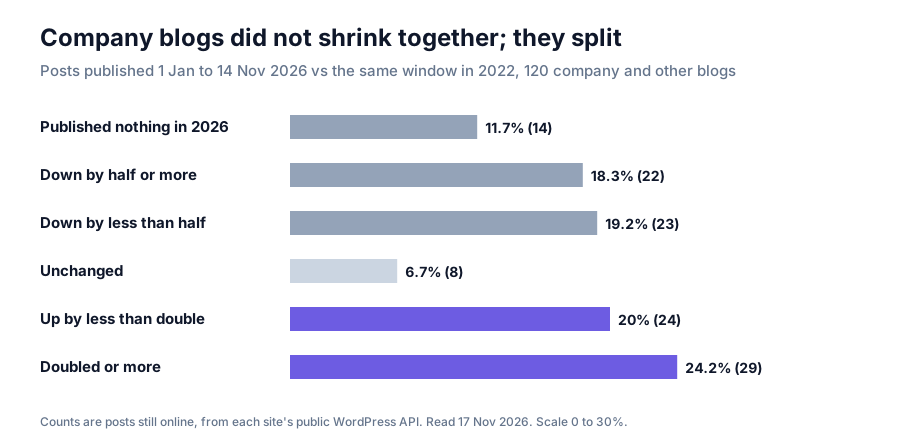
- 11.7% (14 blogs) published nothing at all in the 2026 window.
- 18.3% (22) were still publishing, but half as much or less.
- 24.2% (29) published at least twice as much as in 2022.
- Only 6.7% (8) published the same amount.
So 30% of these company blogs now publish half as much as in 2022, or nothing, while about a quarter have doubled. The blog did not die everywhere; many companies stopped, and many others went the other way. And 18.3% of the company blogs had published nothing since 15 August, three months before we counted.
The 47 high-volume sites were steadier: none stopped, 12.8% halved, and their median change was also 0%.
What the blogs that kept going publish now
To see what kind of posts companies write, we looked at the address of each post, its slug, for the 59 English-language blogs in the group of 167, using up to their 100 latest posts in each year's window.
We counted two kinds of post. Buyer posts have words like vs, alternatives, pricing, best, review or comparison in the slug. How-to and explainer posts start with how, what or why, or contain guide, tips, tutorial or examples.
- Buyer posts rose from 6.4% of new posts in 2022 to 7.8% in 2026.
- How-to and explainer posts fell from 17.2% to 14.2%.
Among the 46 blogs with enough posts in both years to compare, 22 raised their share of buyer posts and 16 lowered it; 23 cut their share of how-to posts and 16 raised it. The shift is real but modest: most posts on these blogs are still neither.
What this cannot tell you
- Only posts still online are counted. The posts API lists what a site publishes today, so a post deleted since 2022 is missing from the 2022 count. That makes the 30% who halved or stopped a floor, and the unchanged median a ceiling: if some of these companies pruned old posts, the real fall is larger.
- A count is not traffic. We did not measure visits, rankings or AI citations for these blogs.
- A slug is a rough label. It shows what a post is called, not what it says.
Five moves for a company blog in 2026
- Decide whether the blog is for search, for buyers, or for neither. The companies here split rather than drifting together, which suggests an active choice.
- Find the posts that still earn clicks before you cut or add. Rankings, AI citations and conversions per post tell you which ones are working.
- Write for buyers where you can be the best source. Comparisons, alternatives and pricing posts grew here; they answer questions an AI summary cannot settle without a source.
- Prune with evidence, not by age. If you delete posts, know first which ones still rank or are cited.
- Keep a pulse. Nearly one in five of these company blogs had been silent for three months. A blog that stops quietly still costs crawl budget and trust.
Finding what still works with Semrush
Watch the posts that matter. Position Tracking tracks your chosen keywords daily and can alert you when positions move.

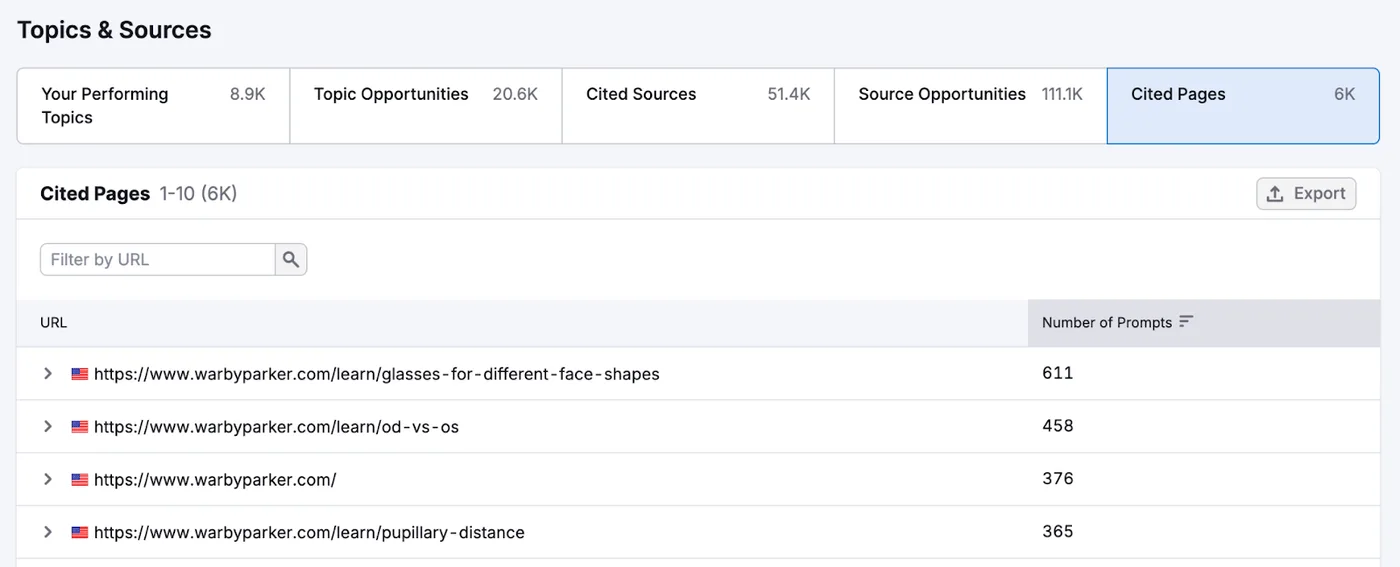
See which posts AI answers cite. The AI Visibility Toolkit lists your own URLs by the number of AI prompts that cite them.
Benchmark the content categories. Organic Research in the SEO Toolkit shows which pages and keywords bring a competitor its search traffic, so you can see whether a drop is yours alone or the whole category's.
Find the buyer keywords. Keyword Gap lists keywords your competitors rank for and you do not, a direct source of comparison and alternatives topics.
Check the pages can still be read. Site Audit reports an AI Search Health score and the AI search bots your site blocks, and can crawl with JavaScript rendering switched off, as in the example below.
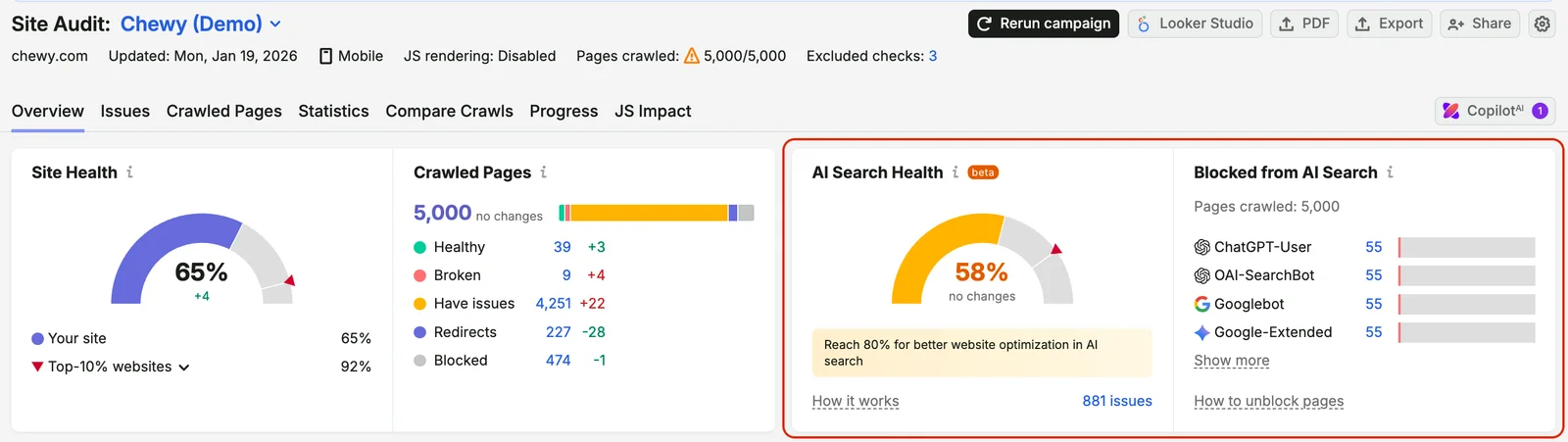
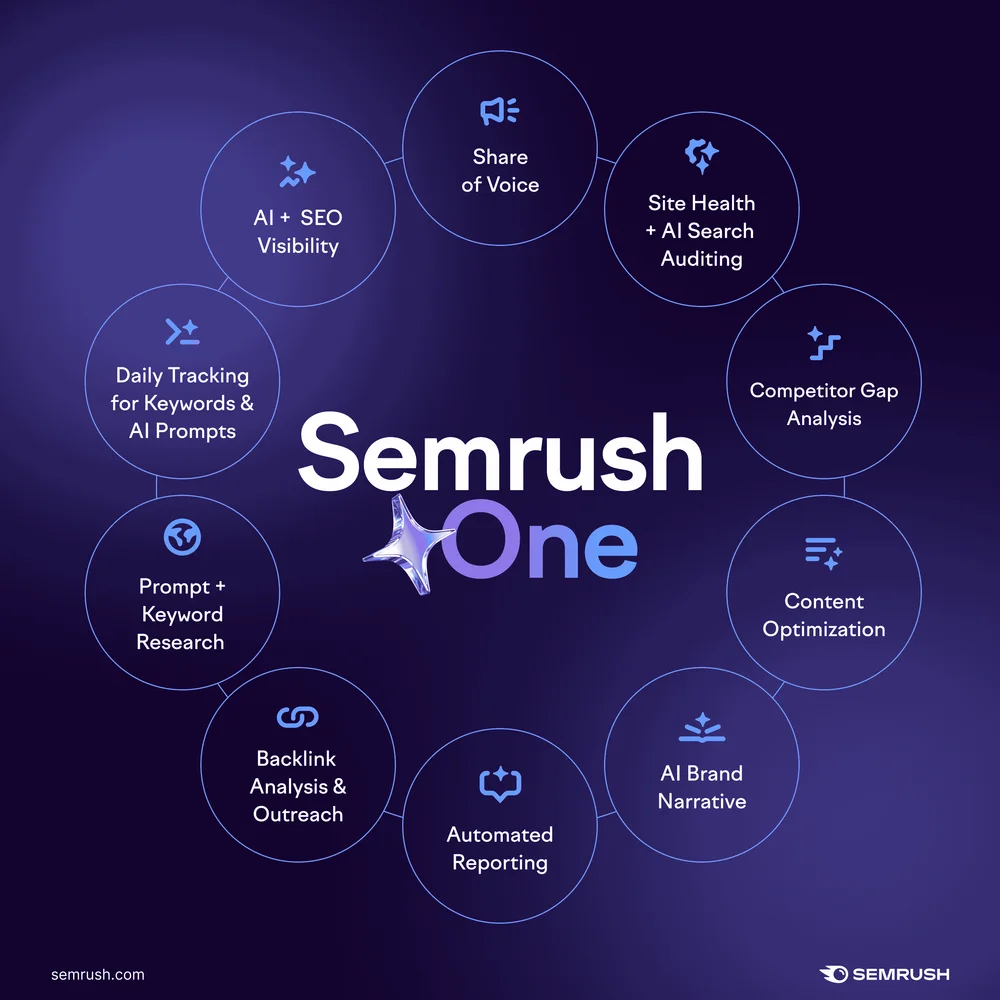
Semrush One includes the SEO Toolkit and the AI Visibility Toolkit, and the 7-day free trial belongs to Semrush One. To find which of your own posts still rank and get cited before paying, try Semrush One free for 7 days. As of 16 October 2026, Semrush's product page called it "Unlimited access to all Semrush One tools".

Stop or double down, but decide
Among these company blogs, the middle has emptied out: 30% have halved or stopped, and 24.2% have doubled. Whichever way you go, make it a decision based on what your posts still earn, not a slow fade.
Try Semrush One free for 7 days
See which posts still rank in Position Tracking and which are cited by AI answers in the AI Visibility Toolkit, both included in Semrush One. Free for 7 days for new users.
Try Semrush One free for 7 daysHow we counted
- Population: Tranco ranks 1,001 to 7,000 (6,000 domains), read on 17 November 2026.
- Robots.txt: a site was skipped if its rules for all crawlers disallow the WordPress posts API; 228 were skipped.
- Posts API: we looked for
/wp-json/wp/v2/postsat the domain, its www version and/blog/, and counted posts dated 1 January to 14 November in each year with the total the API reports; each site's yearly requests were spaced 0.4 seconds apart. - Cohort: complete counts for all six years and at least five posts in the 2022 window (167 blogs); high-volume means 1,000 or more posts in that window.
- Post types: English-language blogs (at least 60% of slugs contain common English words, at least 20 slugs); up to the 100 latest posts per year's window.
- Limits: WordPress sites only; posts still online only; no traffic, ranking or citation data.
- Reproduce it: the scripts and saved results are in
research/r2-f2-blog-cadence/.
Some links may be affiliate links. We may earn a small commission at no extra cost to you.
Related Articles
Explore more guides and reviews from our experts.
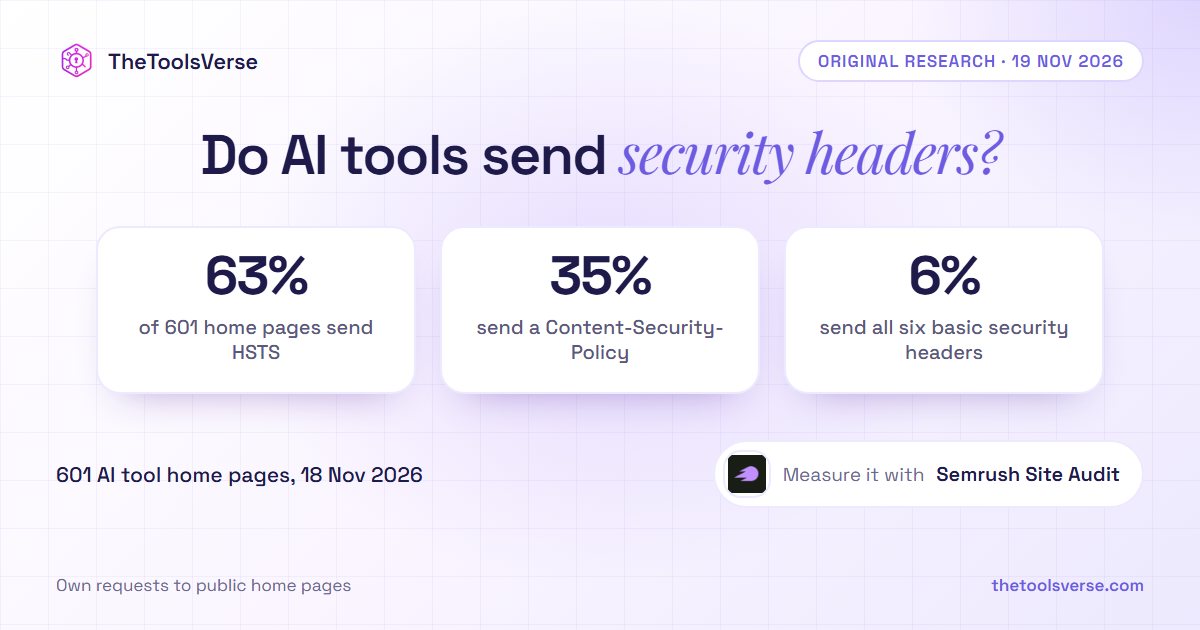
AI Tool Home Pages Redirect to HTTPS 94.5% of the Time, but Only 63% Send HSTS, 35% a Content-Security-Policy and 6% All Six Basic Security Headers: We Checked 601

Insightful Pricing (2026): Three Plans, a 50-Seat Minimum and a 14-Day Work Audit