Claude Code and the Semrush MCP: 61 Calls and 23,810 API Units in 21 Minutes, and the 9 Mistakes Our Checks Caught Before Publishing
Disclosure
This article is promotional content produced as part of the Semrush Creator Accelerator programme. It contains affiliate links to Semrush — if you buy through them we may earn a commission at no extra cost to you — and we may also receive a reward from Semrush for publishing it. We used the Semrush MCP connector. Everything below comes from our own session log; Semrush did not review or approve it.
The pitch for agentic SEO is speed: describe the outcome, let the agent call the tools, get structured data back. We tested that pitch on real work. On 17 November 2026 we used Claude Code with the Semrush MCP connector to collect the data for two studies, then had it run the analysis and draft both reports.
The speed held up. The agent also made mistakes that would have put false numbers in front of readers. This is the full record of both.
Keep the data layer structured
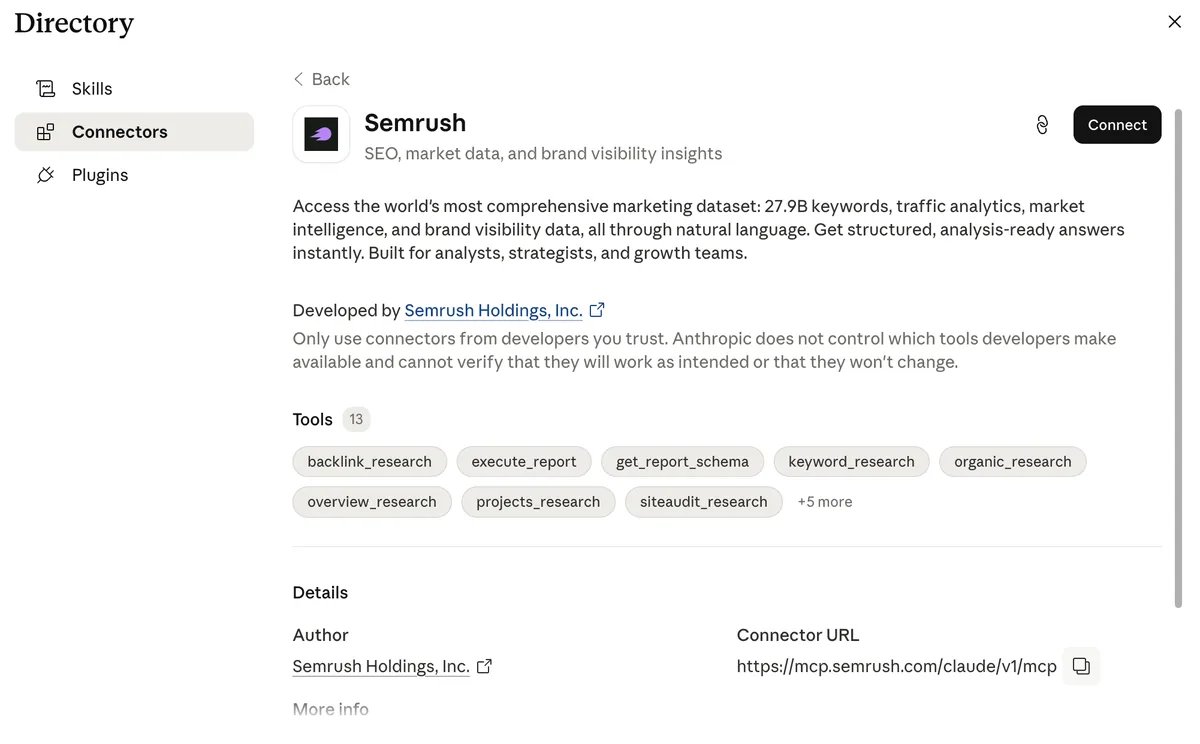
The Semrush MCP returns Semrush's own rows, not a summary, which is what made every check below possible. To query the same data yourself, Semrush One includes the SEO Toolkit and the AI Visibility Toolkit: try Semrush One free for 7 days.
What the agent did in 21 minutes
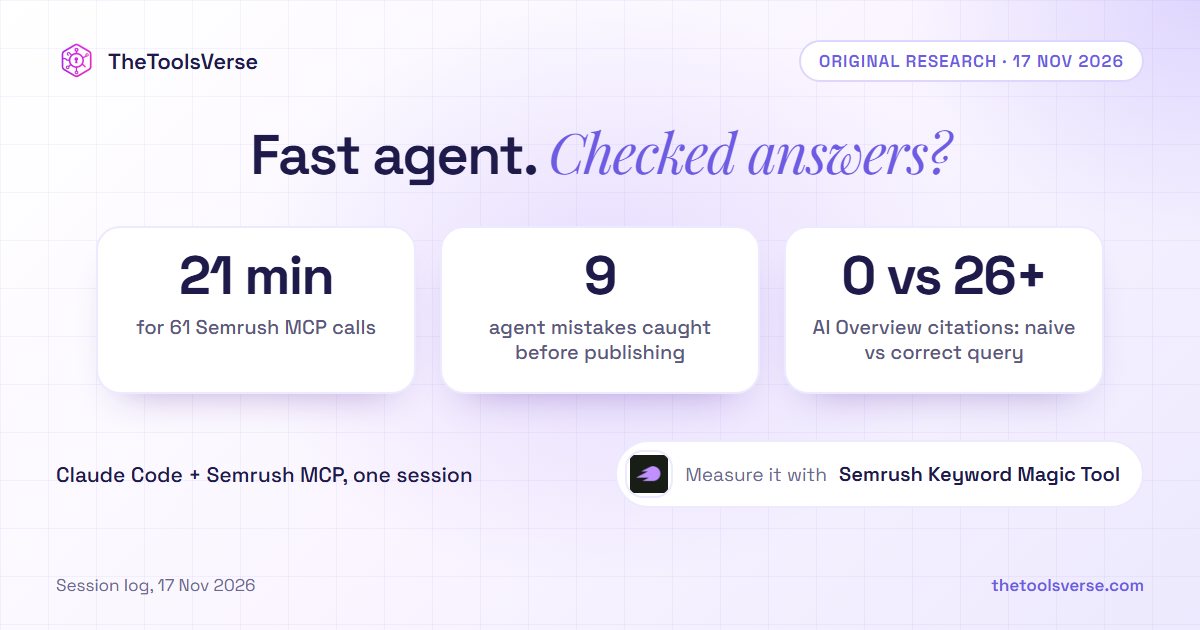
From its first Semrush call to its last, the session took 21 minutes. In that time the agent made 61 calls to the Semrush connector:
- 3 discovery calls, which list the reports a toolkit offers, their price in API units and whether the account can run them;
- 3 schema calls, which return a report's parameters;
- 55 report calls, which returned 2,381 rows of data.
No call failed. The account's balance went from 47,270 to 23,460 API units, so the session used 23,810 units: exactly 10 units per row returned. The analysis and writing took longer than the data collection; the 21 minutes is only the time spent pulling data.
Two of the reports were enough for both studies. Organic Research returned each site's keywords with the SERP features on each results page. Domain history returned two years of monthly totals, including how many of a site's keywords show an AI Overview.
The 9 mistakes, and what caught each one
| # | What the agent got wrong (or nearly did) | What caught it |
|---|---|---|
| 1 | Its first query for "is this site cited in the AI Overview?" read the site's ranking rows. Those rows never show the citation, so every site looked uncited. | A second query for the site's own SERP-feature rows, where Semrush stores the AI Overview citation as a separate row type. |
| 2 | It first worked out the AI Overview's feature code from the order of a column list: 51. | Semrush's API documentation lists AI overview as 52; 51 is "Ads middle". |
| 3 | A 100-row call showed 3,000 units used, three times the expected cost. | Reconciling the balance: the per-call figure did not equal rows × 10 for 47 of the 55 report calls, most of which ran in parallel; the balance itself moved by exactly 10 per row. |
| 4 | A draft said "eight of the ten sites" had an AI Overview on more than 90% of their keywords. | Checking every number in the text against the saved data: it was nine. |
| 5 | A draft said the 20 sites covered 12 niches. | The same check: 11. |
| 6 | A chart was titled "Ranking under an AI Overview rarely means being cited in it". | Reading the chart: sites ranked #1 were cited 64.4% of the time. The title now says only #1 clears half. |
| 7 | A draft said the jump in AI Overviews came "for almost every site" in one month. | Testing the claim: true for 17 of 20 sites, so the text now says 17 of 20. |
| 8 | A draft said one site's AI Overview citations dropped "starting in December 2025". | The data: the drop had begun a month earlier; most of it came in December. |
| 9 | A cover said "94% of their keywords", which reads as all keywords. | Review: 94% is the median site's figure, so the cover now says "(median)". |
Mistake 1 would have produced a false finding: that large sites are never cited in AI Overviews. Mistake 2 would have measured the wrong SERP feature altogether, and mistake 3 would have overstated the cost. Mistakes 4 to 9 would have printed claims slightly stronger or vaguer than the data. None reached a published page, because every number had to pass a check before it could stay.
The costliest trap, tested on 5 new sites
To check that mistake 1 was not a quirk of the first study, we asked the same question both ways for five sites that appear in neither study: mayoclinic.org, nationalgeographic.com, pcmag.com, zillow.com and bbcgoodfood.com.
- The naive way: take each site's 20 highest-volume top-10 rankings and look for the AI Overview code in "SERP Features by Position". Across 87 keywords, 85 showed an AI Overview, and the naive reading found the site cited in 0 of them.
- The correct way: ask for the site's own SERP-feature rows with the AI Overview code. Among the same 85 keywords, the site was cited in at least 26. That is a lower bound, because we only pulled each site's 40 highest-volume citations.
For mayoclinic.org alone, the naive reading said 0 of 19; the correct one found 14. An agent that stops at the first query hands you a confident, structured, wrong answer.
Five rules we now follow
- Never retype a number. We copied every Semrush response out of the session log with a script, so the analysis read exactly the rows Semrush returned.
- Check every number in the text against the data. Our two reports have 37 and 52 automated checks. Writing those checks is how mistakes 4, 5, 7 and 8 were found.
- Ask each question two ways when the answer is surprising. "No site is ever cited" was surprising. A second query showed it was wrong.
- Look up codes and labels; do not infer them. One domain-history response had two columns both labelled "AI overview": one counts keywords with an AI Overview, the other counts the site's own appearances in it. Only the order we requested them in tells them apart.
- Reconcile cost from the balance, not from per-call figures, when calls run in parallel.
Running the same workflow with Semrush
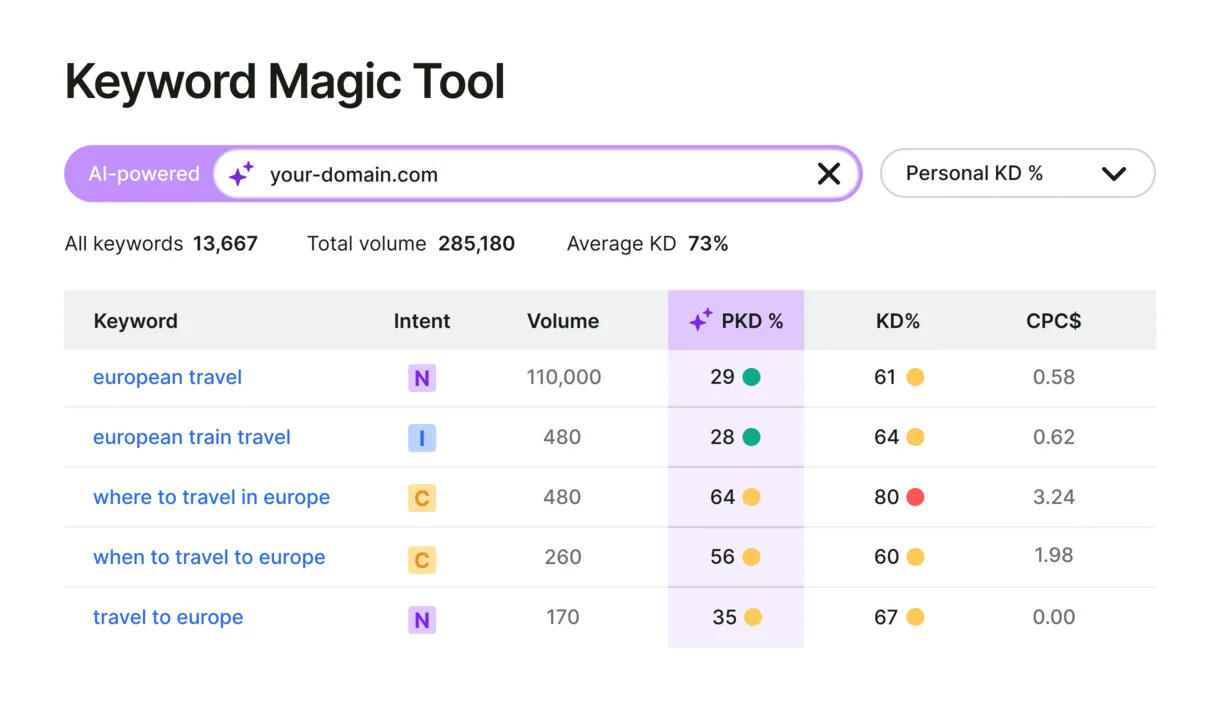
Start from keywords. The Keyword Magic Tool returns keywords with intent, volume and keyword difficulty; through the MCP, the same keyword data arrives as rows an agent can sort and check.
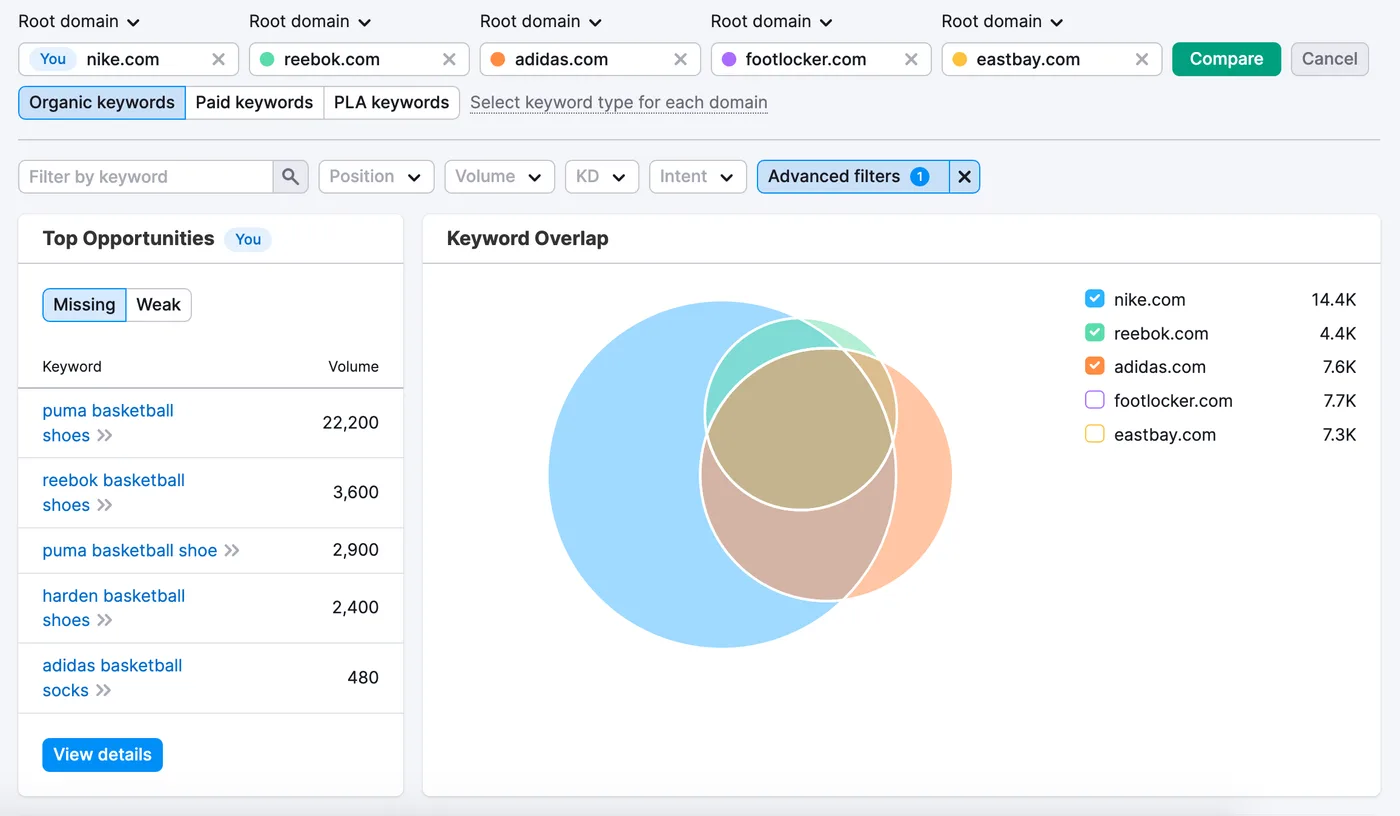
Compare against competitors. Keyword Gap compares the keywords of up to five domains and lists the ones a competitor has and you do not.
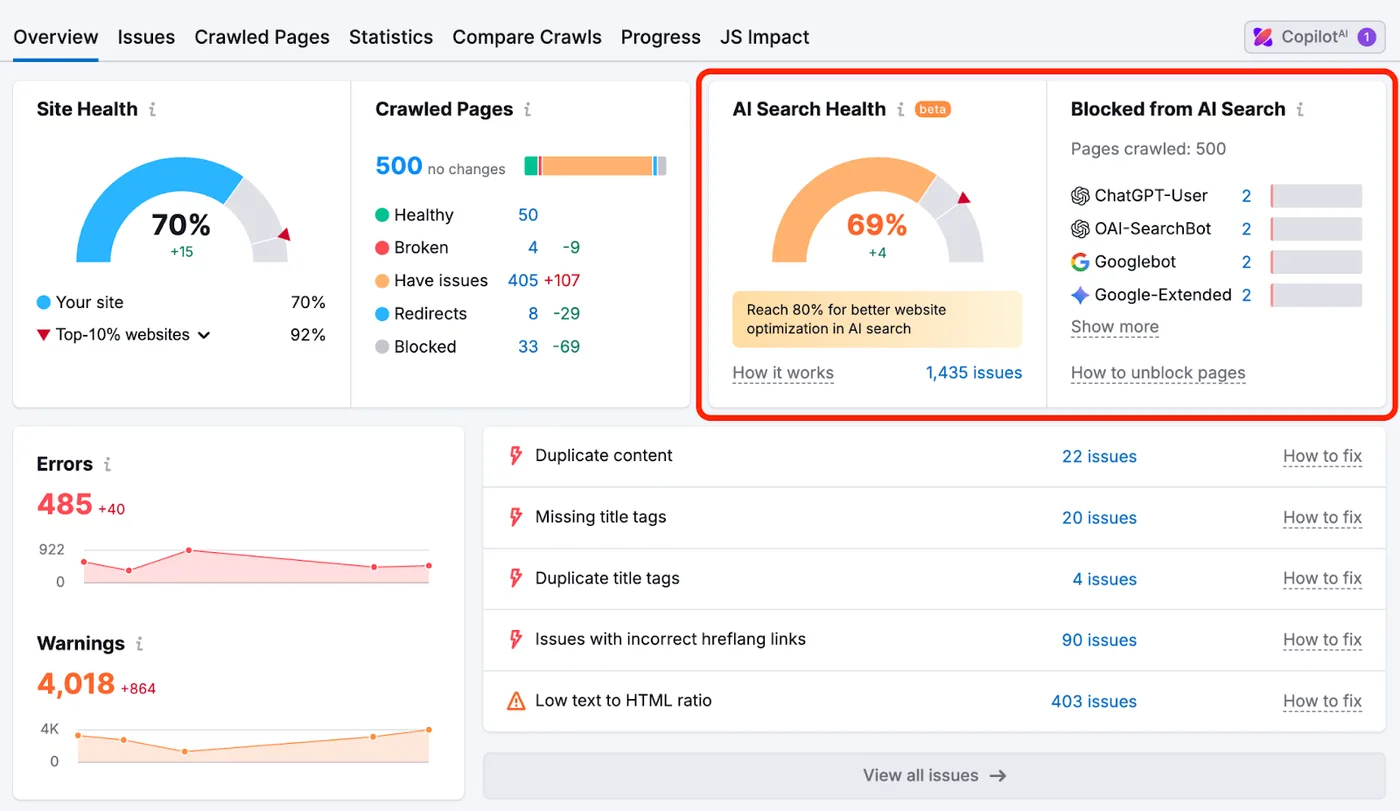
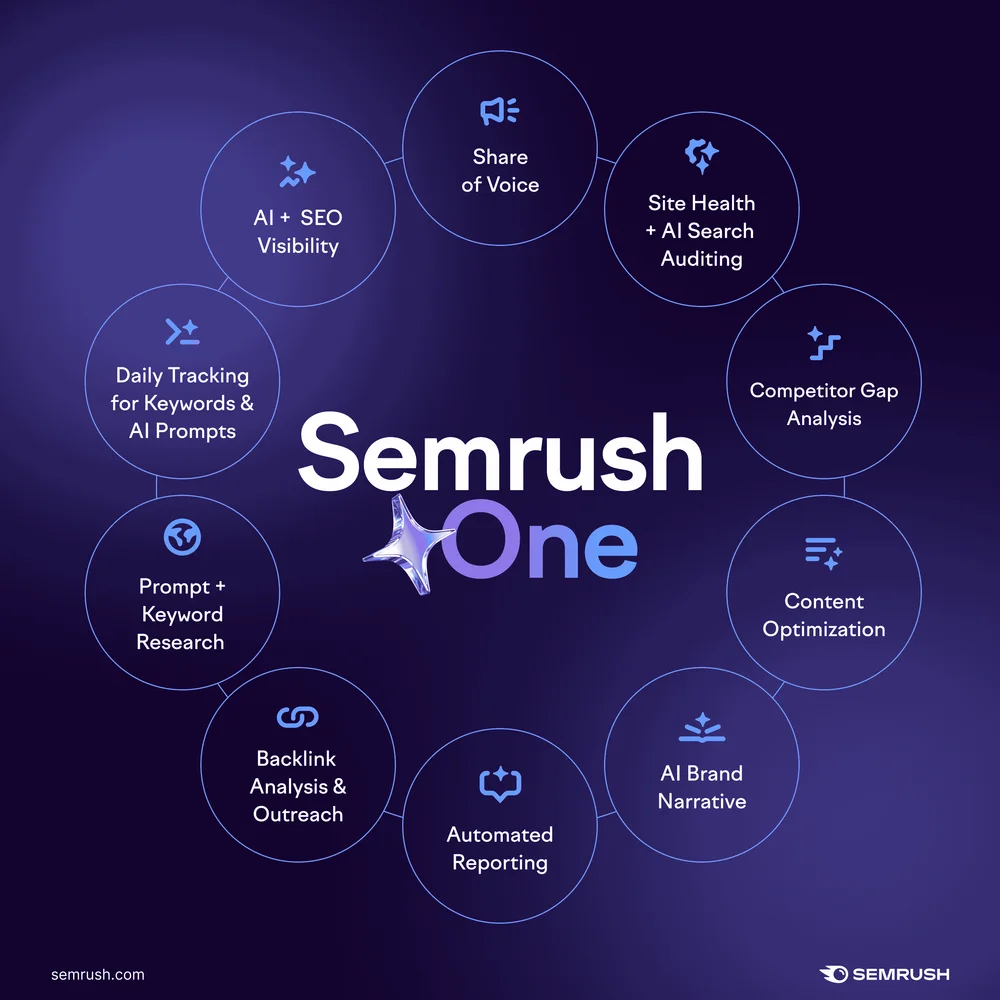
Give the agent a technical baseline. Site Audit reports a site's health, including an AI Search Health score and the AI crawlers it blocks.
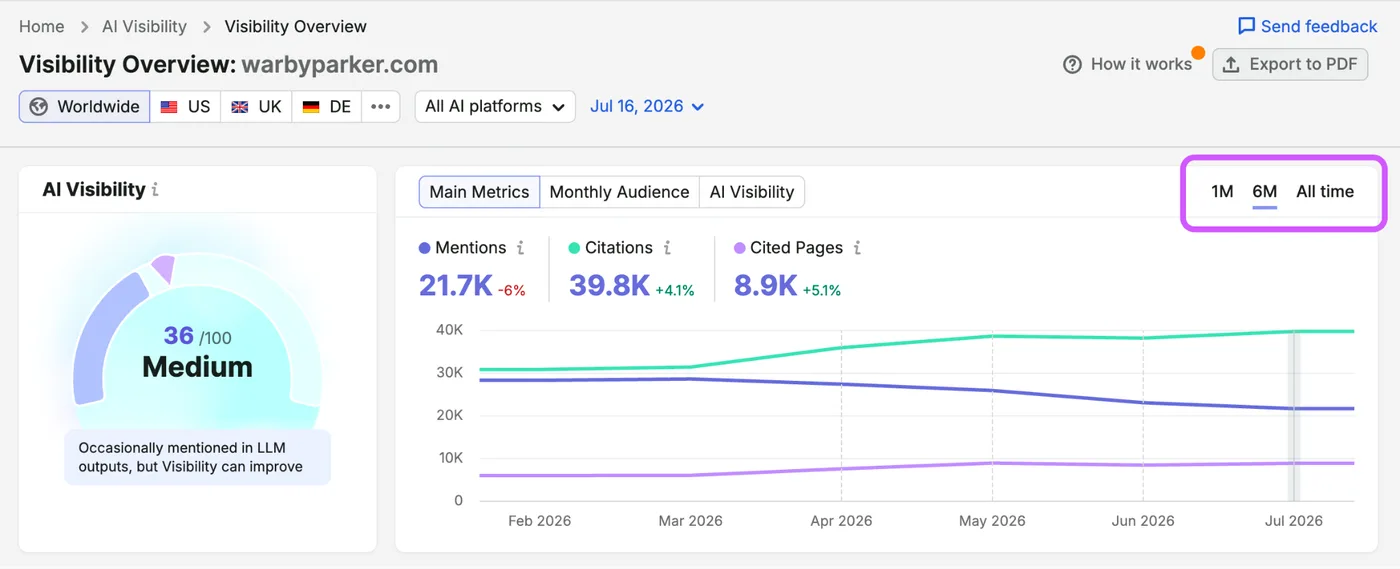
Check where the work ends up. The AI Visibility Toolkit reports mentions, citations and cited pages across AI platforms, the surfaces an agent-built content plan is meant to reach.
The Semrush MCP documentation explains how to connect it. Semrush One includes the SEO Toolkit and the AI Visibility Toolkit, and the 7-day free trial belongs to Semrush One: try Semrush One free for 7 days. Semrush's product page describes the offer as "Unlimited access to all Semrush One tools" (read on 16 October 2026). We did not use the trial for this work, and we have not checked how many API units the trial includes.
Fast is the easy part
The agent collected two studies' worth of data in 21 minutes without a single failed call. What made the results trustworthy was the checking, and that took longer than the collecting.
Try Semrush One free for 7 days
Get the SEO Toolkit and the AI Visibility Toolkit together in Semrush One, the data behind the workflow in this article. Free for 7 days for new users.
Try Semrush One free for 7 daysHow we counted
- Session: one Claude Code session on 17 November 2026 using the Semrush MCP connector. Times are the timestamps of the first and last Semrush calls in the session log.
- Calls and rows: every Semrush call in the log, with the rows each report returned. Discovery and schema calls returned no rows.
- Units: the balance reported before the first call and after the last; per-call figures compared with rows × 10.
- The 9 mistakes: every case in which an agent output was wrong, or would have produced a wrong statement, and was corrected before publication. Typos and layout fixes are not counted.
- The 5-site test: each site's 20 highest-volume top-10 keyword rows (87 unique keywords), against its 40 highest-volume AI Overview rows (code 52), US database.
- Reproduce it: the scripts and saved results are in
research/r2-g3-mcp-workflow/.
Some links may be affiliate links. We may earn a small commission at no extra cost to you.
Related Articles
Explore more guides and reviews from our experts.
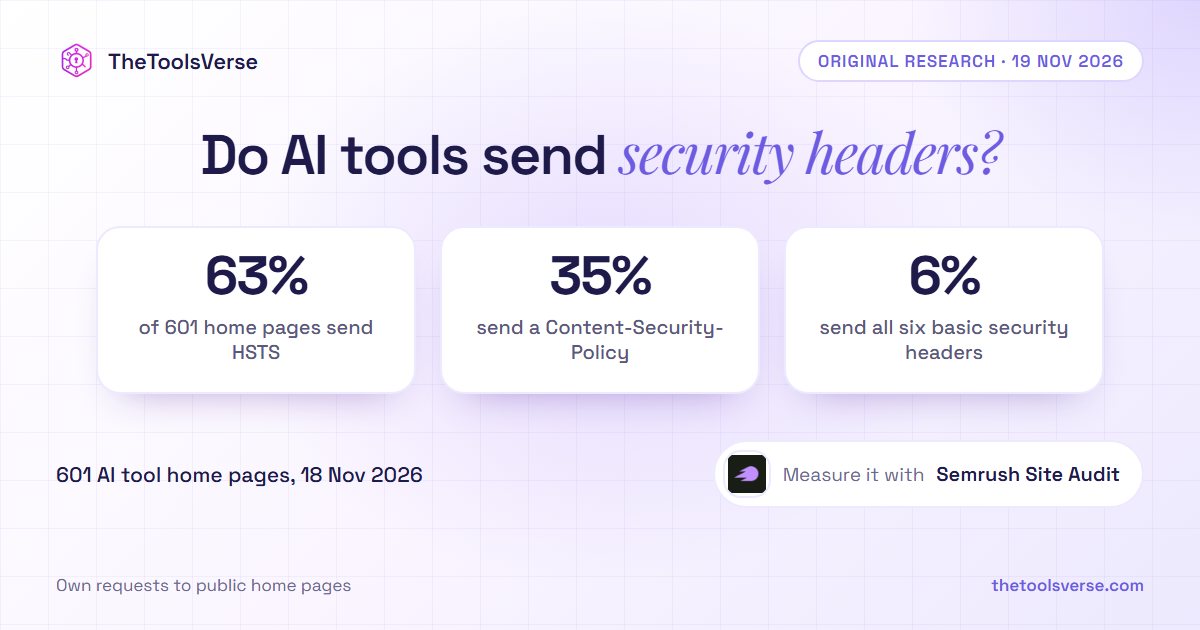
AI Tool Home Pages Redirect to HTTPS 94.5% of the Time, but Only 63% Send HSTS, 35% a Content-Security-Policy and 6% All Six Basic Security Headers: We Checked 601
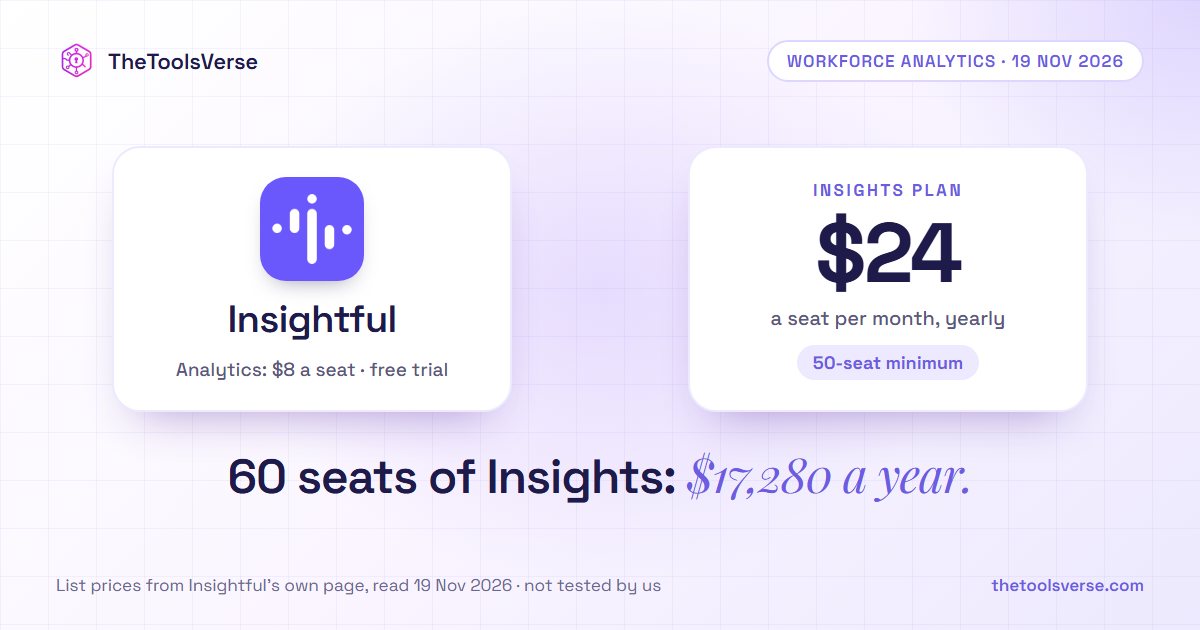
Insightful Pricing (2026): Three Plans, a 50-Seat Minimum and a 14-Day Work Audit