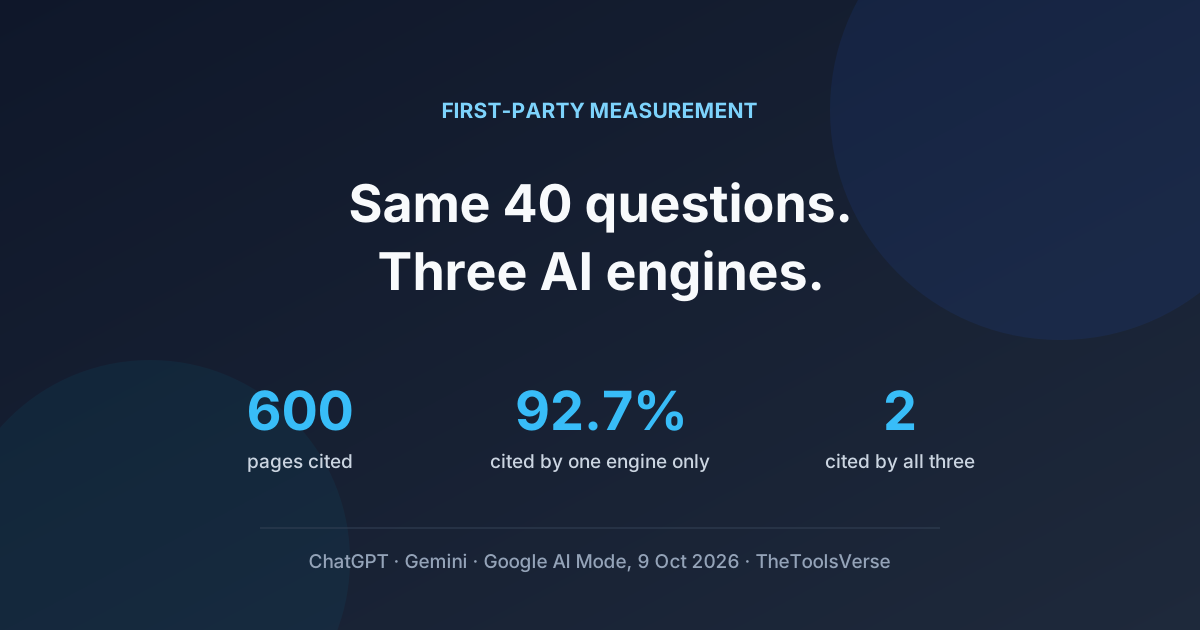
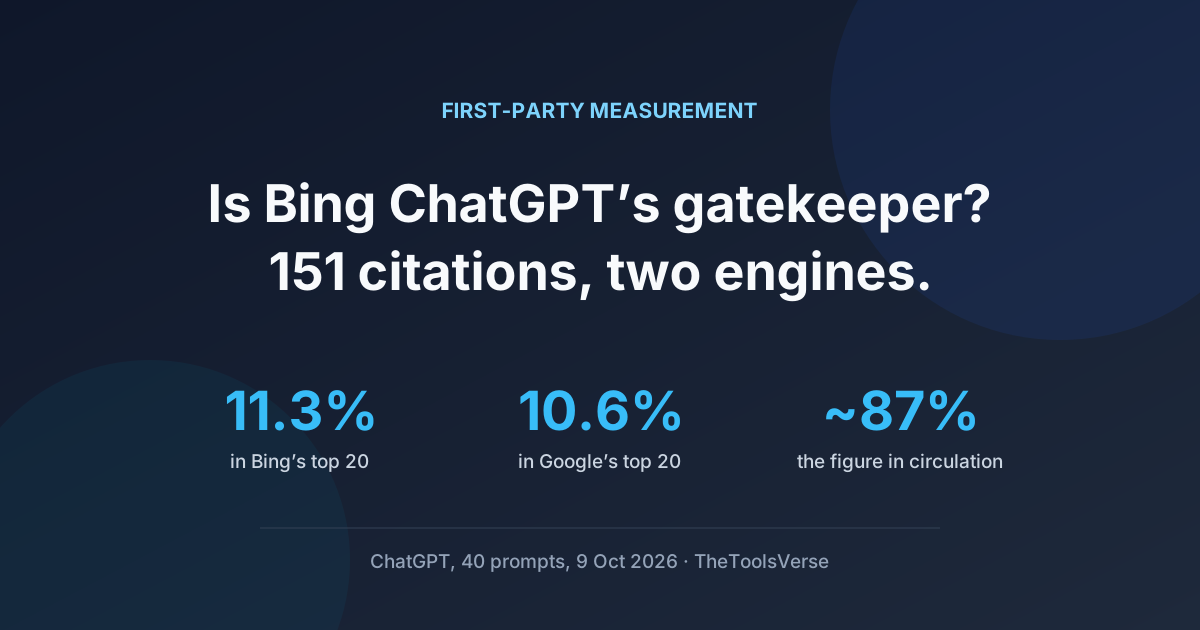
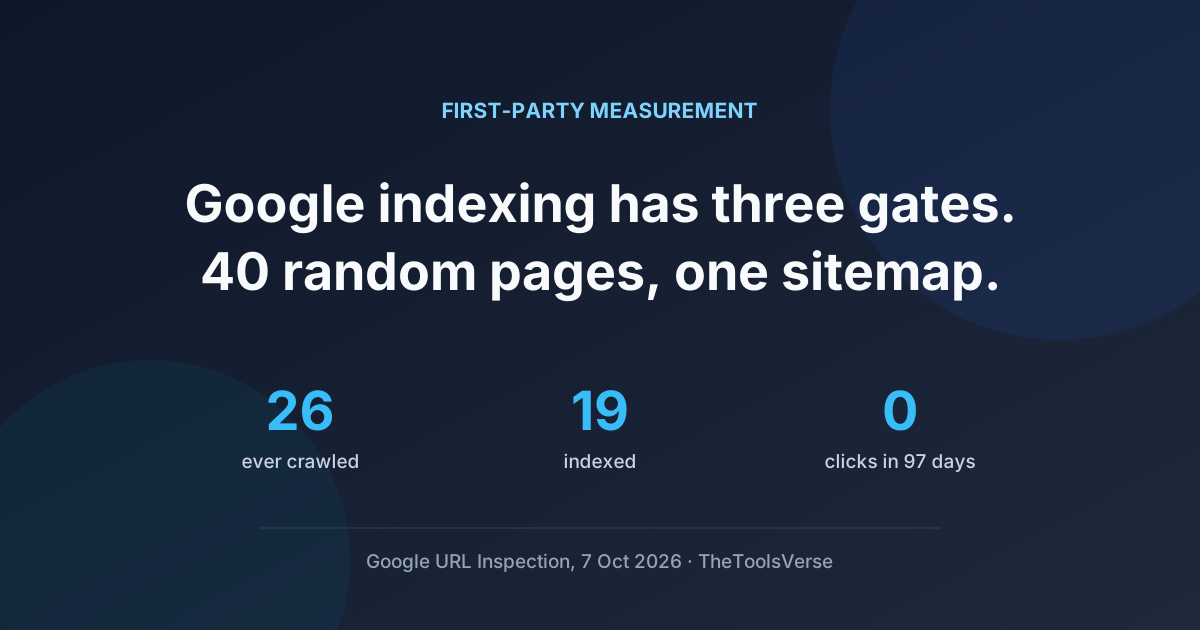
Google Showed an AI Overview on 110 of 120 Brand Searches We Checked. Only a Third of Its Sources Were the Brand.
Disclosure
This article is promotional content produced as part of the Semrush Creator Accelerator programme. It contains an affiliate link to Semrush — if you buy through it we may earn a commission at no extra cost to you — and we may also receive a reward from Semrush for publishing it. All measurements in this article are our own. Semrush did not supply, review or approve the data, and the conclusions we draw are ours.
Semrush's trend brief this month carries a number that should worry anyone who owns a brand: AI Overviews on branded queries "more than tripled in a single month, jumping from 26.1% on September 1 to 90.5% by September 30, according to DemandSphere", with Chris Long of Nectiv independently reporting 93% for enterprise brand queries on the same date.
Find out which of your brand keywords trigger an AI Overview
Flag every keyword that triggers an AI Overview, and see who gets cited, with Semrush One — start your 7-day free trial. Position Tracking marks the keywords that trigger AI Overviews; the AI Visibility Toolkit inside Semrush One lists the sources AI answers cite.
Branded search used to be the safest ground in SEO: the person typing your name wants you, and your homepage answers. If Google now answers first, two questions follow. How often does it happen? And when Google writes the answer, whose pages does it use to write it?
The brief answers the first. We wanted the second, for a category we know well. On 9 October 2026 we searched Google for 40 AI-software brands, three ways each, and logged every link every AI Overview cited.
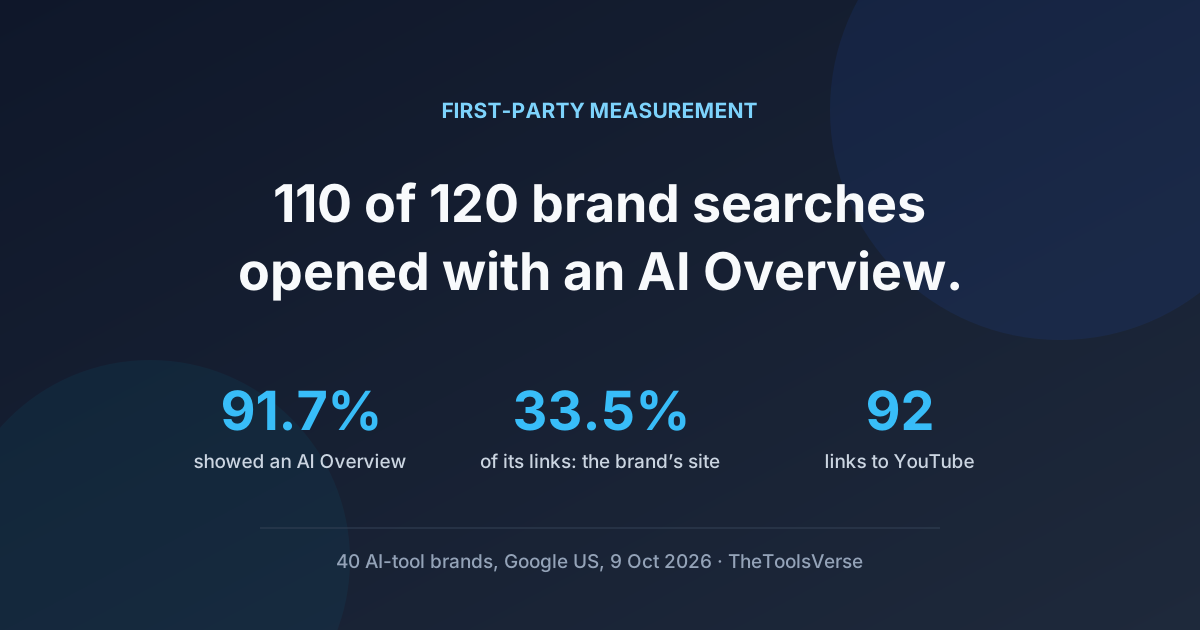
110 of 120 branded searches opened with an AI Overview — 91.7%. Of the 639 links those Overviews cited, 214 — 33.5% — pointed to the brand's own website. YouTube alone supplied 92.
![Share of Google results showing an AI Overview across 40 AI-tool brands: brand name alone 85% (34 of 40), "[brand] pricing" 95% (38 of 40), "is [brand] free" 95% (38 of 40), all branded queries 91.7% (110 of 120).](/blog/branded-ai-overviews-rate.svg)
Why these 40 brands
We did not pick brands we expected to trigger AI Overviews. We took them from our own data.
Our site is a directory of AI tools, and on Bing it is the third party in a lot of brand searches. Between the weeks of 10 April and 25 September 2026, Bing Webmaster Tools reported the queries that showed our pages most often. We took the 40 distinct AI-tool brands behind the top of that list — removing generic queries like "free ai tools", spelling variants like "canava ai", and people-search queries — from Canva AI and Goblin Tools down to Chai. On Bing, the exact queries behind those 40 brands showed our pages 404,358 times in that period.
That makes them a sample of real brand demand that real people type, spanning well-known products and small ones, chosen for a reason unrelated to AI Overviews.
How we measured
- Queries: each brand three ways — the name alone ("turboscribe"), "[brand] pricing", and "is [brand] free". 120 queries.
- Results: Google US English desktop results through DataForSEO's SERP API, with asynchronously loaded AI Overviews fetched in full, collected between 18:53 and 18:59 UTC on 9 October 2026.
- Recorded per query: whether an AI Overview appeared, where on the page, every link it cited, and the top ten organic results.
- Brand-owned: a cited link counts as the brand's own if its host ends in the brand's official domain, subdomains included. We checked each mapping against the organic results and the live sites, and corrected three of them; one is worth describing (below).
What we found
The brief's number reproduces
| Query form | AI Overview shown | Rate |
|---|---|---|
| Brand name alone | 34 of 40 | 85.0% |
| "[brand] pricing" | 38 of 40 | 95.0% |
| "is [brand] free" | 38 of 40 | 95.0% |
| All branded queries | 110 of 120 | 91.7% |
DemandSphere's 90.5% for 30 September and our 91.7% for 9 October are measuring different brand sets with different methods, and they land within two points of each other. Every one of the 40 brands triggered an AI Overview on at least one of its three queries; 31 triggered one on all three. In 88 of the 110 results the Overview sat at the very top of the page, above every organic link.
The ten branded searches without one were mostly bare names — Artificial Analysis, FaceCheck ID, Lenso AI, MiniMax Audio, NightCafe, Quizlet AI. A bare brand name is the one form where Google still sometimes just lists the brand's site. Ask a question about the brand and the Overview is near-certain.
Google ranks the brand first — and writes an Overview anyway
On 64 of the 120 searches, the first organic result was the brand's own website: Google knew exactly who the searcher wanted. 58 of those 64 still showed an AI Overview above it. Ranking first for your own name no longer means being the first thing your customer reads.
Two-thirds of the story is told by someone else
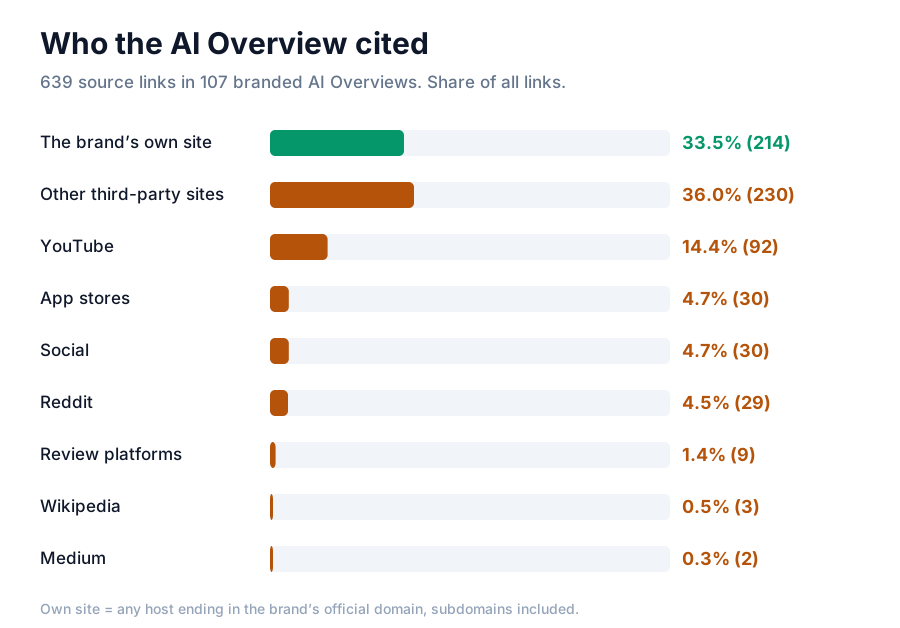
Across the 107 Overviews that listed their sources, the average Overview cited six links. A third were the brand's. The rest came from:
- YouTube — 92 links, in 51 of 107 Overviews. Nearly half of all branded Overviews in this category cite at least one video.
- Reddit — 29 links, in 26 Overviews.
- App stores — 30 links, mostly the App Store and Google Play listings.
- Review platforms — 9 links, in 7 Overviews: G2, Capterra, Trustpilot, Software Advice and Product Hunt combined.
- Everyone else — 230 links: AI-tool directories, blogs, comparison sites and news coverage.
That last point cuts against the brief. It says trust surfaces like "G2 and Capterra" dominate fan-out queries in practitioner datasets. For AI software in October 2026 they were nearly absent, and YouTube out-cited every review platform combined by ten to one. The brief's general rule holds — track which third parties Google cites — but which third parties matter depends on the category, and you only find out by looking.
22 of the 107 Overviews cited no page from the brand at all. Some examples, as Google showed them:
- "dopple ai" — nine links: the App Store, Google Play, Reddit three times, X, Instagram, YouTube and a review blog. Not one from dopple.ai, although dopple.ai was the first organic result.
- "is luma dream machine free" — four links, none from Luma. Two are articles about Luma's pricing published on the websites of other AI video products, VidMuse and Magic Hour. A searcher asking about Luma's free tier is answered partly by companies selling an alternative.
- "is ready player me free" — Ready Player Me was acquired by Netflix and its service discontinued, according to the pages Google cited, and its own site did not respond when we tried it. Google's answer came from a Variety story on the acquisition, a page by Avatar SDK titled "Ready Player Me Discontinued (Jan 31, 2026)", and Genies' list of other avatar creators. When a brand goes quiet, its competitors write its obituary.
When a brand changes, the Overview follows the brand
One of our mappings was wrong at first, and the correction is instructive. TwainGPT has renamed itself Verva: twaingpt.com now redirects to verva.com. Google's Overview for "twaingpt" cited verva.com twice. It had already connected the old name to the new site.
That cuts both ways. Google is good at working out who the brand is. It is not deferring to the brand when it writes the answer.
And the third party Bing shows is not the one Google cites
On Bing, the queries behind these 40 brands showed our pages 404,358 times. On Google, on 9 October, our site appeared in none of the 120 top-ten results and in none of the 639 AI Overview citations. We are the third party on one engine and invisible on the other, which is a reminder that "third-party coverage" is not one thing. The sources an AI Overview draws on are Google's choice, and they are not the sources another engine would choose.
What this means if you own a brand
- Your pricing and free-tier pages are now Overview copy. "Pricing" and "is it free" triggered an Overview 95% of the time, and when those Overviews cited the brand, about half the links (60 of 119) went to a pricing, plan or help page. If they are vague, out of date or hidden behind a sales form, the Overview fills the gap from someone else.
- Video is a citation surface. In this category a YouTube video was cited in nearly half of branded Overviews. A clear walkthrough on your own channel competes for a slot that is otherwise filled by somebody else's review.
- Recalibrate branded CTR. The brief's warning stands: "Historical CTR benchmarks for branded queries no longer apply." If your branded clicks fell in September while rankings held, check for an Overview before you check anything else.
- Track the sources, not just the trigger. Knowing an Overview appears is half the job. Knowing that it cites two competitors and an app store review is the half you can act on.
What we could not test
- Click-through. We measured what Google showed, not what searchers did. Without each brand's own Search Console data we cannot say how much traffic the Overviews took.
- The trend. One snapshot shows the level, not the September rise the brief describes. We did not measure 1 September.
- Other markets and devices. US English, desktop, one evening. Mobile results and other countries may differ.
- Three Overviews were present but empty in our data — Google loaded them asynchronously and their content did not come back. They count as shown, with no sources.
- One category. AI software is young, video-heavy and app-store-heavy. A category with an older review culture may cite G2 and Capterra far more.
Run this on your own brand
- List your branded queries in three forms: the name, the name plus "pricing", and a question about it ("is X free", "is X safe", "X vs Y").
- Record, for each: is there an AI Overview, where is it, and which links does it cite? Do it on one day, logged out.
- Split the citations into your own pages, competitors, video, communities, app stores and review sites.
- Fix the pages you own that get cited — pricing and plan pages first — so the facts Google lifts are current.
- For every Overview that cites no page of yours, ask what it cites instead, and whether you can publish the page it is missing.
- Repeat weekly. Overviews change, and the brief's own data shows how fast.
Where Semrush fits
Steps two and six are where doing this by hand stops scaling. Position Tracking in Semrush's SEO Toolkit tracks a fixed keyword list daily, and its Knowledge Base says, checked on 9 October 2026, that the SERP Features filter lets you "identify keywords that trigger Featured snippets, reviews, AI overviews" and more. Load your branded keywords once and you can see each day which of them open with an Overview.

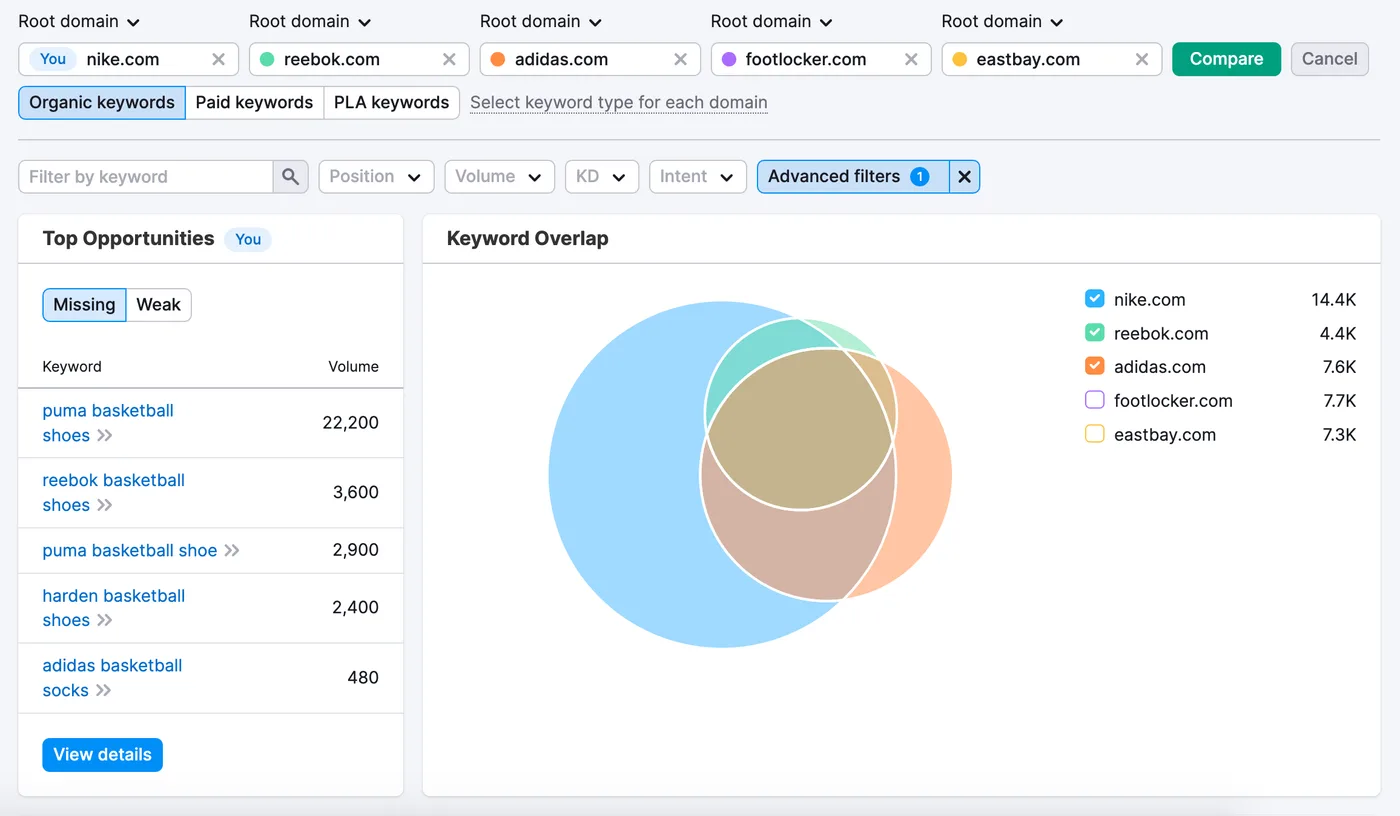
Knowing an Overview appears does not tell you who outranks you underneath it. On 56 of our 120 branded searches, the first organic result was not the brand's own site — Reddit alone took first place on 13 of them, and YouTube, social profiles, app stores, blogs, directories and rival tools took the rest. Keyword Gap is built to find where that happens to you: Semrush's Knowledge Base says it "offers a side-by-side comparison between keyword profiles of up to five competitors" (checked 9 October 2026). Put your domain next to the sites that appear in your branded Overviews, and the keywords they rank for and you do not — including ones that contain your own brand name — become a list you can work through.
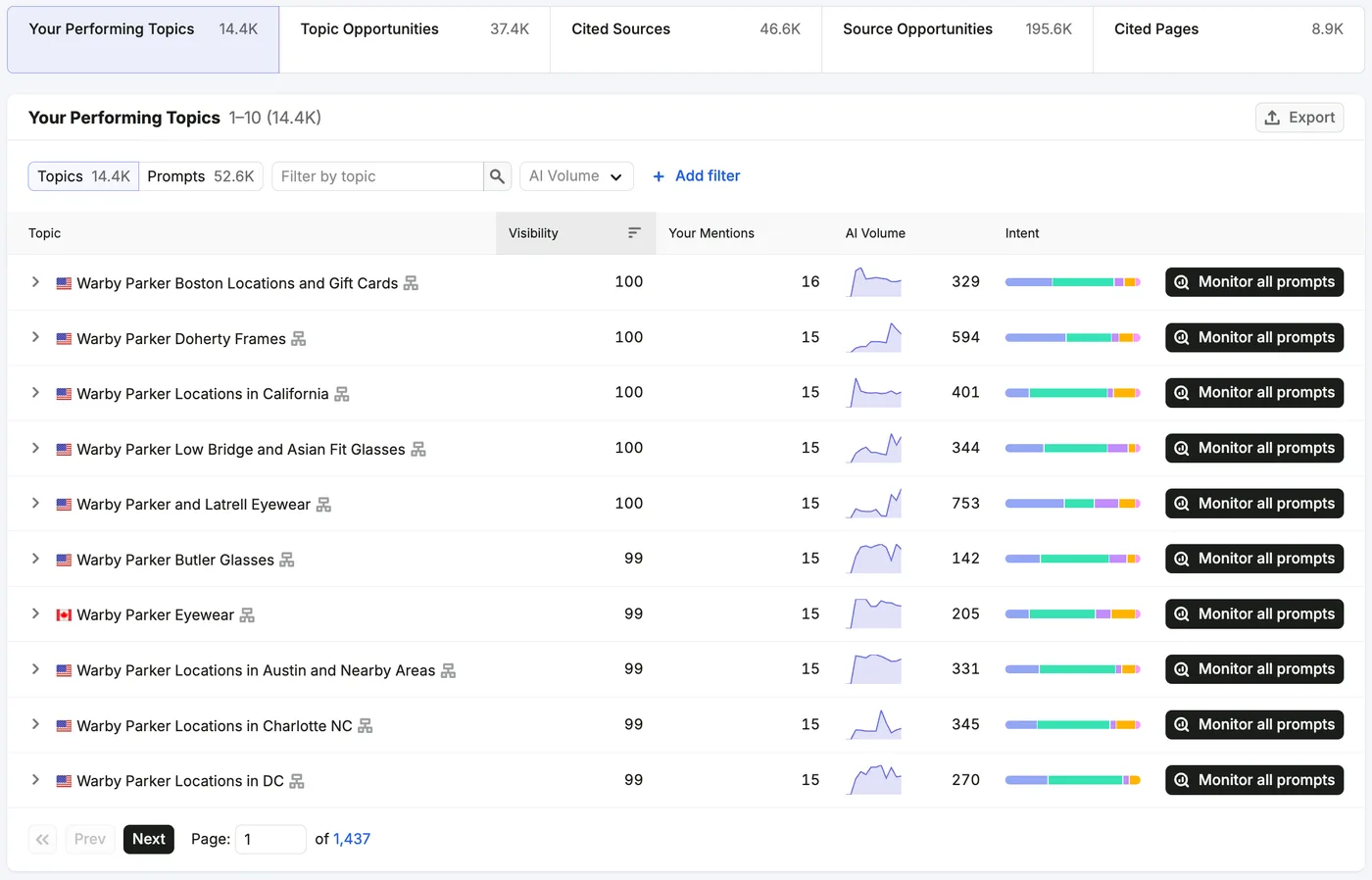
Step three is what the AI Visibility Toolkit in Semrush One is for. Its Visibility Overview report has a Cited Sources tab — in Semrush's words, "The websites that AI systems reference when generating answers" — and a Source Opportunities tab for "Sources frequently cited in AI answers that mention your competitors but not your brand." Its data, the same page says, covers "Google AI Overviews, AI Mode, Gemini, and ChatGPT." That is our 639-link breakdown, kept current and extended past Google.
One branded case in our data needed no tool to diagnose. Ready Player Me's site did not respond, and Google's Overview was written entirely by others. Quieter versions of the same failure — a pricing page blocked by robots.txt, a help centre on a subdomain nobody added to the sitemap — end the same way, because on pricing and "is it free" searches about half of the brand links Google cited (60 of 119) were pricing, plan or help pages. Site Audit crawls for exactly those barriers, and Semrush's Site Audit page states that it "checks for AI crawler accessibility for the following bots: ChatGPT-User, OAI-SearchBot, Googlebot, Google-Extended, Perplexity-User, PerplexityBot, Claude-User, and Claude-SearchBot" (checked 9 October 2026). The pages Google lifts into your Overview are the ones that must stay reachable.
One detail matters for planning: the free trial belongs to Semrush One, not to the AI Visibility Toolkit on its own. Semrush One's page offers "Try free for 7 days" with "Unlimited access to all Semrush One tools", for new users only — checked on 9 October 2026. Read that as Semrush's terms, not our test; every number above was measured without a Semrush account.
Semrush One — 7-day free trial
Position Tracking flags which of your brand keywords trigger an AI Overview; the AI Visibility Toolkit's Cited Sources shows who the answers quote instead of you. Both are in Semrush One, free for 7 days for new users.
Start your 7-day free trialWhat we actually learned
The brief's headline holds. On 9 October 2026, 91.7% of branded searches for 40 AI-tool brands opened with an AI Overview — 95% when the searcher asked about pricing or a free tier — and 58 of the 64 searches where the brand already ranked first got an Overview anyway.
The more useful finding is who writes it. Only a third of the links in those Overviews were the brand's own. 22 of 107 cited the brand not at all, and some cited its competitors. In this category the biggest outside voice was not a review site but YouTube.
So the branded query is no longer a page you own. It is an answer Google assembles, and the sources are the part you can still influence — with accurate pricing pages, your own videos, and a weekly look at what Google is quoting.
See which of your brand keywords trigger an AI Overview, and who gets cited, with Semrush One — start your 7-day free trial.
Try Semrush One free for 7 days
Track AI Overviews on your branded keywords and the sources AI answers cite, in one subscription. Free for 7 days for new users.
Start your 7-day free trialSources and method
| Figure | Source | Date |
|---|---|---|
| 40 brands; 404,358 Bing impressions on their source queries | Bing Webmaster Tools query statistics for our site | weeks of 2026-04-10 → 2026-09-25 |
| 120 branded Google results; AI Overview presence, position and 639 cited links; organic top ten | DataForSEO SERP API, Google US English desktop, asynchronous AI Overviews loaded | 2026-10-09, 18:53–18:59 UTC |
| 91.7% / 85% / 95% / 95%; 33.5% brand-owned; YouTube 92 links in 51 Overviews; review platforms 9 links in 7 | Our classification of the saved results | 2026-10-09 |
| TwainGPT → Verva redirect; Ready Player Me site not responding; Chai and Privee official sites | Live requests to each domain | 2026-10-09 |
| 26.1% → 90.5% (DemandSphere); 93% (Chris Long, Nectiv); "G2 and Capterra"; CTR benchmark warning | Semrush Creator Accelerator trend brief | page edited 2026-10-05 |
| SERP Features filter identifies keywords that trigger AI overviews | Semrush Knowledge Base, Position Tracking Overview | 2026-10-09 |
| Cited Sources and Source Opportunities definitions; platforms covered | Semrush Knowledge Base, Visibility Overview report | 2026-10-09 |
| 56 of 120 branded searches where the first organic result was not the brand's site | Our classification of the saved organic results | 2026-10-09 |
| Keyword Gap description; Site Audit AI crawler list | Semrush Knowledge Base, Keyword Gap; Semrush Site Audit feature page | 2026-10-09 |
| Keyword Gap and Semrush One screenshots (Semrush's own images) | Semrush Knowledge Base, Keyword Gap; Semrush One page | retrieved 2026-10-09; 2026-09-26 |
| SERP features menu and Visibility Overview screenshots (Semrush's illustrations) | Semrush Knowledge Base, same pages | retrieved 2026-10-09 |
| "Try free for 7 days"; "Unlimited access to all Semrush One tools"; new users only | Semrush One product page | 2026-10-09 |
Written by Sohail Akhtar. Every figure here is a measurement on a stated date; the raw results, the brand-to-domain mapping and the classification script are saved and can be re-run.
Some links may be affiliate links. We may earn a small commission at no extra cost to you.
Related Articles
Explore more guides and reviews from our experts.