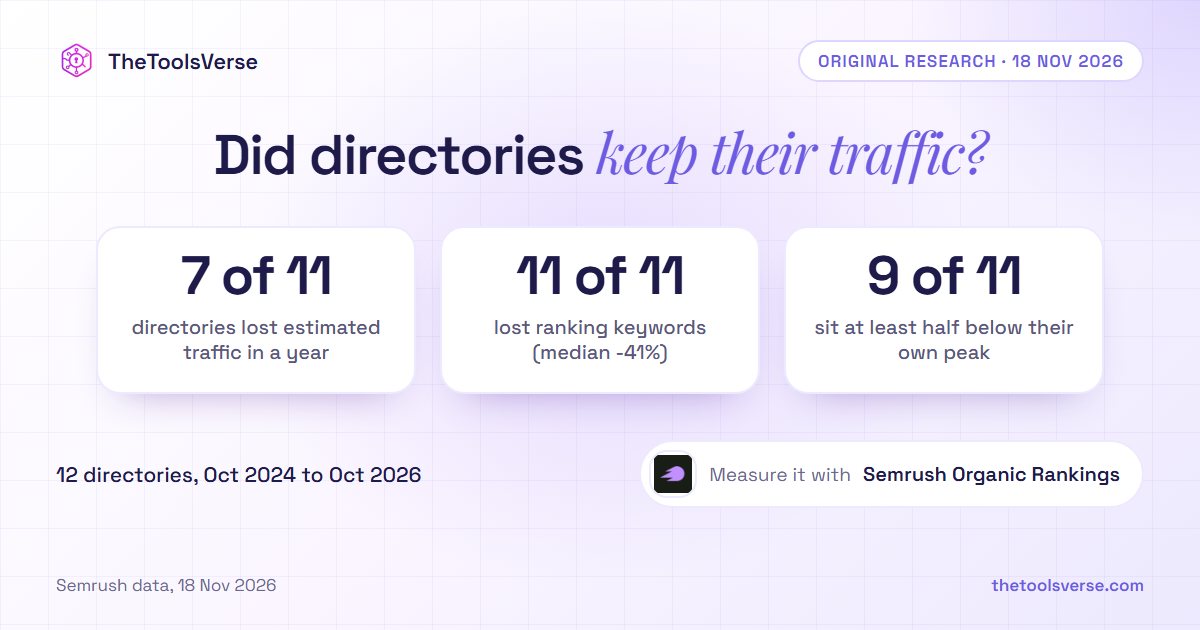
One Site, Two AI Overview Scores: Across 12 Sites, Semrush's Mobile Data Shows a Median 18.3% Citation Rate Against 5.8% on Desktop, and a 44.6% One-Month Drop That Desktop Never Saw
Disclosure
This article is promotional content produced as part of the Semrush Creator Accelerator programme. It contains affiliate links to Semrush — if you buy through them we may earn a commission at no extra cost to you — and we may also receive a reward from Semrush for publishing it. Every figure below was read from Semrush's desktop and mobile databases on 17 November 2026, through its MCP connector. The choice of sites, the method and the conclusions are ours alone, and Semrush has not reviewed them.
"How visible are we in AI Overviews?" sounds like a question with one answer. In practice the answer depends on what you measure, on which device, and in which month. We wanted to know by how much.
So we took one metric, the share of a site's AI Overview keywords where the site itself is cited, and measured it twice for 12 sites: once in Semrush's US desktop database and once in its US mobile database, every month from October 2025 to October 2026.
Measure AI visibility across platforms, not one surface
The AI Visibility Toolkit tracks mentions, citations and cited pages across ChatGPT, Gemini, Google's AI surfaces and other platforms, month by month. It is part of Semrush One: try Semrush One free for 7 days.
The 12 sites and what we measured
We chose 12 large sites in eight niches, publishers and software companies alike: cnet.com and tomsguide.com (tech), clevelandclinic.org and goodrx.com (health), thepointsguy.com (travel), seriouseats.com (food), apartmenttherapy.com (home), motortrend.com (cars), khanacademy.org (education), and shopify.com, zapier.com and canva.com (software).
For each, Semrush's domain history gave us, per month and per database: the keywords the site ranks for, the keywords in the top 3, the ranking keywords whose results page shows an AI Overview, and the keywords where the site appears in that AI Overview. None of these sites was in our earlier studies.
Desktop and mobile are not the same keyword set
The first thing to know is the size difference. For the median site, Semrush's mobile database holds 9.9% as many ranking keywords as its desktop database. The two databases describe different slices of search, not the same keywords on two screens.
On one measure they agree: the share of a site's ranking keywords that show an AI Overview is almost identical, a median 89% on desktop and 89.9% on mobile.
The citation rate does not agree
Where they part ways is the citation rate. In October 2026, the median site was cited in the AI Overview for 5.8% of its AI Overview keywords on desktop and 18.3% on mobile. The mobile rate was higher for all 12 sites, a median 2.6 times the desktop rate, and anywhere from 1.1 to 7 times.
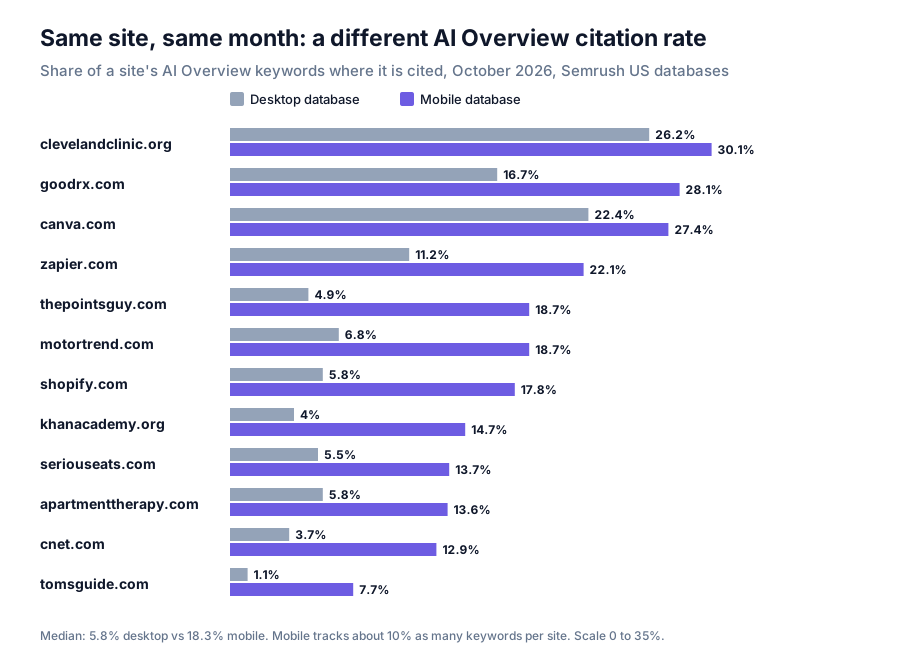
The gap is widest for the sites with the lowest desktop rate. tomsguide.com was cited for 1.1% of its desktop AI Overview keywords and 7.7% of its mobile ones. A report built on either number alone would describe a very different site.
We cannot say from this data why mobile is higher. The smaller mobile keyword set is one likely reason, since it leaves out much of the long tail where a site ranks lower. But the practical point does not depend on the cause: an AI visibility figure means little unless it says which keyword set and which device it was measured on.
Citation counts are noisier than rankings
Next we looked at how much each number moves from one month to the next. For the median site, the number of AI Overviews citing it changed by 8.6% a month on desktop and 18.1% a month on mobile. Its top-3 rankings changed by 5.5% a month on desktop and 5.6% on mobile.
In other words, AI Overview citations moved about one and a half times as much as rankings on desktop, and about three times as much on mobile. On desktop, citations moved more than rankings for 10 of the 12 sites.
The February 2026 cliff that only mobile saw
One month stands out. Between January and February 2026, the number of mobile AI Overviews citing these sites fell by a median 44.6%. On desktop, the same sites moved a median 3%. For 11 of the 12 sites, February 2026 was the lowest mobile month of the 13; for none of them was it the lowest desktop month. Most recovered within two months.
We do not know whether that dip reflects a change in Google's mobile results or in how the data was collected, and this data cannot tell them apart. Either way, a team reporting mobile AI visibility monthly would have announced a near halving of its citations in February and a recovery in spring, with nothing on its own site having changed.
Where the two databases agree
Over the full year, the direction of change agreed for all 12 sites: when a site's AI Overview citations rose on desktop, they rose on mobile too, and Shopify, the one site that fell, fell on both. The median rise was 44% on desktop and 65.9% on mobile. The trend held even where the monthly numbers did not.
How to report AI visibility without misleading anyone
- Name the device and the keyword set next to every AI visibility figure. A 5.8% rate and an 18.3% rate can describe the same site in the same month.
- Report trends, not single months. Monthly citation counts moved more than rankings did in this data, and one month could swing by half.
- Compare like with like. Compare a site with itself in the same database, or with competitors measured the same way, never a desktop figure with a mobile one.
- Add platforms other than Google. ChatGPT, Gemini and Perplexity are separate surfaces, and a Google-only figure is one view of AI visibility, not all of it.
Measuring it consistently in Semrush
Follow AI visibility the same way every month. The AI Visibility Toolkit reports mentions, citations and cited pages over time, and splits mentions by AI platform, so a change on one surface is not mistaken for a change everywhere.
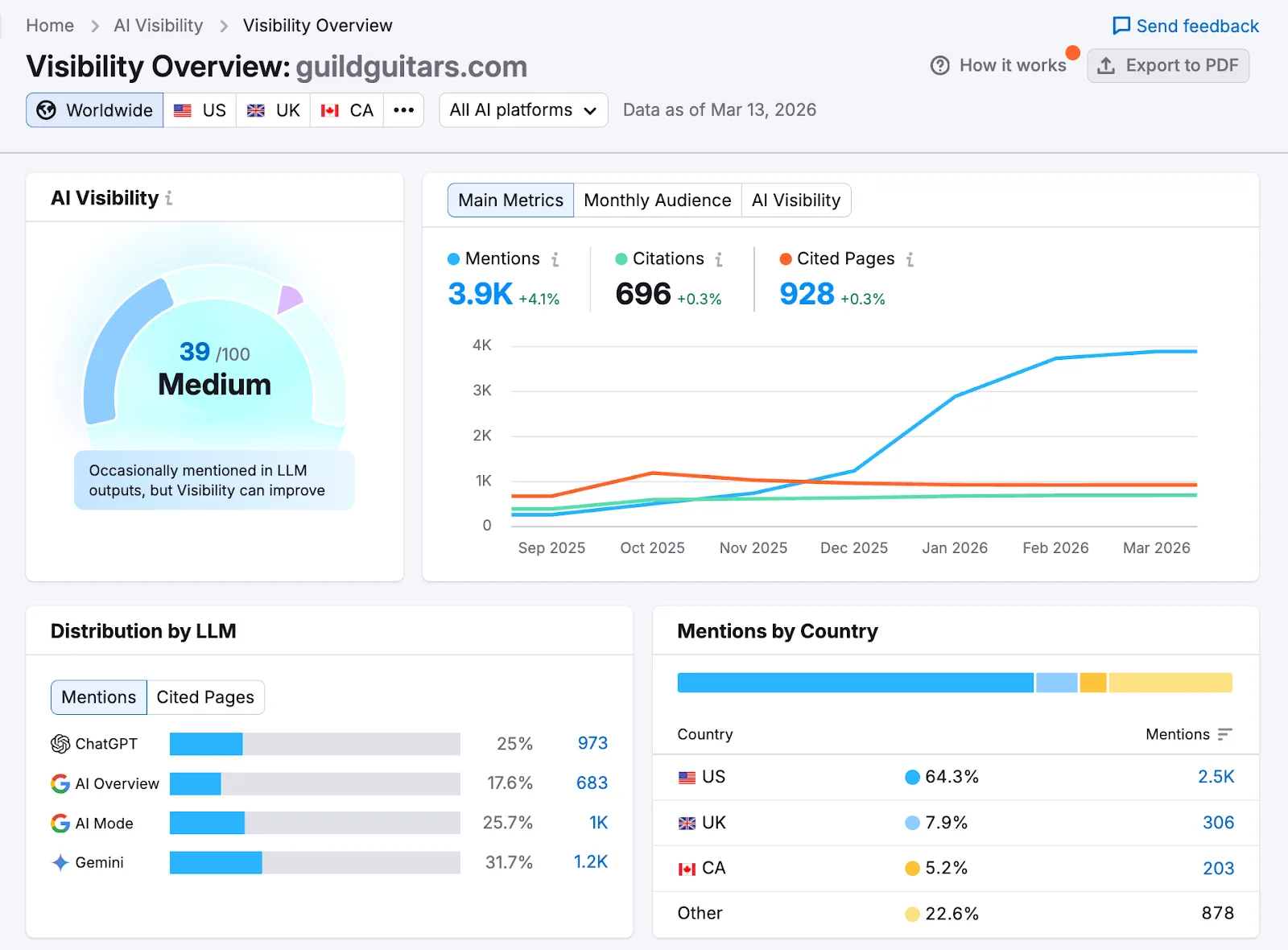
See which AI platforms cite a domain. Domain Overview shows an AI Search panel for ChatGPT, AI Overview, AI Mode and Gemini next to the site's organic search figures.
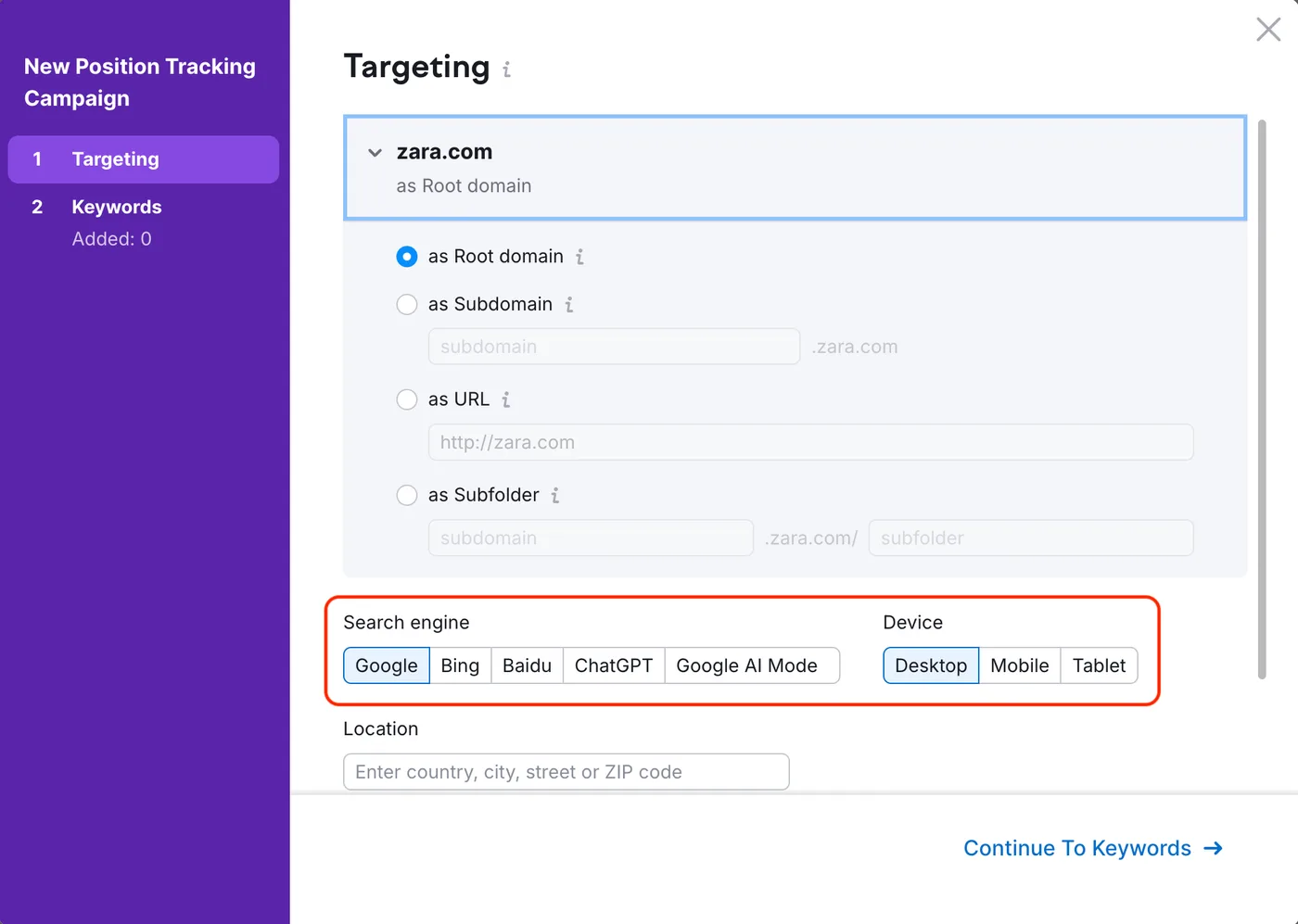
Track a fixed keyword set on the device you care about. Position Tracking monitors the keywords you choose, on the device you choose, and can track the AI Overview as a SERP feature, so the keyword set does not shift under your report.
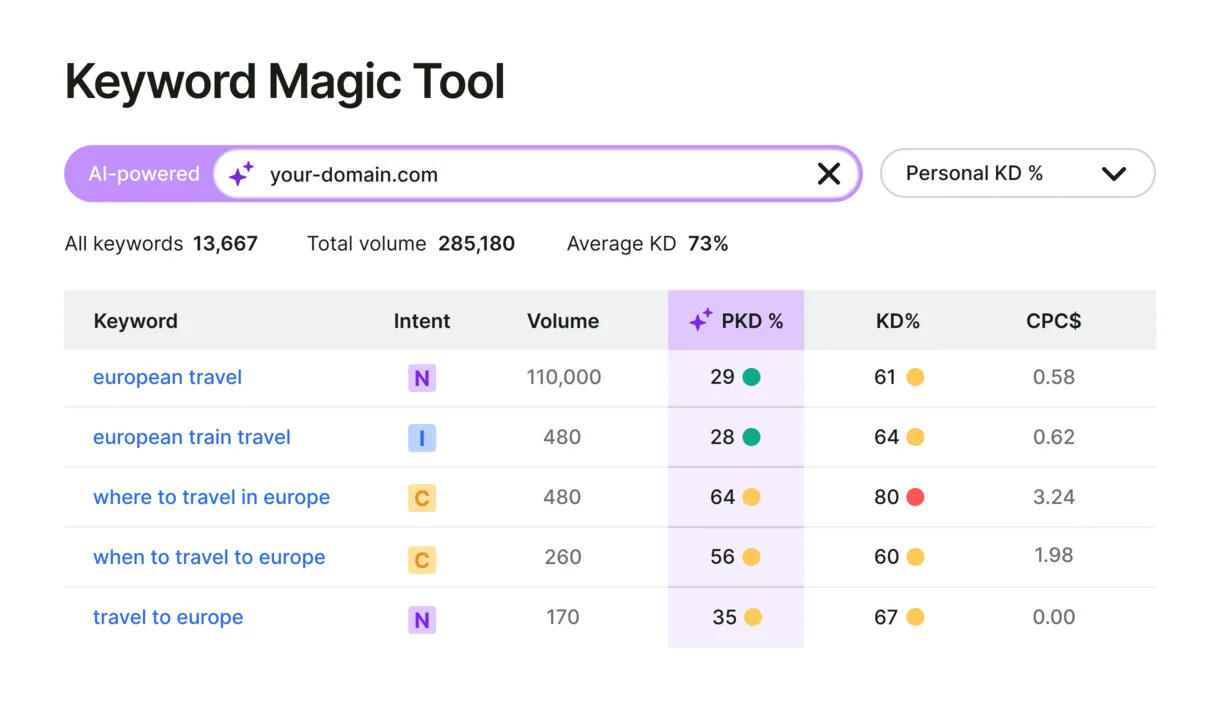
Find the intents where you are missing. The Keyword Magic Tool returns keywords with intent, volume and difficulty, and Keyword Gap shows the keywords competitors rank for and you do not.
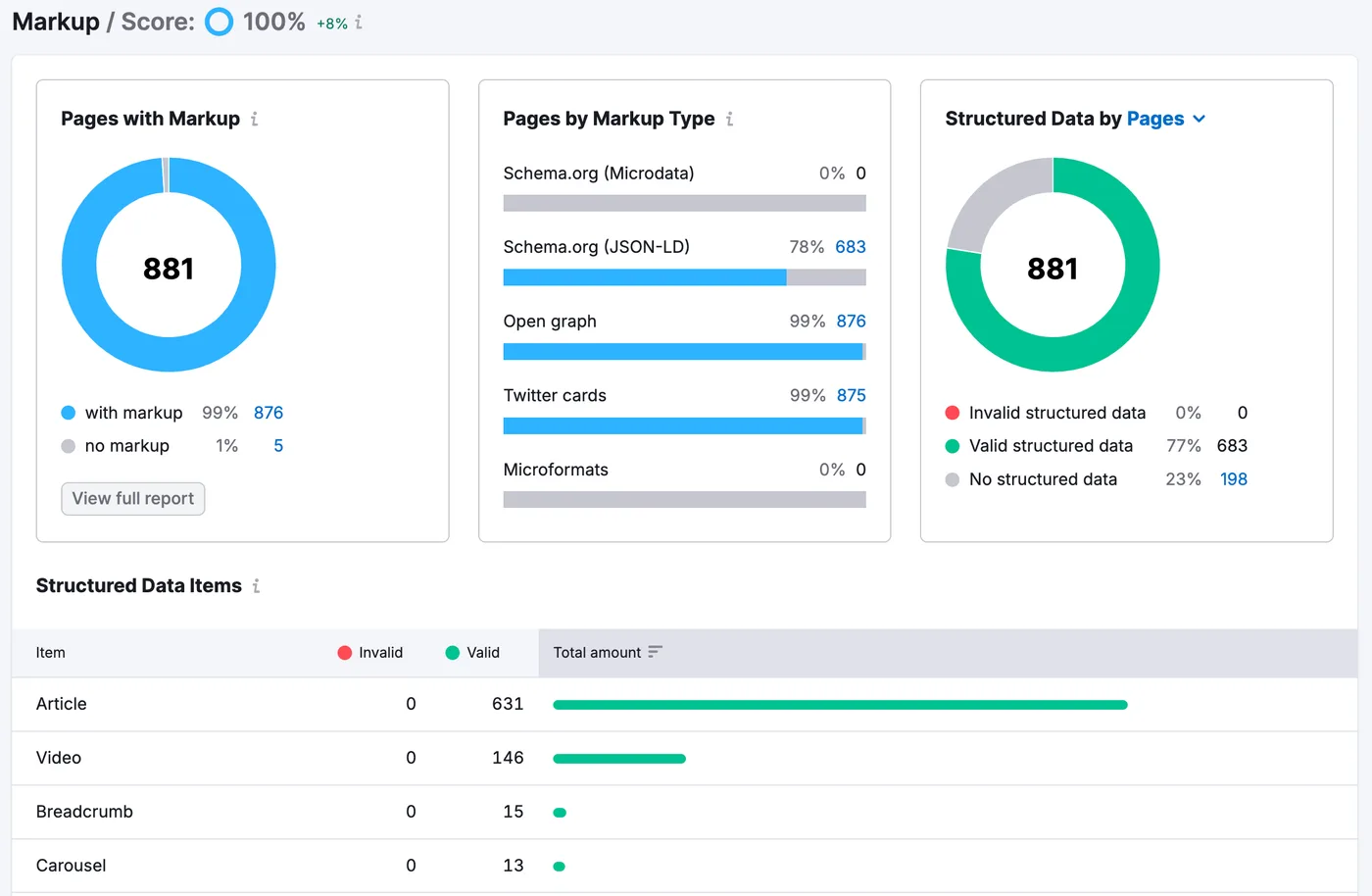
Make sure the pages can be read and cited. Site Audit checks crawlability and the structured data on your pages, two things that decide whether a page can be read and cited at all.
Semrush One includes the SEO Toolkit and the AI Visibility Toolkit, and the 7-day free trial belongs to Semrush One. To compare your own figures on both devices before paying, try Semrush One free for 7 days. On 16 October 2026 Semrush's product page described the offer as "Unlimited access to all Semrush One tools". We used the MCP connector for this study, not the trial.
One number is not enough
The same site, in the same month, had an AI Overview citation rate of 5.8% or 18.3% depending on the database. Say which one you mean, and watch the trend, because the single month can mislead.
Try Semrush One free for 7 days
Track AI visibility across ChatGPT, Gemini and Google's AI surfaces in the AI Visibility Toolkit, next to your rankings in the SEO Toolkit, both included in Semrush One. Free for 7 days for new users.
Try Semrush One free for 7 daysHow we counted
- Data: 13 monthly rows (October 2025 to October 2026) for each site from two Semrush databases,
usfor desktop andmobile-usfor mobile, using theresource_rank_historyreport through the MCP connector on 17 November 2026. - Citation rate: keywords where the site appears in the AI Overview, divided by its ranking keywords whose results page shows an AI Overview, in the same database and month.
- Monthly change: the absolute percentage change from one month to the next, the median of 12 changes per site, then the median across sites.
- February 2026: the change from January to February 2026 in the number of AI Overviews citing the site.
- Year: October 2025 to October 2026.
- Limits: 12 sites chosen by us; Semrush's two databases cover different keyword sets, so their rates are not two readings of the same keywords; we did not check any site's own analytics, and we do not know what caused the February 2026 dip.
- Reproduce it: the scripts and saved results are in
research/r2-g4-aio-measurement/.
Some links may be affiliate links. We may earn a small commission at no extra cost to you.
Related Articles
Explore more guides and reviews from our experts.
AI Tool Home Pages Redirect to HTTPS 94.5% of the Time, but Only 63% Send HSTS, 35% a Content-Security-Policy and 6% All Six Basic Security Headers: We Checked 601
Insightful Pricing (2026): Three Plans, a 50-Seat Minimum and a 14-Day Work Audit