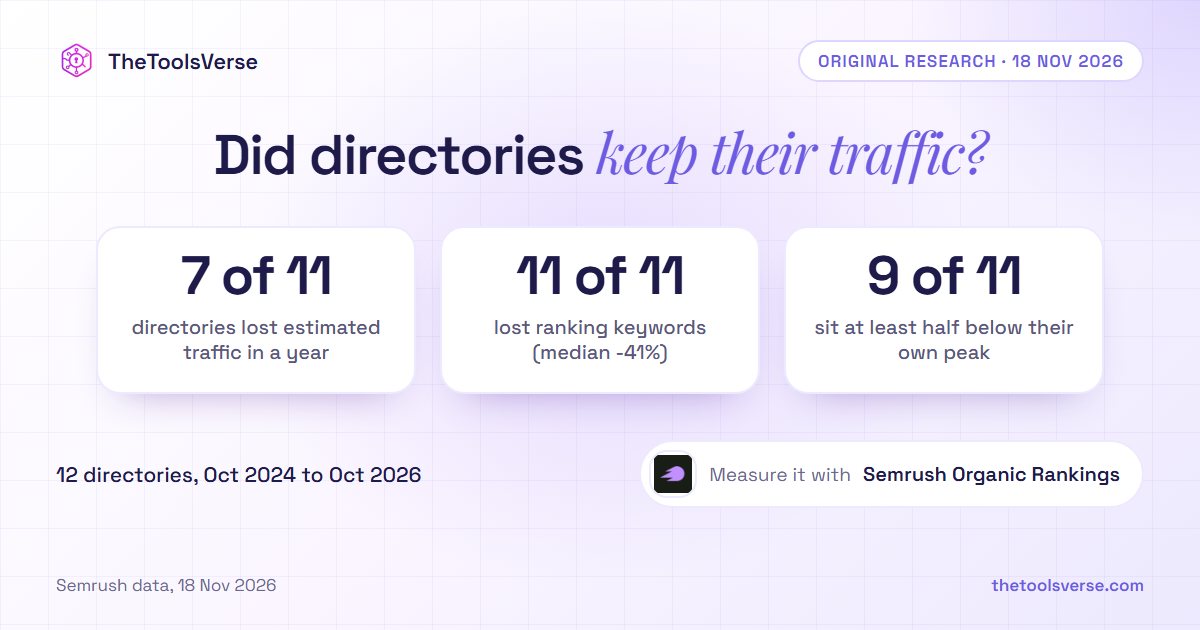
Ranking in Google's Top 10 Under an AI Overview Got the Site Cited 22% of the Time: Semrush Data on 936 Keywords From 10 Content Sites
Disclosure
This article is promotional content produced as part of the Semrush Creator Accelerator programme. It contains affiliate links to Semrush — if you buy through them we may earn a commission at no extra cost to you — and we may also receive a reward from Semrush for publishing it. The data comes from Semrush's own database: we queried its Organic Research data through the Semrush MCP connector on 17 November 2026. We chose the sites, the method and the conclusions; Semrush did not review or approve them.
Most rank reports still treat a top-10 position as the finish line. On a results page that opens with an AI Overview, it is only half of the question. The other half is whether the AI Overview above you links to you, or to someone else.
So we asked Semrush's database directly. For 10 large content sites, one per niche, we took the keywords where each ranks in Google's top 10 in the US and checked two things for every keyword: does the search show an AI Overview, and is the ranking site one of the sources it cites?
Track the citation, not just the rank
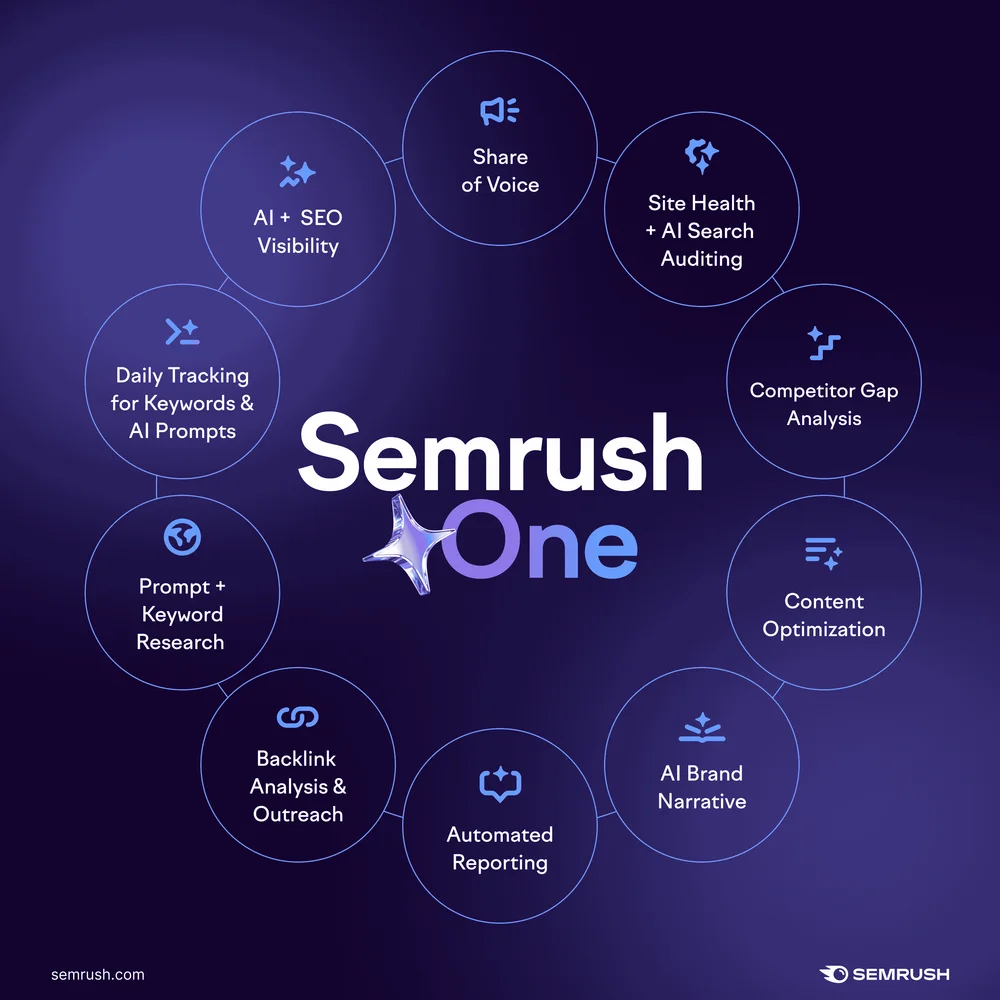
Position Tracking can track the AI Overview as a SERP feature for your domain, next to your rankings. To follow citations across ChatGPT, Gemini and AI Mode as well, the AI Visibility Toolkit is part of Semrush One: try Semrush One free for 7 days.
The 10 sites and the 936 keywords
We picked one well-known content site per niche: Investopedia (finance), Healthline (health), Allrecipes (recipes), HubSpot's blog (B2B marketing), wikiHow (how-to), Britannica (reference), The Spruce (home and garden), PetMD (pets), Edmunds (cars) and Lonely Planet (travel).
For each, Semrush's Organic Research data gave us its 100 highest-volume keywords where it ranks 1 to 10 in Google's US results, and the SERP features Semrush recorded on each of those results pages. After merging keywords where a site ranks with two pages, that left 936 keywords.
Separately, we pulled every keyword where Semrush records the site as a source inside the AI Overview, down to the same search-volume floor. Matching the two lists tells us, keyword by keyword, whether the site that ranks is also the site that gets cited.
95.3% of these searches show an AI Overview
Of the 936 keywords, 892 (95.3%) showed an AI Overview when Semrush last recorded the page. These are each site's biggest head terms, so the share is far higher than across all searches, but they are also the keywords those sites depend on most. For nine of the ten sites, the AI Overview was on more than nine in ten of them; the exception, Britannica, was at 82.7%.
The ranking site is cited in 22% of them
Under those 892 AI Overviews, the site ranking in the top 10 was cited in 196, or 22%. In the other 78%, the answer at the top of the page drew on other sources while the site sat below it in the organic results.
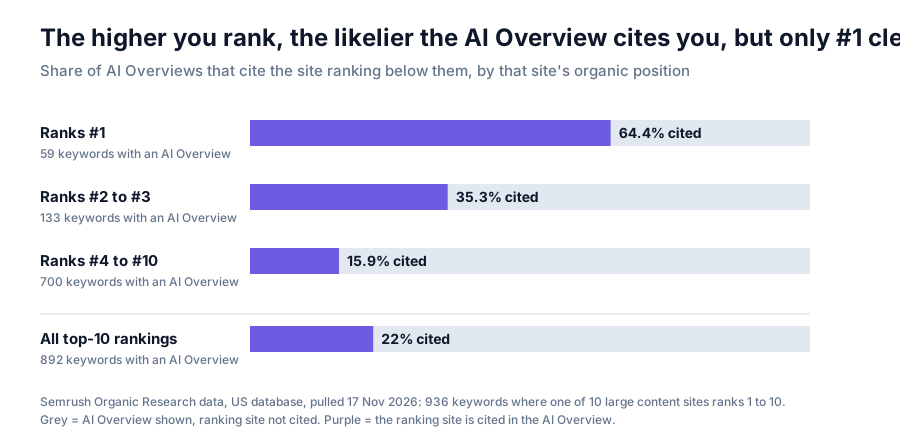
Position matters, and steeply:
- Ranks #1: cited in 64.4% of AI Overviews (38 of 59).
- Ranks #2 to #3: 35.3% (47 of 133).
- Ranks #4 to #10: 15.9% (111 of 700).
Most of the rankings in this set sit at #4 to #10, which is why the overall figure is low. Even at #1, though, about one AI Overview in three cited someone else.
The result holds when we remove the brand and navigational searches Semrush marks as such: 21.6% of 767 AI Overviews cited the ranking site.
By site: from 1% to 37%
| Site (niche) | Top-10 keywords with an AI Overview | Ranking site cited |
|---|---|---|
| Britannica (reference) | 81 | 37% |
| Edmunds (cars) | 83 | 33.7% |
| PetMD (pets) | 92 | 32.6% |
| Allrecipes (recipes) | 92 | 30.4% |
| Investopedia (finance) | 86 | 29.1% |
| Healthline (health) | 91 | 27.5% |
| wikiHow (how-to) | 93 | 14% |
| The Spruce (home and garden) | 90 | 11.1% |
| Lonely Planet (travel) | 87 | 6.9% |
| HubSpot's blog (B2B marketing) | 97 | 1% |
The median site was cited under 28.3% of its own top-10 AI Overviews. HubSpot's blog is the outlier: one citation among 97 AI Overviews above its top-10 rankings. Its rankings in this set are smaller keywords than the others' and mostly at #4 to #10, but even so, one in 97 is the lowest rate in the group by a wide margin. We checked it a second way, by querying the whole hubspot.com domain for AI Overview citations of blog pages, and got the same single keyword. Leaving HubSpot out raises the overall rate only to 24.5%.
Almost half of the citations go where the site does not rank
The reverse view is just as striking. Above each site's volume floor, Semrush recorded 311 keywords where one of these ten sites is cited in the AI Overview. On 145 of them (46.6%), the site does not rank in the organic top 10 for that keyword.
Britannica is cited in AI Overviews for searches such as "ebay" and "temu". Edmunds is cited for "honda civic" and "toyota rav4" without a top-10 ranking for them in this data. The Spruce is cited for "wallpaper" and "wolf spider". Ranking and being cited are related, but they are not the same list.
What this means for your reporting
- Report the citation separately from the rank. A keyword at #4 to #10 under an AI Overview was cited about one time in six in this data. If your report shows only "#6", it tells you little about what the searcher actually saw first.
- Check who the AI Overview cites when it is not you. That is the competitor for that keyword now, whether or not they outrank you.
- Look for citations you already have outside the top 10. Nearly half of these sites' AI Overview citations were on keywords where they did not rank 1 to 10. Those pages are already treated as sources; they may be closer to a ranking than their position suggests.
- Treat #1 as the strongest position, not a guarantee. Even at #1, about a third of these AI Overviews cited other sites.
Tracking both in Semrush
Follow the AI Overview next to the ranking. Position Tracking in the SEO Toolkit lets you choose SERP features to track for your domain, AI Overview among them, so a keyword can show both its position and whether you appear in the AI Overview.

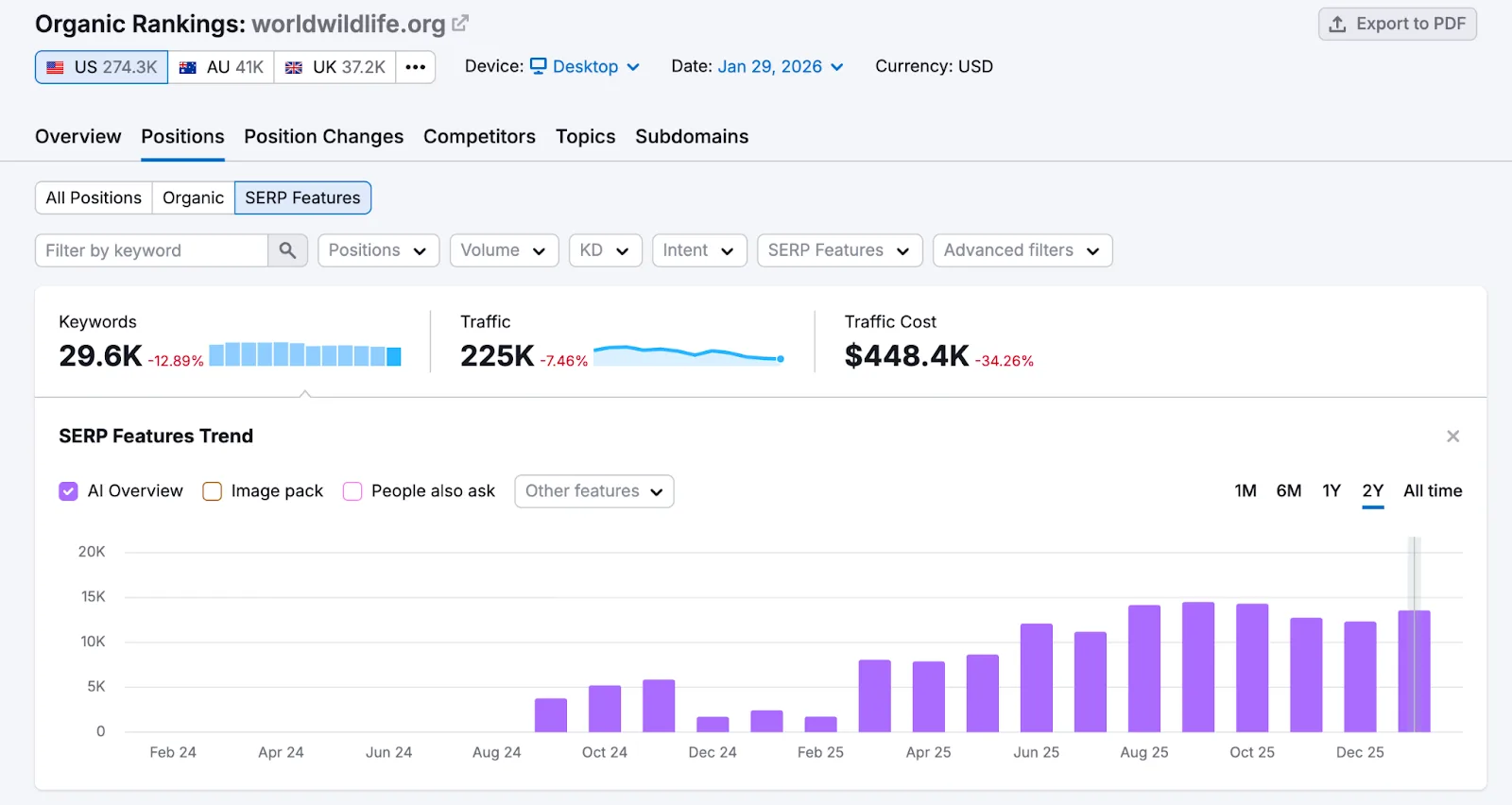
See which of your keywords trigger AI Overviews. Organic Rankings in the SEO Toolkit, the report behind this study's data, shows the SERP features on each of your keywords, including the AI Overview, and how many keywords triggered one each month.
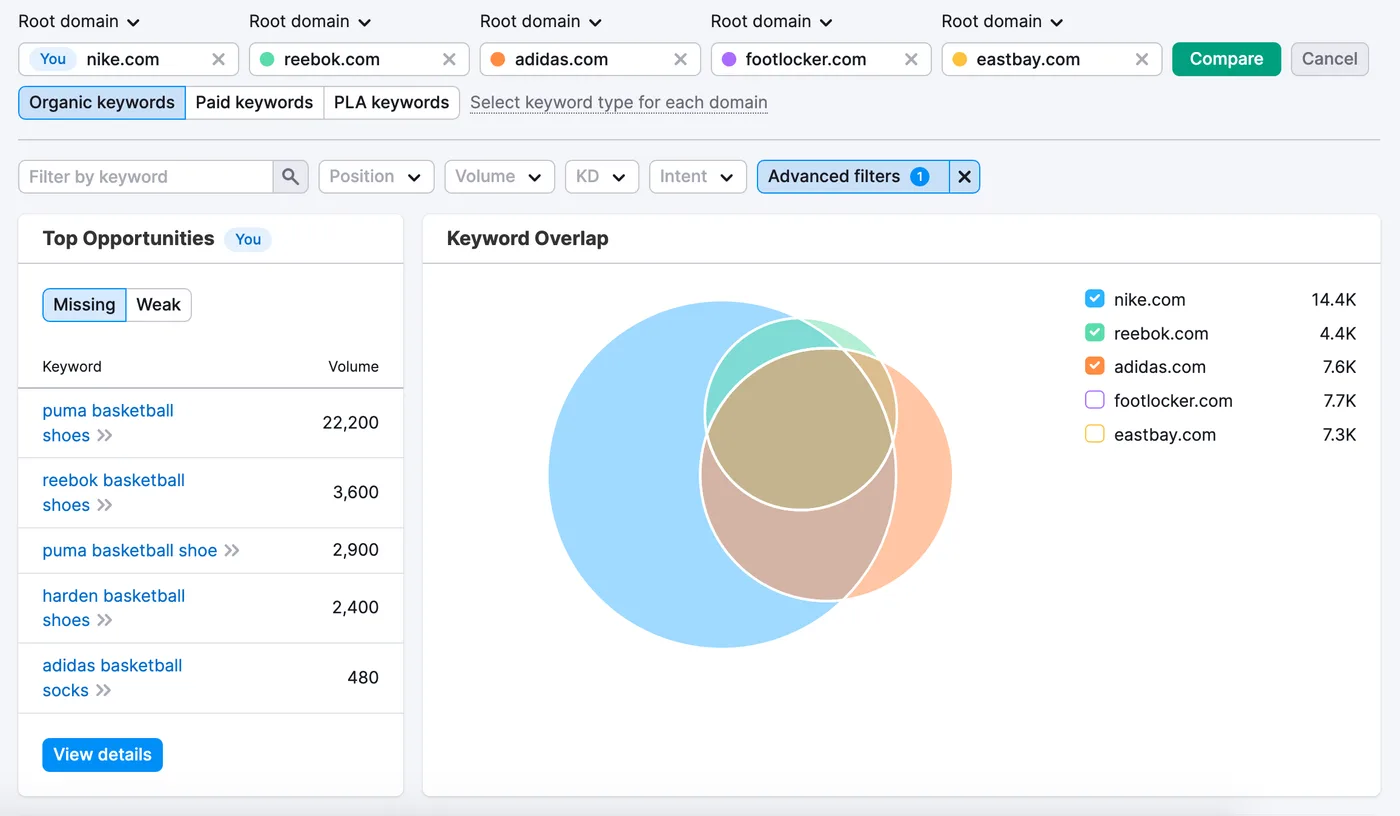
Compare your keywords with the sites being cited. Keyword Gap compares the keywords of up to five domains and lists the ones a competitor has and you do not.
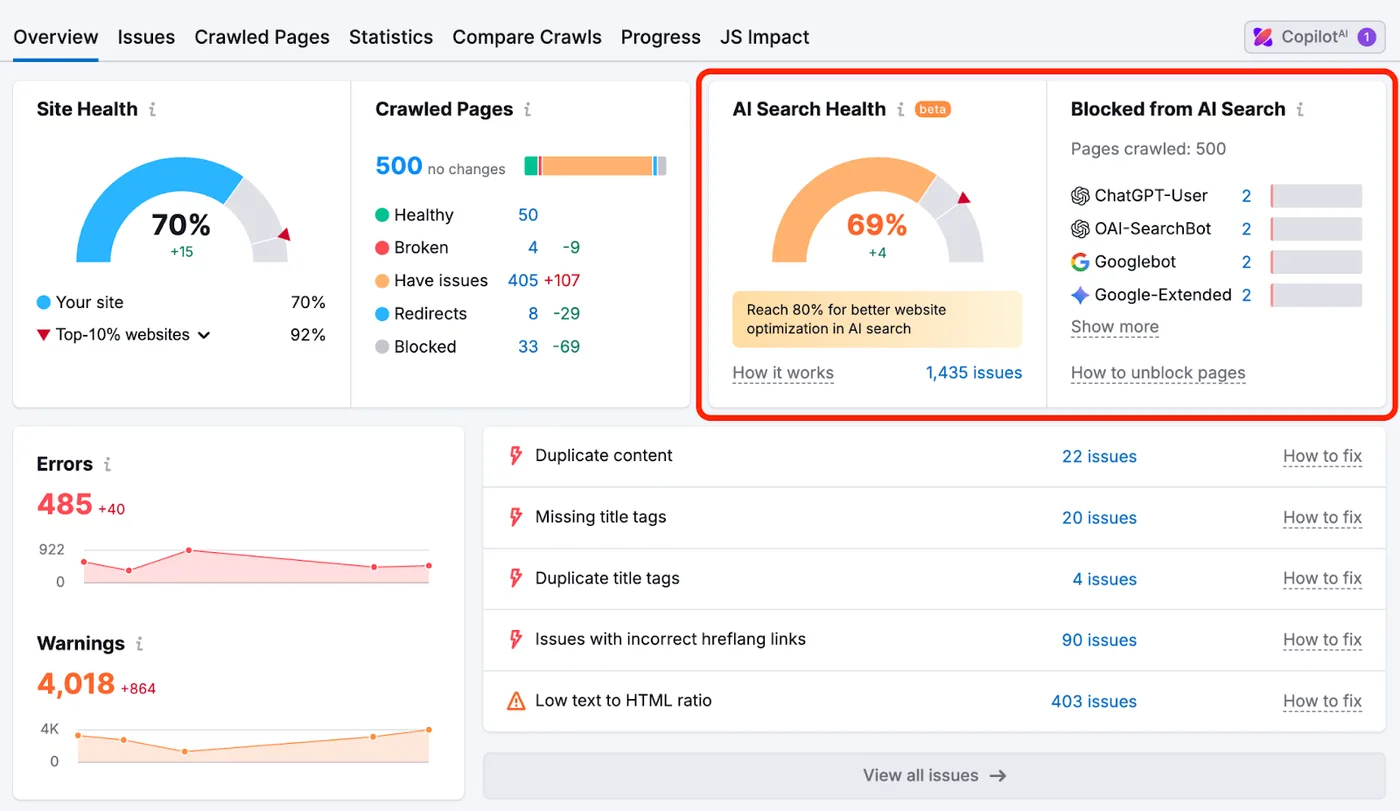
Check that AI systems can read the pages you want cited. Site Audit includes an AI Search Health score and lists AI crawlers your site blocks.
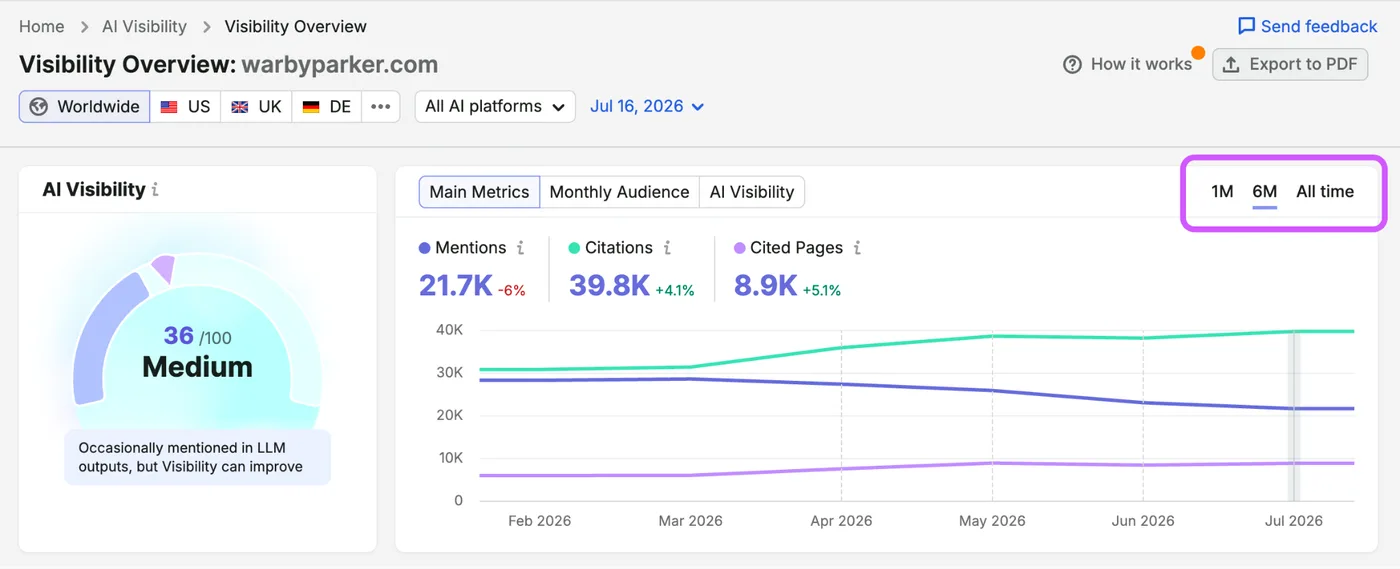
Follow citations beyond Google. The AI Visibility Toolkit reports mentions, citations and cited pages across AI platforms.
Semrush One includes the SEO Toolkit and the AI Visibility Toolkit, and the 7-day free trial belongs to Semrush One. To run the same check on your own keywords before paying, try Semrush One free for 7 days. Semrush's product page describes the offer as "Unlimited access to all Semrush One tools" (read on 16 October 2026). The numbers in this article came from Semrush's database through its MCP connector, not from the trial.
A ranking is a place on the page, not a place in the answer
On these 936 keywords, the AI Overview cited the site below it about one time in five. Measure both, because they are no longer the same thing.
Try Semrush One free for 7 days
Track rankings and AI Overview appearances together in Position Tracking, and citations across AI platforms in the AI Visibility Toolkit, both included in Semrush One. Free for 7 days for new users.
Try Semrush One free for 7 daysHow we counted
- Source: Semrush Organic Research (the
resource_organicreport), US database, queried on 17 November 2026 through the Semrush MCP connector. Search volumes and SERP features are Semrush's records, not live Google results, so a page can look different today. - Rankings: for each site, the 100 highest-volume keyword rows where it ranks 1 to 10 organically; where a site ranks with two pages for one keyword, we kept its best position. That gave 936 keywords.
- AI Overview shown: SERP feature code 52, which Semrush's API documentation lists as "AI overview", among the features recorded for that keyword.
- Cited: the same keyword appears among the site's own AI Overview rows (SERP features where the site itself appears, code 52), pulled separately down to the same volume floor. This is the domain, not necessarily the page that ranks.
- A trap to avoid: a rankings-only pull never shows the AI Overview citation, because Semrush stores it as a separate row type. Read that way, every site looks uncited. We pulled both.
- Not in the top 10: a cited keyword above the site's volume floor that is not among its top-10 rankings. Keywords exactly at the floor were left out of that count.
- Limits: ten sites chosen by us, one per niche, so this is not a sample of the web; head terms only; one database (US); no click or traffic data, so this says nothing about how many visits a citation brings.
- Reproduce it: the scripts and saved results are in
research/r2-g1-aio-citations/.
Some links may be affiliate links. We may earn a small commission at no extra cost to you.
Related Articles
Explore more guides and reviews from our experts.
AI Tool Home Pages Redirect to HTTPS 94.5% of the Time, but Only 63% Send HSTS, 35% a Content-Security-Policy and 6% All Six Basic Security Headers: We Checked 601
Insightful Pricing (2026): Three Plans, a 50-Seat Minimum and a 14-Day Work Audit