ChatGPT Writes 2.6 Times as Many Words as Perplexity, Claude Never Uses a Table, and 84% of ChatGPT Answers Carry a Date. How Five AI Engines Write the Same Answer
Disclosure
This article is promotional content produced as part of the Semrush Creator Accelerator programme. It contains affiliate links to Semrush — if you buy through them we may earn a commission at no extra cost to you — and we may also receive a reward from Semrush for publishing it. All measurements in this article are our own. Semrush did not supply, review or approve the data, and the conclusions we draw are ours.
Advice on AI visibility keeps saying that each engine behaves differently, and then treats "AI answers" as one thing. Before you count mentions, it is worth asking what a mention is inside. A brand named in a 570-word answer with a comparison table is a different event from a brand named in a 220-word answer with no table.
So we read the answers themselves, and counted how each engine writes.
Track each engine separately
See how ChatGPT, Gemini, Perplexity and Google AI Mode mention your brand, platform by platform, with Visibility Overview in the AI Visibility Toolkit. To get it with the SEO Toolkit in one subscription, try Semrush One free for 7 days.
The test
We put 88 buyer questions about AI tools and software to ChatGPT, Perplexity, Claude, Gemini and Google AI Mode on 24 October 2026, which gave 440 answers, 88 per engine. For each answer we counted its length in words and whether it contained a table, a date or year, a dollar price, and a line telling the reader to check the official source. The features are found by simple text rules, listed at the end.
The same question, five different answers
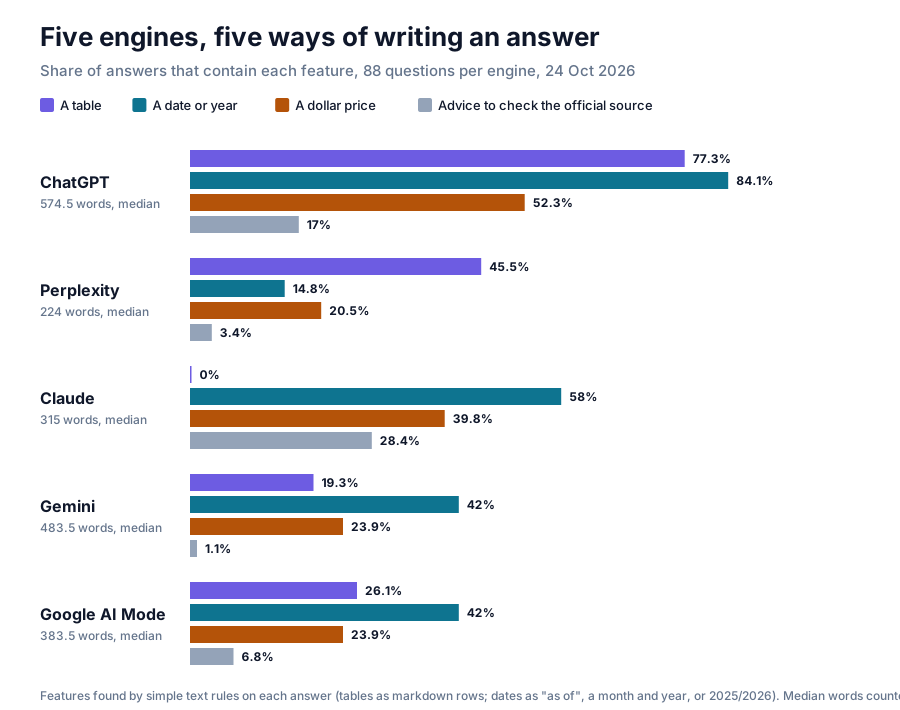
| Engine | Median words | Table | Date or year | Dollar price | Advice to check the official source |
|---|---|---|---|---|---|
| ChatGPT | 574.5 | 77.3% (68) | 84.1% (74) | 52.3% (46) | 17.0% (15) |
| Gemini | 483.5 | 19.3% (17) | 42.0% (37) | 23.9% (21) | 1.1% (1) |
| Google AI Mode | 383.5 | 26.1% (23) | 42.0% (37) | 23.9% (21) | 6.8% (6) |
| Claude | 315 | 0% (0) | 58.0% (51) | 39.8% (35) | 28.4% (25) |
| Perplexity | 224 | 45.5% (40) | 14.8% (13) | 20.5% (18) | 3.4% (3) |
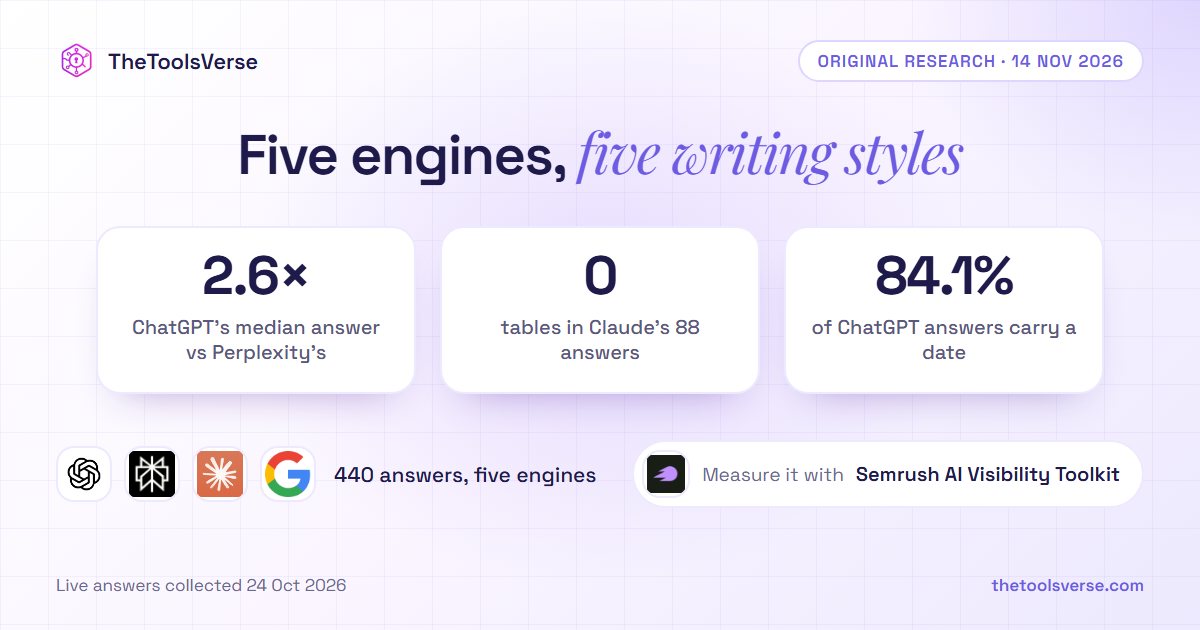
ChatGPT's median answer was 574.5 words, 2.6 times Perplexity's 224. Every ChatGPT answer used headings and 77.3% had a table. Claude wrote no table and no heading in any of its 88 answers, and 80.7% of them were bullet lists. Gemini and Google AI Mode used bullet lists in nearly every answer (100% and 97.7%).
Dates and prices
84.1% of ChatGPT answers carried a date or a year, against 14.8% for Perplexity. More than half of ChatGPT's answers (52.3%) quoted a dollar price, and so did 39.8% of Claude's. Perplexity quoted one in 20.5% of answers, Gemini and Google AI Mode in 23.9%.
For a vendor, that means your price is part of the answer on some engines far more than on others. On ChatGPT and Claude, a visitor is likely to meet your price before your site. If your pricing page is out of date or hard to read, those answers will repeat the mistake.
Only Claude tells you to check
A line advising the reader to confirm details on the official site or pricing page appeared in 28.4% of Claude's answers and 17.0% of ChatGPT's. It appeared in 6.8% of Google AI Mode's answers, 3.4% of Perplexity's and 1.1% of Gemini's (one answer).
It is not hedging in general. Words such as "may", "typically" or "varies" were rare everywhere, between 0.2 and 0.7 per hundred words. The engines mostly write with confidence, and only some of them say where to verify it. Where an engine does send readers to the official source, your own site is the next click, and what it says about price and features matters more.
What this means for measurement
- A mention is not a fixed unit. The same brand mention sits in a long structured answer on one engine and a short bulleted one on another.
- Per-engine tracking is not optional. Averages across engines hide that the answers are built differently.
- Prices and dates travel with the answer. Out-of-date pages can be quoted back to buyers, in half of ChatGPT's answers.
- Format shapes what is easy to cite. A table is easy to lift into an answer, and ChatGPT writes one in more than three answers in four.
What this cannot tell you
- That a feature causes a citation. We counted how answers are written, not why a source was chosen.
- That the rules are exact. A table is any markdown table row, a date is any "as of", month and year, or 2025 or 2026, and the advice rule looks for a phrase such as "check the official site". Some answers will be misread by the rules.
- That the pattern is stable. This was one run on software and AI tools, in English from the US. Models and defaults change.
- That a consumer sees the same layout. The answers were captured through a data provider, and each app may render them differently.
- Which answers are better. Longer is not better, and we did not judge accuracy.
What to do with it
- Check your price and plan names on your own pages first. Half of ChatGPT's answers and 40% of Claude's will quote a price.
- Date what you can. Dated pages match the dated answers that ChatGPT writes.
- Make your key facts easy to lift, in short sentences and clean tables.
- Track every engine on its own and compare each with itself over time.
- Re-read the answers, not just the scores. A visibility score does not say what the answer said.
Track each engine, benchmark, and check the foundation
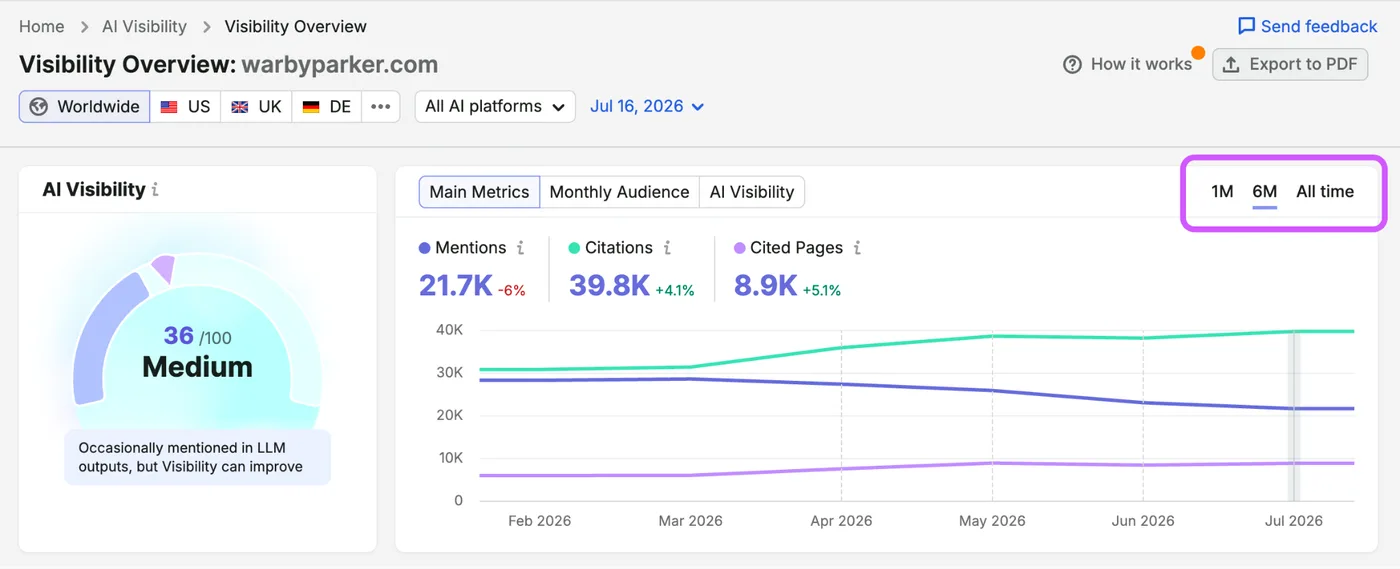
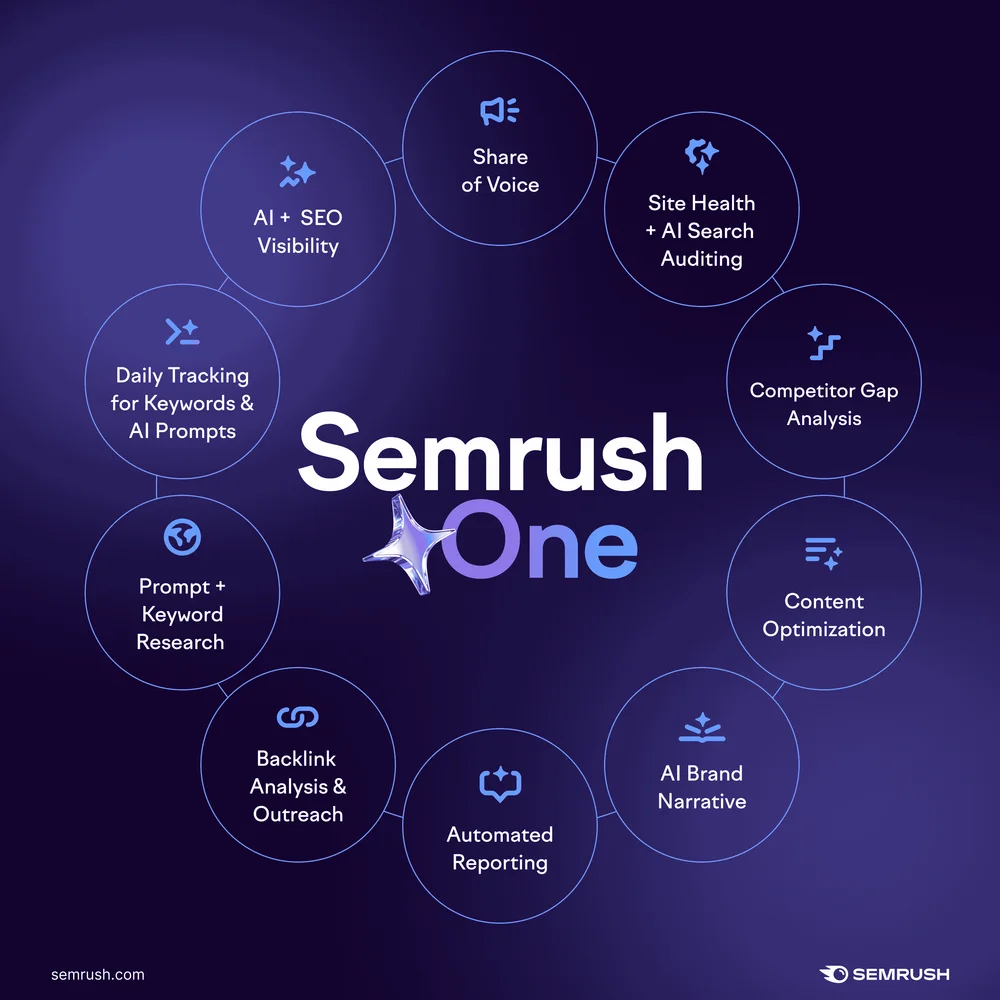
Track how each engine mentions you. Visibility Overview in the AI Visibility Toolkit has an "All AI platforms" view and a view for each platform.
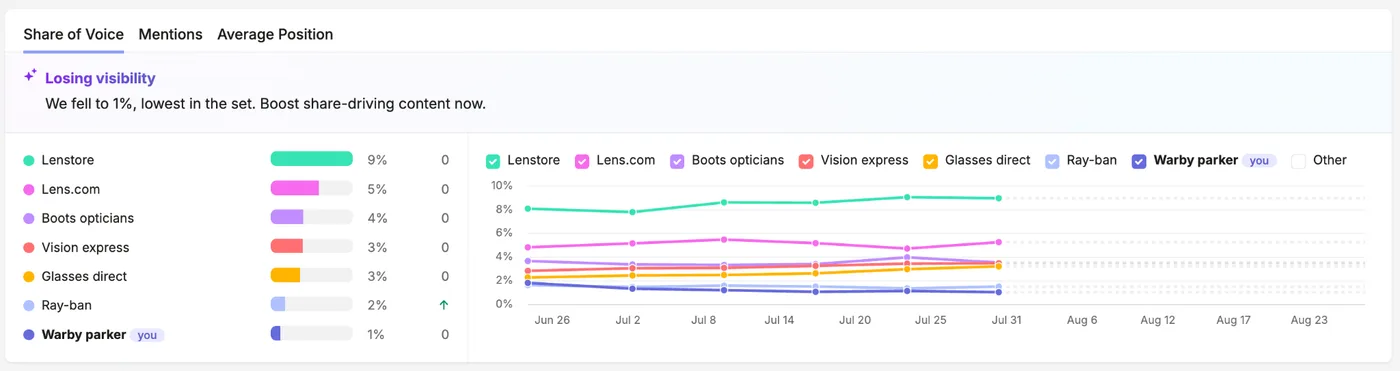
Benchmark share of voice against competitors. Brand Performance reports share of voice, sentiment and narratives for a brand and its rivals.
Compare rankings with AI appearances. Position Tracking in the SEO Toolkit tracks keyword positions daily, with SERP features such as AI Overview.

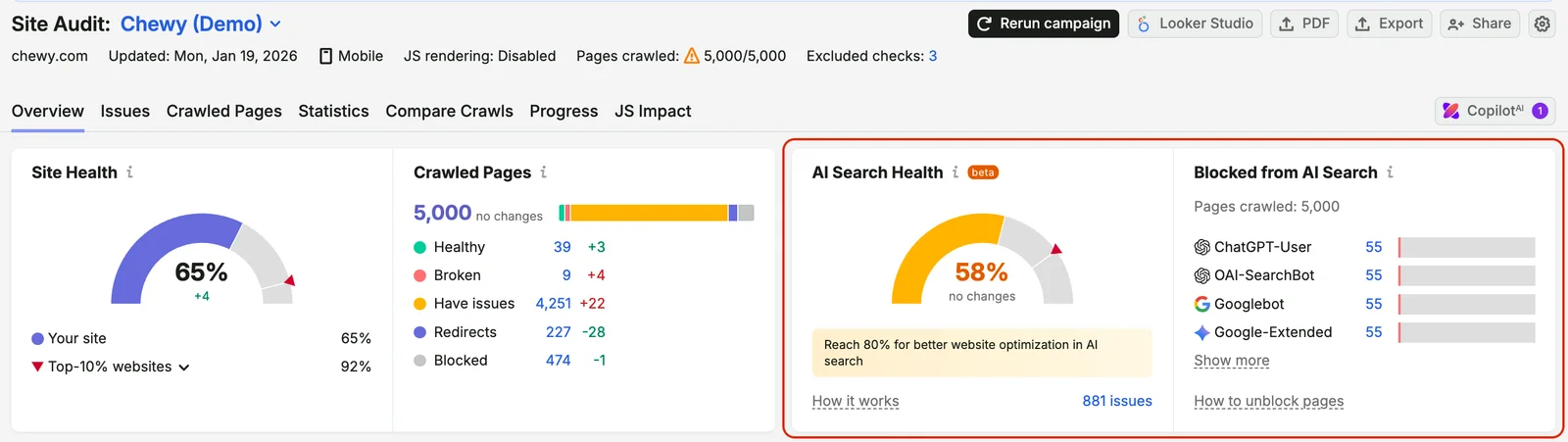
Check that AI bots can read your pages. Site Audit in the SEO Toolkit audits crawlability and structured data, with an AI Search Health view that lists pages blocked from AI search bots.
Semrush One's 7-day trial is the way to try these without paying first. The AI Visibility Toolkit has no trial of its own, and Semrush One includes it with the SEO Toolkit, so try Semrush One free for 7 days. Semrush's product page says "Unlimited access to all Semrush One tools" (read on 16 October 2026). That is Semrush's published offer, which we did not test, and no figure here came from a Semrush account.
One question, five answers
If you measure AI visibility as one number, you are averaging five different kinds of answer. Measure each engine on its own terms, and read what the answers actually say.
Try Semrush One free for 7 days
Visibility Overview and Brand Performance in the AI Visibility Toolkit, with Position Tracking and Site Audit in the SEO Toolkit, together in Semrush One. Free for 7 days for new users.
Try Semrush One free for 7 daysHow we counted
- Capture: one answer to each of 88 buyer questions from every engine, collected through DataForSEO for a US searcher on 24 October 2026: 440 answers.
- Length: words in the whole answer text, as the median per engine.
- Table: the answer contains a line that starts and ends with a vertical bar, the markdown form of a table row.
- Date or year: "as of", a month followed by a year, or 2025 or 2026 anywhere in the answer.
- Price: a dollar sign followed by a digit.
- Advice to check: a phrase such as check, verify, confirm, visit or see followed within 60 characters by official, pricing page, website, vendor or latest, or a statement that prices, plans or features may change or vary.
- Hedges: the words may, might, typically, generally, usually, reportedly, approximately, roughly, varies, vary and depends, per hundred words.
- Left out: the answer texts themselves, accuracy, and which sources each answer cited.
- Reproduce it: the script and the summary are in
research/r2-e2-answer-style/.
Some links may be affiliate links. We may earn a small commission at no extra cost to you.
Related Articles
Explore more guides and reviews from our experts.
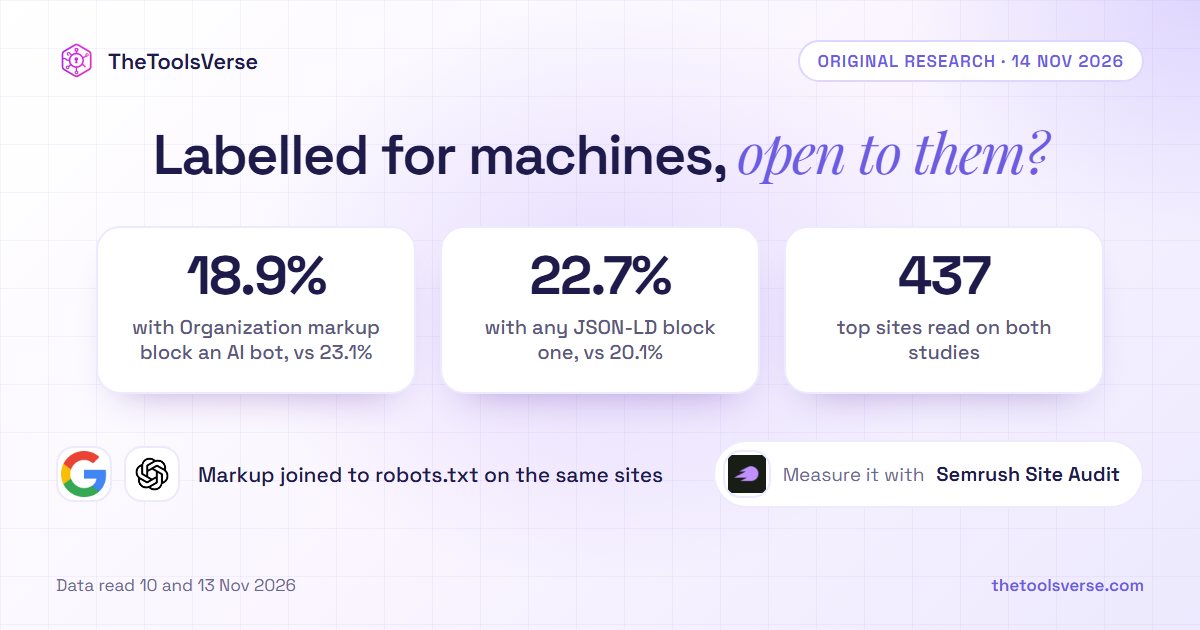
Top Sites With Organization Markup Block AI Crawlers Slightly Less, 18.9% Against 23.1%, but Plain JSON-LD Shows No Such Pattern: Joining Two of Our Studies
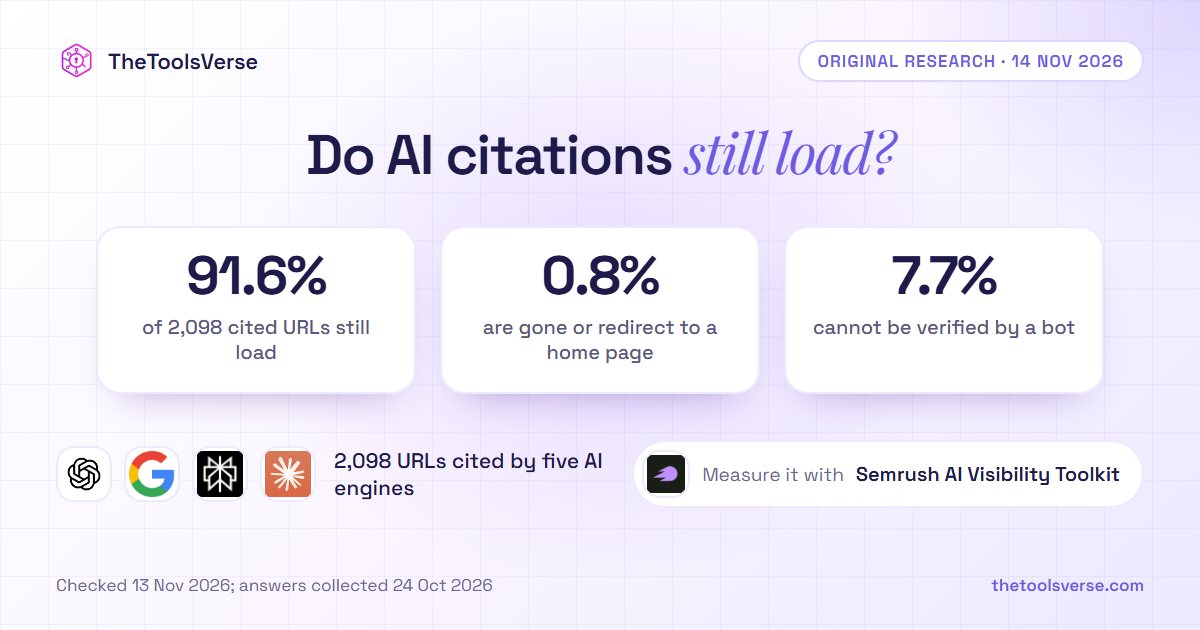
We Re-Checked 2,098 URLs That Five AI Engines Cited: 91.6% Still Load, 0.8% Are Gone, and 7.7% Cannot Be Verified by a Bot